
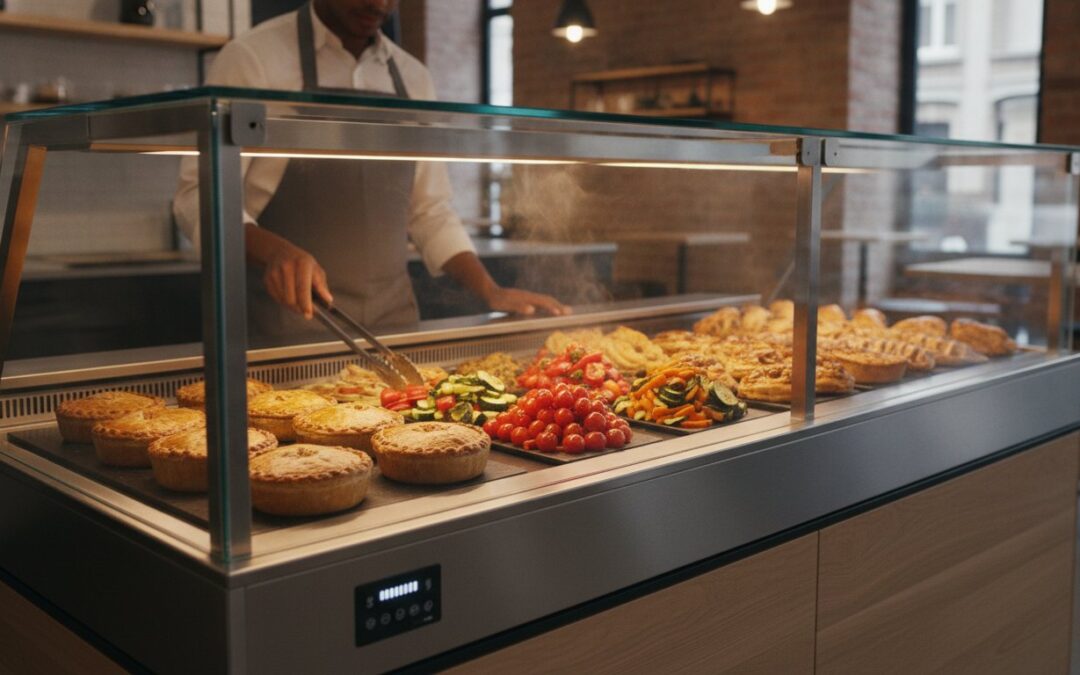
A hot food display counter should be an engineered environment for food quality, not just a heated box. Many hospitality operators face the daily stress of watching artisanal products degrade under inefficient lamps while energy costs continue to rise. You’ve likely experienced the frustration of a standard unit that fails to maintain the delicate balance between the legal 63°C holding temperature and the moisture levels required for taste. It’s a difficult challenge to find equipment that protects your margins without compromising your brand’s aesthetic.
This 2026 guide provides the technical clarity you need to choose a display that delivers on both performance and style. We’ll explore how to select units that meet the latest Minimum Energy Performance Standards (MEPS) while extending the shelf life of your products. By focusing on precision UK manufacturing and smart temperature monitoring, you can reduce energy consumption and ensure your counter fits perfectly within a bespoke layout. We’ll walk through the essential specifications, from Energy Efficiency Index (EEI) ratings to modular design, helping you transform a functional necessity into a reliable driver of hospitality profit.
Key Takeaways
- Understand why temperature consistency is non-negotiable for food safety and how to choose a unit that balances heat precision with visual appeal.
- Compare dry and humidified heat retention methods to prevent product dehydration and extend the shelf life of your specific menu items.
- Identify the critical features of a modern hot food display counter, focusing on energy-efficient lighting and the long-term durability of food-grade stainless steel.
- Learn how to optimize your layout for both HACCP hygiene compliance and increased impulse sales through strategic point-of-sale positioning.
- Discover the benefits of UK-based bespoke CAD design and project management for integrating a high-performance display into a unique commercial space.
Choosing the Right Hot Food Display Counter for Your Business
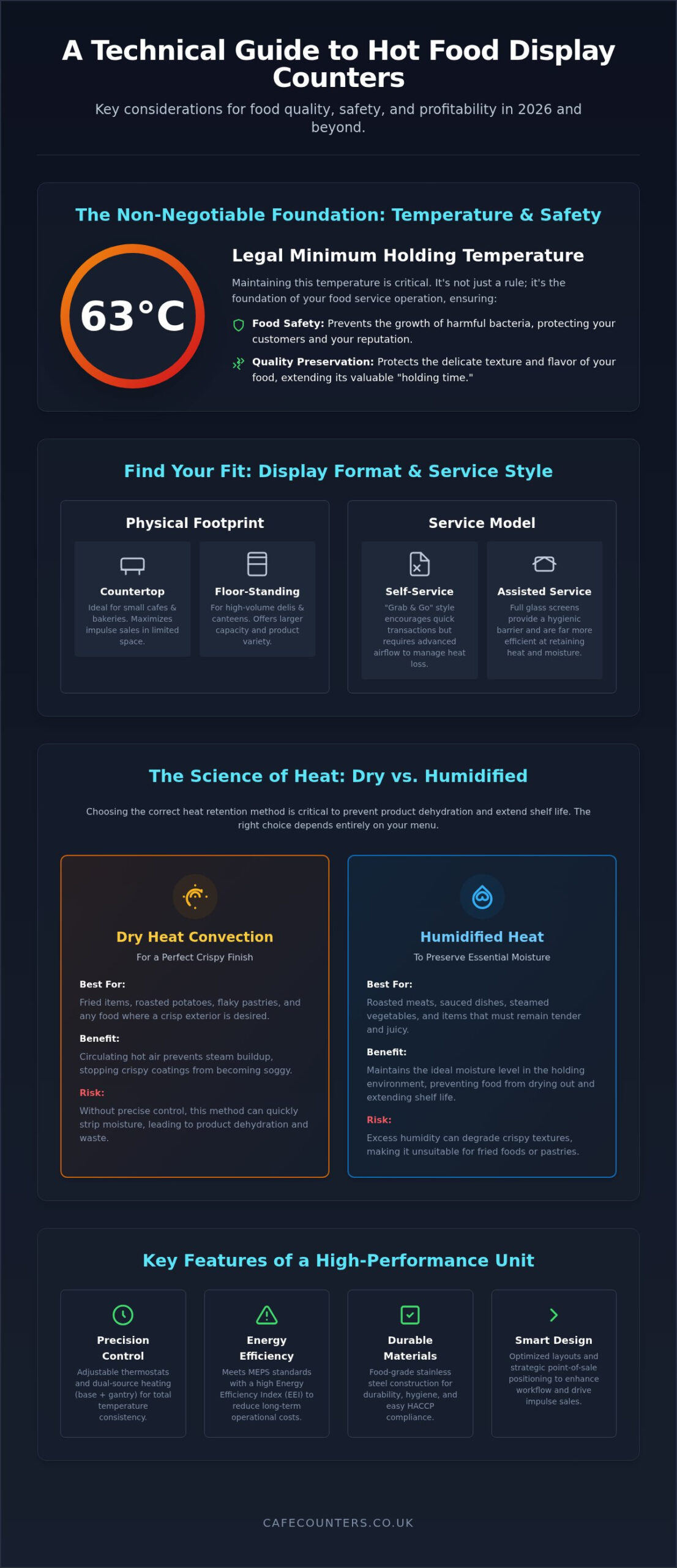
A hot food display counter serves as much more than a visual stage for your products; it’s a critical piece of infrastructure that bridges the gap between culinary preparation and customer satisfaction. In the high-pressure environment of a commercial kitchen, maintaining the legal minimum temperature of 63°C is non-negotiable for food safety. Unlike basic commercial food warmers that might provide uneven heat, a professional-grade display ensures total temperature consistency across every shelf. This stability is the foundation of your operation, preventing the growth of harmful bacteria while preserving the delicate texture and flavour profile of your menu.
Choosing the right unit requires an understanding of “holding time.” This is the window during which your food remains at peak quality before dehydration or overcooking sets in. Every minute a product sits in a suboptimal environment, its market value drops and the risk of waste increases. By investing in a counter designed for precision, you directly protect your profitability by extending the shelf life of your most popular items and reducing the volume of stock you’re forced to discard.
Countertop vs. Floor-Standing Heated Displays
Space constraints often dictate the initial choice between a countertop merchandiser and a floor-standing unit. Countertop models are excellent for smaller cafes or boutique bakeries where floor space is at a premium. They offer a compact footprint without sacrificing the visibility needed to drive impulse sales. However, high-volume environments like busy delis or staff canteens usually require the capacity of floor-standing or bespoke integrated counters. These larger units allow for a wider variety of products and can be seamlessly incorporated into a serving line using CAD-modelled stainless steel fabrication. Your decision should align with your peak throughput. A unit that’s too small will lead to constant restocking, while one that’s too large creates unnecessary energy costs.
Service Styles: Self-Service vs. Assisted Service
The glass configuration of your hot food display counter significantly impacts both customer flow and heat retention. Self-service or “Grab & Go” models typically feature open fronts or easy-access flaps to encourage quick transactions. While convenient, these designs require advanced airflow technology to combat the heat loss that occurs when the unit is opened. Conversely, assisted-service deli counters use full glass screens to create a hygienic barrier between the food and the customer. These closed systems are far more efficient at retaining moisture and heat, making them ideal for delicate items like roasted meats or sauced dishes. Evaluating your service model helps determine whether you need the speed of an open display or the climate control of a protected screen.
The Science of Heat Retention: Dry vs. Humidified Displays
A high-performance hot food display counter isn’t just a heating element; it’s a precision-engineered environment. Choosing between dry and humidified heat retention depends entirely on your menu’s physical properties. Dry heat, often delivered via convection fans, is the standard for products that require a crisp finish. However, without careful management, this same air movement can quickly strip moisture from artisanal bakes, turning a premium pastry into a dry, unappealing product within an hour. It’s a common pain point that leads to unnecessary waste and diminished brand reputation.
Precision control is where professional equipment separates itself from budget alternatives. Utilizing adjustable thermostats allows operators to fine-tune the environment for specific batches. While UK regulations mandate a minimum holding temperature of 63°C, global standards like the FDA Food Code also emphasize the importance of consistent thermal control to prevent quality degradation. Modern units often combine internal heat with overhead heated gantries, providing a dual-source approach that ensures even temperatures from the base to the surface of the food. This method is far more effective than traditional bain-marie systems, which can struggle to maintain surface heat in open-air environments.
When to Use Dry Heat Convection
Dry heat convection is the superior choice for fried items, roasted potatoes, and flaky pastries. The constant movement of hot air prevents steam from building up, which would otherwise turn crispy coatings soggy. Internal fans are crucial here; they eliminate cold spots that often plague cheaper, static units. While effective, dry heat has a shorter holding window. It’s best suited for high-turnover items where the product will be sold within 30 to 60 minutes. For businesses looking to integrate these into a larger setup, bespoke serving counters can be designed to house specific dry-heat zones alongside other service styles.
The Benefits of Humidified Hot Displays
For “wet” dishes such as stews, curries, or carvery meats, a humidified hot food display counter is essential. These units use a water-well system or an internal reservoir to introduce moisture into the air. This humidity creates a protective barrier that stops the food’s natural juices from evaporating. It significantly extends the holding time and ensures that a joint of beef remains as succulent at 2:00 PM as it was at noon. Managing these levels is a delicate task. Too much humidity leads to unsightly condensation on the glass screens, obscuring the view and impacting sales. High-end UK-manufactured units solve this with targeted airflow that keeps the glass clear while maintaining the internal climate. This balance is key to preserving both the visual appeal and the artisanal quality of your signature dishes.
Essential Features of High-Performance Heated Counters
A high-performance hot food display counter relies on the integrity of its physical build to maintain the delicate thermal balance required for artisanal quality. While budget imports often use thin-gauge metals that warp or lose heat, professional UK manufacturing prioritises heavy-duty, food-grade stainless steel. This material is the backbone of a reliable unit. It offers the durability needed for high-traffic environments and provides a non-porous surface that is essential for maintaining safe food holding temperatures. Beyond the frame, the use of toughened safety glass ensures that your display can withstand the daily rigours of a busy commercial space while providing customers with a crystal-clear view of your menu.
Hygiene and maintenance shouldn’t be an afterthought in a professional kitchen. We design our counters with easy-access components, allowing staff to remove glass panels or crumb trays for rapid cleaning. This meticulous attention to detail ensures that your equipment remains a hygienic asset rather than a maintenance burden. By choosing a unit engineered for accessibility, you protect the longevity of your investment and ensure that your brand’s standards are never compromised by the pressures of a fast-paced service.
Energy Efficiency and Operational Costs
In 2026, managing operational costs is a primary concern for any hospitality business. High-quality insulation is your first line of defence against rising utility bills. By trapping thermal energy within the hot food display counter, you reduce the workload on heating elements and ensure a more stable climate for your products. Digital “set and forget” controllers have replaced old-fashioned dials, providing precise monitoring that aligns with modern Energy Efficiency Index (EEI) standards. While the initial investment in a UK-built unit reflects its superior build quality, the long-term ROI is found in significantly lower energy consumption and reduced downtime. It’s a practical choice for operators who value precision and durability over a low entry price.
Lighting and Visual Merchandising
Visual appeal is the primary driver of impulse sales, and lighting plays a critical role in how your food is perceived. We prioritise energy-efficient LED lighting that uses specific light spectrums to make hot products appear more appetising without adding excess heat that could dry out delicate items. The strategic positioning of heated gantries provides essential top-down heat while framing your offerings in a professional light. To further enhance the aesthetic, many operators choose glass shelving to create a “floating” look. This allows light to penetrate every level of the display, ensuring that even items on the lower tiers are presented with the same visual impact as those at eye level.
Optimising Layout and Hygiene for Hot Food Service
The placement of your hot food display counter is a strategic decision that directly influences impulse purchasing. Positioning these units near the point of sale allows the aroma and visual appeal of fresh products to capture customers at the final stage of their journey. Beyond sales, the physical layout must support your staff’s workflow. Rear-loading doors are an ergonomic necessity in high-volume environments; they allow for seamless restocking from the kitchen side without obstructing customer access. This configuration ensures that your service remains fluid and professional even during the busiest lunch peaks.
Operational excellence is also defined by your commitment to hygiene. HACCP compliance isn’t just a regulatory checkbox; it’s the framework that protects your customers and your reputation. A daily cleaning protocol is essential for equipment longevity and food safety. We recommend this baseline checklist for every shift:
- Daily: Wipe down all glass surfaces with food-safe cleaners to maintain crystal-clear visibility.
- Daily: Remove and sanitise internal crumb trays to prevent debris buildup.
- Daily: Verify that digital thermostats are recording a consistent temperature above the legal 63°C threshold.
- Weekly: Inspect door seals and sliding tracks for wear to ensure maximum thermal efficiency.
Integrating Hot and Cold Displays
Creating a cohesive aesthetic often involves matching your heated units with refrigerated deli counters. While a unified look projects brand quality, placing hot and cold units adjacent to each other presents technical challenges. Thermal transfer can force refrigeration compressors to work harder, increasing energy costs and risking temperature fluctuations. Our CAD-modelled layouts solve this by incorporating high-performance thermal breaks and targeted ventilation. This precision engineering allows you to create a seamless “Grab & Go” run that maintains the integrity of both your chilled salads and your hot artisanal bakes. If you’re planning a complex installation, our team can provide the technical expertise needed to design bespoke serving counters that balance these competing climates.
Hygiene and Food Safety Standards
In the UK, the legal requirement to hold hot food at or above 63°C is the absolute priority for any food business. A professional hot food display counter is engineered to meet this standard consistently. Features like removable crumb trays and easy-glide sliding doors aren’t just for convenience; they’re designed to facilitate deep cleaning in minutes rather than hours. Sneeze guards also play a vital role in maintaining a sanitary environment, especially in self-service layouts. These glass barriers protect the product from external contaminants while ensuring the food remains the hero of the display. By choosing equipment that prioritises these hygiene features, you ensure that your operation remains compliant and your products stay safe for consumption.
Bespoke British Manufacturing: The TFSE Advantage
Choosing a hot food display counter is an investment in your brand’s operational future. While many suppliers offer mass-produced imports, we believe that high-end hospitality environments require a more meticulous approach. Since 1991, our UK-based manufacturing facility has focused on the intersection of technical precision and artisanal pride. By keeping production internal, we maintain total quality control over every weld and component. This regional expertise allows us to act as your expert partner, guiding you from the initial concept through to the final physical installation. You aren’t just buying a unit; you’re securing a reliable hand in a complex field.
The benefit of working with a British manufacturer extends far beyond the build quality. It ensures that your equipment is fully compliant with local 2026 energy standards and that technical support is always within reach. Our end-to-end project management style alleviates the stress of commercial fit-outs. We handle the technical commissioning nationwide, ensuring that your heated displays are calibrated for peak performance the moment your doors open. This commitment to service is what defines a professional partnership.
The CAD Design and Planning Process
Precision starts long before the first piece of stainless steel is cut. We use advanced CAD modelling to ensure that every hot food display counter fits perfectly within your specific architectural constraints. A professional site survey allows us to account for existing workflows and utility points, preventing costly errors during installation. This bespoke approach gives you the freedom to customise finishes to match your brand aesthetic. Whether you require premium granite tops or specific stainless steel gantry styles, our design process integrates these elements seamlessly. CAD modelling is particularly vital for the integration of drop-in heated units, where millimetre-perfect cut-outs are required to maintain a flush, high-end finish.
Installation and Long-Term Reliability
Reliability is built into the heavy-duty materials we select for every project. We prioritise food-grade stainless steel and toughened glass because they withstand the rigours of commercial use without degrading. Once manufacturing is complete, our professional commissioning process verifies that all heating elements and digital controllers operate at peak efficiency. This methodical approach ensures that your equipment remains a durable asset for years to come. If you’re ready to move from a standard solution to a precision-engineered environment, we invite you to contact our expert team for a bespoke consultation. We’ll help you bring your vision to life with the technical expertise your business deserves.
Elevating Your Food Service Standards for 2026
Securing the future of your hospitality business requires a technical approach to food preservation. You’ve seen how maintaining the legal 63°C threshold is only half the battle; the real success lies in balancing heat with moisture to protect the artisanal quality of your menu. Whether you choose a dry convection unit for crispy pastries or a humidified system for succulent meats, your hot food display counter must act as a precision-engineered environment that reduces waste and drives profit.
At TFSE Products Ltd, we’ve refined this process through expert UK manufacturing since 1991. Our full CAD design and project management service ensures your equipment isn’t just a purchase, but a bespoke fit-out tailored to your unique space. With nationwide installation and commissioning, we provide the steady, reliable hand needed to bring your vision to life. View our range of professional hot food display counters to begin your journey toward a more efficient, high-impact service environment. We look forward to helping you set a new standard for quality and durability in your establishment.
Frequently Asked Questions
What is the ideal temperature for a hot food display counter?
The legal minimum temperature for any hot food display counter in the UK is 63°C. Maintaining this heat is critical for food safety and regulatory compliance. While some operators set their units slightly higher to account for ambient temperature drops during service, exceeding 70°C for long periods can cause delicate products to dry out or overcook. Professional digital controllers allow for precise monitoring to ensure you stay within this safe and appetizing range.
How long can food be safely kept in a heated display?
Hot food can be held indefinitely at 63°C or above for safety, but quality usually degrades after two to four hours. If the temperature drops below the legal limit, the 2-hour rule applies; the food must be served, chilled, or discarded within that window. We recommend monitoring holding time closely to ensure that the texture and flavour of your artisanal products meet the high standards your customers expect.
What is the difference between a heated gantry and a bain-marie?
A heated gantry provides top-down thermal energy, often using infrared lamps or ceramic elements to maintain surface temperature and illuminate the food. In contrast, a bain-marie heats from the bottom using a water bath or dry well. For a truly professional setup, combining both methods ensures even heat distribution throughout the product. This dual-source approach is far more effective at preventing cold spots than a standalone bottom-heat system.
Do I need a humidified or dry heat display for my products?
Your choice depends entirely on your menu. Dry heat convection is the superior option for fried items, roasted potatoes, and flaky pastries, as it prevents steam from making coatings soggy. Conversely, humidified displays are essential for wet dishes like stews, curries, or carvery meats. These units introduce moisture into the air to stop natural juices from evaporating, ensuring your signature dishes remain succulent throughout a long lunch service.
How much electricity does a commercial hot food display use?
Energy consumption varies based on the unit’s size and insulation quality. In 2026, all new commercial equipment must meet updated Minimum Energy Performance Standards (MEPS). High-performance units designed with thick-gauge stainless steel and precision digital controllers are significantly more efficient than budget alternatives. By checking the Energy Efficiency Index (EEI) rating before purchase, you can accurately estimate operational costs and ensure the hot food display counter aligns with your business’s sustainability goals.
Can I integrate a hot display into my existing cafe counter?
Yes, we specialise in the design and manufacture of integrate drop-in units that fit seamlessly into existing or new counter structures. Using advanced CAD modelling, we ensure that the cut-out dimensions are millimetre-perfect for your specific layout. This approach allows you to maintain a unified brand aesthetic while adding high-performance heating capabilities. It’s a practical way to upgrade your service without the need for a completely new floor-standing installation.
Is it better to buy a countertop unit or a bespoke floor-standing counter?
Countertop units offer a compact, space-saving solution for smaller cafes with lower product volumes. However, bespoke serving counters are better suited for high-traffic environments where capacity and workflow are priorities. A custom-built solution allows for the integration of heated gantries and storage, designed specifically for your throughput. Choosing bespoke manufacturing ensures that your equipment is an engineered asset that fits your physical space and operational requirements perfectly.
What are the cleaning requirements for a professional heated display?
Daily cleaning is essential for maintaining hygiene and equipment longevity. Staff should wipe down glass surfaces with food-safe cleaners and remove internal crumb trays for sanitisation after every shift. Deep cleaning of sliding tracks and door seals should occur weekly to prevent debris from impacting thermal efficiency. Professional units are designed with removable components specifically to make these tasks faster, ensuring your display remains a clean, appealing focal point for your customers.