
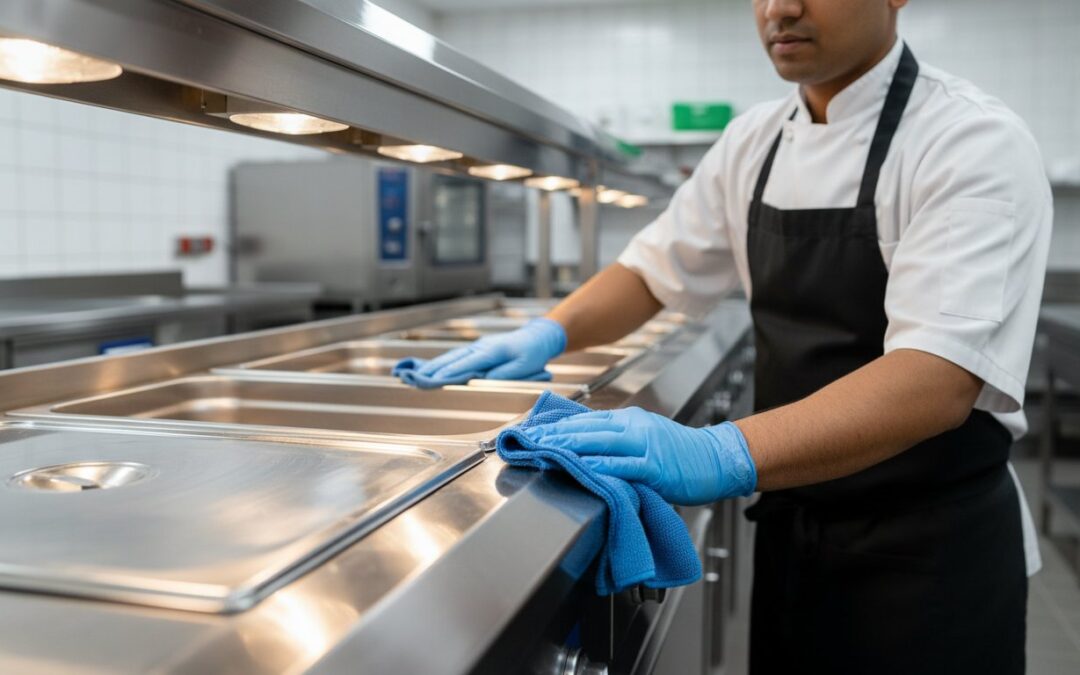
A cloudy heat lamp or a greasy surface doesn’t just look unprofessional; it directly compromises the thermal efficiency of your serving line and risks falling foul of the latest NSF/ANSI 4-2025 sanitation standards. Keeping high-reach surfaces spotless is often one of the most frustrating tasks in a busy kitchen. If you’re struggling with stubborn grease or worrying about fragile quartz lamps, learning how to clean a stainless steel gantry correctly is essential for both presentation and safety. It’s a delicate balance between rigorous hygiene and protecting the specialized equipment your service relies on.
We understand that maintaining high-end heated gantries requires a meticulous touch. This guide provides the technical expertise to master a dual-zone cleaning approach that protects your delicate components while ensuring total food safety compliance. You’ll learn the exact process for sanitising food-contact surfaces without risking damage to sensitive heating elements or shattering glass. We’ll walk you through the precise steps to eliminate streaks, safely handle lighting, and select detergents that align with the EU 2026 regulations, ensuring your display remains a beacon of quality and durability.
Key Takeaways
- Prioritise safety by following the essential “Cool Down” rule and isolating power before moisture touches any heated components.
- Protect your equipment’s finish by selecting chloride-free cleaning solutions and high-quality microfibre cloths to prevent corrosion or streaks.
- Learn the professional sequence of how to clean a stainless steel gantry, focusing on dry dusting first to remove debris without scratching the surface.
- Align your kitchen’s hygiene practices with 2026 sanitation standards to mitigate risks from airborne grease and dust accumulation.
- Implement a structured maintenance schedule that extends the operational life of your heated gantry and preserves food presentation quality.
Understanding the Importance of Gantry Hygiene in 2026
The heated gantry serves as the vital bridge between the culinary team and front-of-house service. It’s more than a simple shelf; it’s a precision-engineered component designed to maintain food temperatures while providing essential illumination for presentation. Because these units are positioned directly above open food, they are prime targets for rising airborne grease and fine dust particles. Over time, these contaminants form a sticky film that traps more debris, creating a significant hygiene challenge. Mastering how to clean a stainless steel gantry effectively is the first step in maintaining a professional, compliant kitchen environment.
Regulatory bodies have intensified their focus on high-level surfaces. The updated NSF/ANSI 4-2025 standards emphasize that equipment design must facilitate easy sanitation to prevent foodborne illnesses. Neglecting the upper surfaces of your serving line can lead to failed inspections, even if your lower counters are spotless. It’s a matter of total competence. A clean gantry isn’t just about passing a test; it’s about projecting reliability in every corner of your facility.
The Aesthetic Impact on Food Presentation
Visual appeal is paramount in commercial foodservice. Smudges, fingerprints, or a layer of hazy grease on your gantry can quickly diminish the perceived quality of your offerings. Whether you’re operating high-end patisserie displays or bespoke serving counters, the equipment must reflect the same level of care as the food itself. High-reach surfaces are frequently overlooked during the rush of service. Yet, they’re often the first thing a customer notices when approaching the pass. A gleaming finish signals a commitment to excellence. It reassures your guests that your standards are uncompromising.
Preventing Cross-Contamination and Bacteria Growth
The combination of heat and organic matter creates a fertile environment for bacterial multiplication. When grease accumulates on the underside of a gantry, the constant heat can cause it to liquefy. It might then drip onto the food below. This represents a direct cross-contamination risk that no operator can afford to ignore. The unique properties of stainless steel, particularly its corrosion resistance and smooth surface, make it the ideal material for these high-risk zones. Food-grade stainless steel is the industry standard for hygiene due to its non-porous surface and resistance to bacterial colonization.
Meticulous maintenance ensures these surfaces remain a barrier against contamination rather than a source of it. Knowing how to clean a stainless steel gantry without damaging the delicate lamps or electrical components is vital for long-term operational efficiency. By treating hygiene as a core part of your daily project management, you protect both your customers and your brand’s reputation for quality. It’s the mark of a seasoned professional who values precision over speed.
Essential Safety Precautions for Heated Gantries
Cleaning a commercial gantry requires more than a bucket of soapy water; it demands a technical understanding of electrical safety and thermal management. Because these units are often integrated into bespoke serving counters, protecting the internal circuitry from moisture is a critical priority. Unlike standard ambient shelving, heated units house sensitive quartz tubes and wiring that can be easily compromised by improper handling. Understanding how to clean a stainless steel gantry begins with a strict adherence to safety protocols that protect both the operator and the equipment’s long-term operational efficiency.
Electrical Isolation and Cooling Procedures
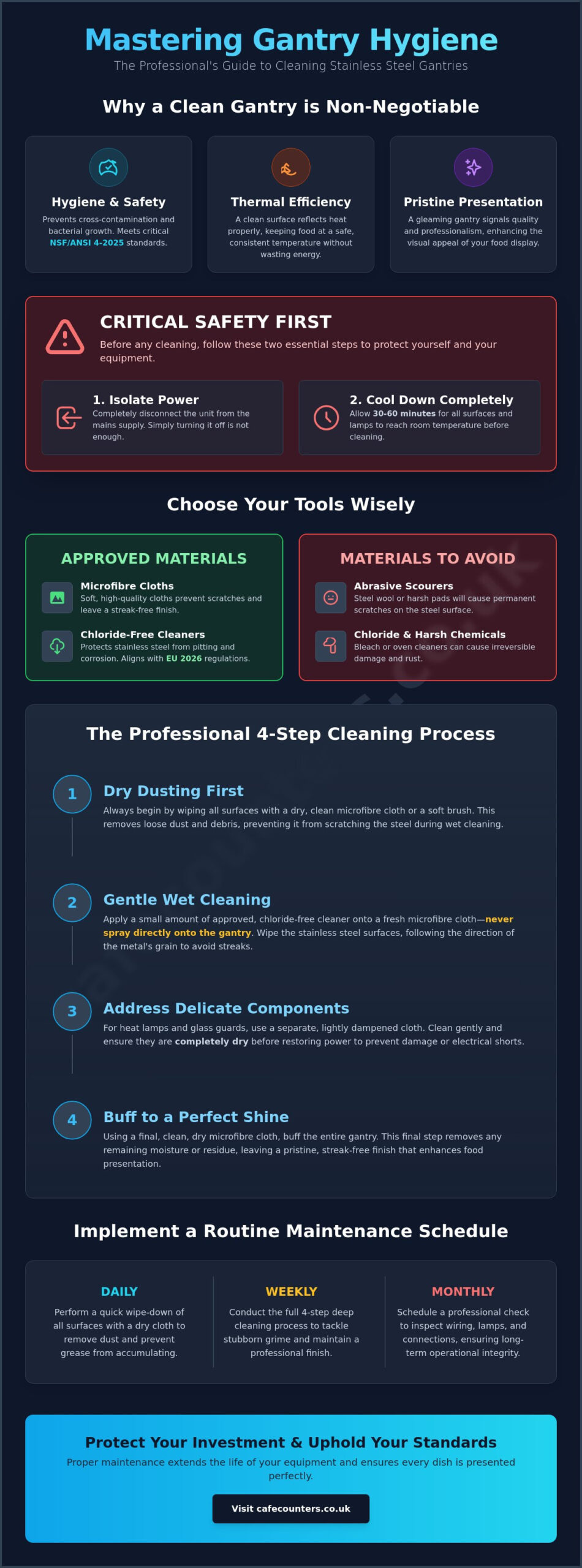
The first step in any maintenance routine is the total isolation of the power supply. Simply turning off the switch on the unit isn’t enough. You should disconnect the gantry at the mains to prevent any risk of electrical shock when applying cleaning solutions. Once isolated, the “Cool Down” rule must be observed. We recommend allowing at least 30 to 60 minutes for the unit to reach room temperature. Attempting to clean a hot surface is counterproductive. High temperatures cause cleaning chemicals to “bake” onto the steel almost instantly, resulting in stubborn streaks and a cloudy finish that is incredibly difficult to remove. This methodical approach ensures the metal is receptive to treatment without causing chemical damage.
Heat Lamp and Glass Guard Protection
Heat lamps and quartz tubes are the most fragile components of your gantry. These elements are highly susceptible to thermal shock. If cold liquid touches a hot glass guard or lamp, the material can shatter instantly, creating a major safety hazard and requiring expensive replacements. When you’re ready to proceed with how to clean a stainless steel gantry, check if the lamps require removal. If they remain in place, they must be handled with extreme care. Always wear clean, lint-free gloves when touching quartz lamps. The natural oils from your skin can create “hot spots” on the quartz, which significantly reduces the lamp’s lifespan and can lead to premature failure during service. Protecting these delicate parts ensures your display remains bright and effective for years to come.
Selecting the Right Cleaning Materials and Solutions
The longevity of your equipment depends heavily on the chemistry of your cleaning cabinet. Stainless steel is prized for its durability, yet it remains vulnerable to specific chemical reactions that can permanently mar its surface. When you’re determining how to clean a stainless steel gantry, you must first distinguish between brushed and mirror-polished finishes. Brushed steel is more forgiving of daily wear, while the highly reflective surfaces often found on bespoke serving counters require a much lighter touch to avoid visible swirling. Precision in your choice of materials prevents the frustration of a dull, scratched finish that no amount of buffing can fix.
Approved Solutions and What to Avoid
Chlorides are the primary enemy of 304-grade stainless steel. Common household bleach or cleaners containing high concentrations of salt will cause irreversible pitting, which appears as tiny dark spots on the metal. These pits aren’t just an eyesore; they act as microscopic reservoirs for bacteria. We recommend using pH-neutral detergents for daily maintenance to preserve the protective chromium oxide layer of the steel. Abrasive powders should never touch a polished gantry as they cause irreversible micro-scratches that compromise both aesthetics and hygiene. For heavy grease, a commercial-grade alkaline degreaser is effective, provided it is thoroughly rinsed with clean water afterward.
The Essential Gantry Cleaning Toolkit
A professional finish requires professional tools. Ditch the paper towels, which often leave behind lint and can actually cause fine scratches on polished surfaces. Instead, invest in high-quality microfibre cloths. Their split-fibre structure traps grease and dust far more effectively than traditional materials. To achieve a streak-free result on glass sneeze guards, use a dedicated glass cleaner applied to the cloth rather than sprayed directly onto the unit. This prevents liquid from seeping into the lamp housings or electrical connections. Your toolkit should also include:
- Soft-bristled brushes: These are vital for reaching dust trapped in corners or around lamp brackets without scratching the metal.
- Nitrile gloves: Even “mild” commercial cleaners can cause skin irritation over time, and gloves prevent natural finger oils from marking the freshly cleaned steel.
- Microfibre buffing pads: Use these specifically for the final pass to ensure a uniform, high-end visual impact across the entire assembly.
By selecting materials that respect the technical properties of the metal, you ensure your gantry remains a steady, reliable hand in your service line. This methodical selection process mirrors the care taken during the initial fabrication of the unit. It’s about protecting a significant investment through informed, professional care.
Step-by-Step Guide to Cleaning Your Stainless Steel Gantry
Achieving a pristine finish on high-reach equipment requires a methodical, top-down approach. Once you’ve cleared the service pass and confirmed the unit is fully isolated and cool, the physical cleaning process can begin. Performing this task with precision ensures your equipment remains as reliable as the day it was installed. When considering how to clean a stainless steel gantry, the sequence of actions is just as important as the materials you use. By following a structured workflow, you prevent dirty water or dislodged grease from falling onto surfaces you’ve already sanitised.
Start with a thorough dry dusting. Use a clean, dry microfibre cloth to remove loose debris, dust, and airborne particles from the top of the gantry and the lamp housings. This step is vital. It prevents the formation of an abrasive “mud” when you introduce liquid cleaners later. Once the loose material is gone, you can move into the active degreasing phases to restore the unit’s professional appearance.
Phase 1: Degreasing the Stainless Steel Framework
Apply your pH-neutral detergent or degreaser directly to a microfibre cloth rather than spraying the unit. This prevents liquid from entering electrical vents or pooling in lamp sockets. It’s essential to wipe with the grain of the metal to avoid creating micro-scratches that dull the finish over time. Pay close attention to the underside of the framework. This area often harbours the heaviest grease buildup due to rising steam from the hot food below. Maintain the visual impact of your bespoke serving counters by ensuring every inch of the framework is free from sticky residues.
Phase 2: Cleaning Glass Guards and Lamps
Crystal-clear visibility is non-negotiable for effective food presentation. Use a dedicated glass cleaner on a fresh cloth to wipe down tempered glass sneeze guards and lamp covers. Avoid circular motions; instead, use straight, overlapping strokes to prevent streaks. While cleaning, take a moment to inspect the fittings. Check for loose screws or signs of wear on the reflectors. If you notice any components that are no longer performing at their peak, it might be time to upgrade to more durable, high-performance heated gantries to ensure your service line remains efficient.
The final step is the buffing pass. Use a clean, dry microfibre buffing pad to polish the stainless steel until it regains its deep, artisanal shine. This final touch doesn’t just look excellent; it creates a smooth surface that is harder for new grease and dust to cling to. A well-maintained gantry is a signature of a kitchen that values quality, durability, and total hygiene compliance.
Long-term Maintenance and Professional Fabrication
Expert maintenance extends far beyond the daily wipe-down. It requires a structured approach that respects the equipment’s engineering and ensures long-term operational efficiency. While mastering how to clean a stainless steel gantry on a shift-by-shift basis is vital, a preventative maintenance schedule is what truly protects your investment. High-quality UK manufacturing ensures that these units are built for longevity; however, even the most durable steel requires a methodical care plan to remain a reliable asset in a high-pressure hospitality environment.
There are times when internal cleaning isn’t enough. If you notice a persistent dimness in your display or if grease has penetrated behind the reflectors, it’s time to call a professional for a technical deep clean or lamp replacement. Attempting to dismantle electrical housings without specialist knowledge risks damaging the internal wiring. By partnering with a seasoned manufacturer, you gain access to the technical expertise required to keep your serving line performing at its peak without compromising safety.
Building a Cleaning Schedule
Consistency is the hallmark of a professional kitchen. For high-volume cafe environments, we recommend a tiered approach to hygiene. Daily tasks should focus on clearing the service pass and performing a dry dust of the upper framework. Weekly sessions must include the full degreasing process and glass detailing we’ve discussed. Training your staff on the nuances of stainless steel care ensures that nobody uses a forbidden abrasive scourer in a moment of haste. For deeper insights into equipment longevity, our guide on Vision Heated Counters provides a comprehensive look at maintaining hot food displays in modern settings.
The Advantage of Bespoke Stainless Steel Solutions
The ease of maintenance often begins at the design stage. Bespoke gantries that utilise CAD-modelled designs are specifically engineered to eliminate dirt traps and awkward sharp corners where grease typically accumulates. This precision in commercial kitchen fabrication directly reduces the time and effort required for your team to meet hygiene standards. When a unit is manufactured with seamless welds and smooth transitions, the process of how to clean a stainless steel gantry becomes significantly more efficient.
Investing in quality fabrication means choosing a steady, reliable hand for your project. Our internal production facilities allow us to maintain total quality control, ensuring that every gantry we produce meets the rigorous demands of the professional foodservice industry. If you are looking to upgrade your service line with equipment designed for both visual impact and practical durability, contact TFSE Products Ltd for bespoke gantry solutions. We invite you to share your vision so we can bring the technical expertise required to make it a physical reality.
Elevate Your Standards with Professional Care
Maintaining a pristine service environment requires a blend of technical knowledge and consistent discipline. You’ve learned that protecting your equipment involves more than just a quick wipe; it demands strict adherence to cooling protocols and a careful selection of pH-neutral materials. Mastering how to clean a stainless steel gantry ensures that your presentation remains as impressive as your culinary standards while protecting sensitive components from premature wear. By treating hygiene as a core part of your operational management, you reinforce your brand’s reputation for total professional competence.
Since 1991, our UK-based manufacturing team has prioritised hygienic design through advanced CAD modelling and meticulous craftsmanship. We specialise in bespoke cafe counter fit-outs that eliminate dirt traps and streamline your daily maintenance routines. Explore our range of professional heated gantries and display solutions to see how high-quality fabrication makes total compliance easier to achieve. We’re here to help you bring your vision to life with equipment built for the long haul. Your commitment to detail today ensures a reliable and visually stunning service line for years to come with the support of TFSE Products Ltd.
Frequently Asked Questions
Can I use glass cleaner on the stainless steel parts of the gantry?
You can use glass cleaner for light touch-ups, but it lacks the surfactants needed for heavy grease removal. It’s excellent for removing fingerprints from the vertical supports of your serving line during service. However, for a thorough process on how to clean a stainless steel gantry, stick to pH-neutral detergents that won’t leave a chemical film. Always apply the cleaner to your cloth first to avoid overspray into the lamp housings.
How often should a commercial heated gantry be cleaned?
Daily cleaning is essential for all food-contact surfaces and sneeze guards to maintain visibility and hygiene. High-volume environments should also perform a quick dry dust of the upper framework every evening. A deeper degreasing of the entire assembly, including the underside where grease accumulates, should be scheduled at least once a week. This prevents the buildup from becoming a fire hazard or a source of cross-contamination in the kitchen.
What happens if I use bleach on my stainless steel gantry?
Bleach causes irreversible pitting and corrosion by attacking the protective chromium oxide layer of the steel. Once this layer is breached, the metal becomes susceptible to rusting and bacterial colonisation in the microscopic craters. If you’ve accidentally used a chloride-based cleaner, rinse the area immediately with copious amounts of fresh water. It’s a mistake that can permanently dull the artisanal finish of bespoke equipment and compromise its durability.
Is it safe to clean the heat lamps while they are still warm?
It is not safe to clean heat lamps until they have reached room temperature. Applying cool liquid to a warm quartz tube or tempered glass guard causes thermal shock, which can lead to the component shattering instantly. This creates a significant safety hazard for staff and risks contaminating the food preparation area with glass shards. Always allow at least 30 minutes for the unit to cool after total electrical isolation.
How do I remove burnt-on grease from the underside of the gantry?
Removing burnt-on grease from the underside requires a high-quality alkaline degreaser and patience. Apply the solution to a microfibre cloth and hold it against the stubborn spot to allow the chemicals to break down the carbonised oil. Use a soft-bristled brush for corners, but never use metal scourers. Scourers create deep scratches that trap more grease in the future, making the task of how to clean a stainless steel gantry much harder over time.
Why does my stainless steel look “rainbowed” or discoloured after cleaning?
A “rainbow” effect, or heat tint, often occurs when cleaning chemicals are applied to a surface that is still too hot. It can also be caused by mineral deposits in hard water or detergent residues that weren’t thoroughly rinsed away. To fix this, use a dedicated stainless steel polish or a diluted white vinegar solution on a cool surface. Buffing with a dry microfibre pad usually restores the uniform, professional shine of the metal.
Do I need a professional to replace the lamps after cleaning?
Replacing standard push-fit lamps is usually a straightforward task for trained kitchen staff, provided the power is isolated. However, if the lamp housing shows signs of heat damage or if the wiring appears brittle, you should contact a professional technician. Meticulous care during the cleaning process often reveals these minor issues before they become major operational failures. It’s part of being a detail-oriented partner in your kitchen’s long-term maintenance.
Can I use a steam cleaner on a commercial heated gantry?
Steam cleaners should generally be avoided on heated gantries due to the high risk of moisture ingress into electrical components. The pressurised steam can easily penetrate seals and vents, leading to short circuits or premature failure of the heating elements. While steam is effective for sanitising ambient shelving, it is too aggressive for units containing integrated lighting and quartz tubes. Stick to manual cleaning with damp, well-wrung microfibre cloths for total safety.