
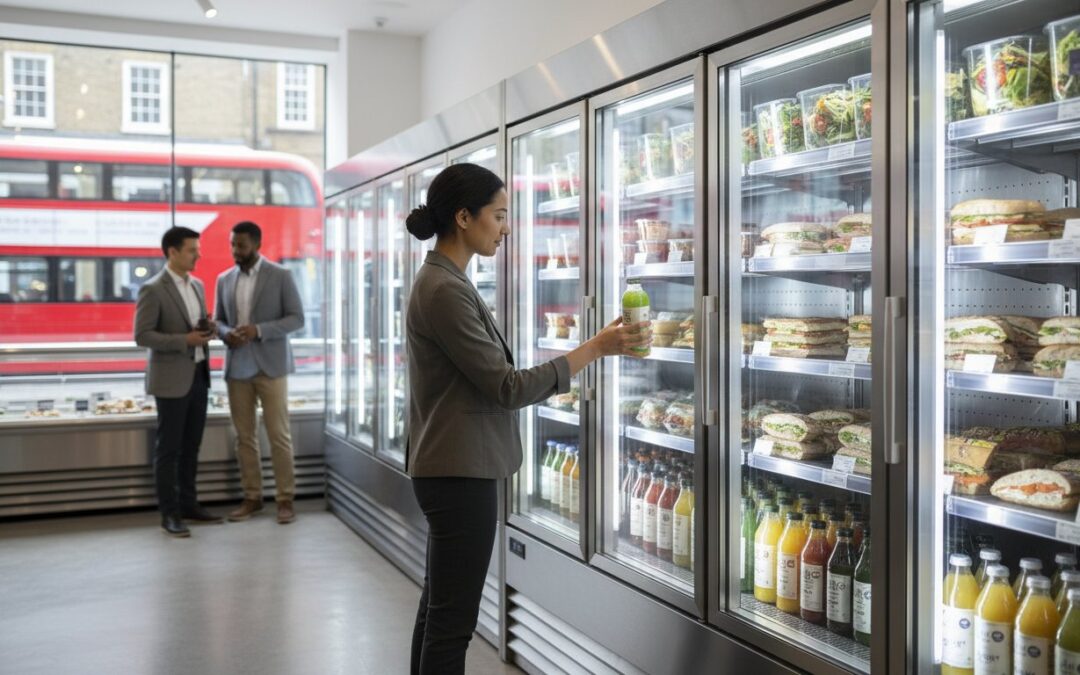
Could your current front-of-house equipment be quietly draining over 30% of your annual utility budget while failing to present your premium products in their best light? You likely already recognize that in the competitive UK high street, every square millimetre of floor space must justify its existence through consistent sales and reliable performance. Choosing the right multideck display refrigeration isn’t just about keeping drinks cold; it’s about engineering a seamless customer experience that balances aesthetic appeal with the robust durability required for high-traffic environments.
In this professional guide, you’ll learn how to master the technical specifications and energy-efficient configurations necessary to transform your retail or hospitality space. We’ll provide a clear roadmap from initial design to final installation, covering how modern temperature controls can eliminate food waste and how bespoke finishes can align with your brand’s unique identity. From reducing your monthly energy bills to driving impulse purchases, we’re exploring the precision-engineered solutions that define the 2026 commercial landscape. We will walk you through the essential steps of selecting, placing, and maintaining your unit for long-term operational success.
Key Takeaways
- Understand the psychology of the “Grab & Go” revolution and how to strategically position vertical chillers to maximise impulse sales and retail throughput.
- Explore the engineering behind air curtain technology and energy-efficient EC fans to maintain optimal food safety while reducing your utility overheads.
- Compare the operational benefits of open-front and glass-door multideck display refrigeration to align your choice with your venue’s specific footfall and sustainability goals.
- Learn how bespoke CAD modelling and a “Concept to Completion” strategy ensure your refrigeration units integrate seamlessly into your overall design layout.
- Discover the long-term durability of British-manufactured Type 304 stainless steel equipment and the logistical advantages of sourcing high-end units locally.
The Evolution of Multideck Display Refrigeration in Modern Foodservice
The modern multideck is a precision-engineered vertical chiller designed to transform cold storage into a high-impact sales tool. Unlike traditional chest freezers or solid-door units, multideck display refrigeration utilizes an open-fronted or glass-door design to present products directly to the consumer. This equipment has become the engine room of the UK food-to-go sector, a market that reached a valuation of over £22 billion in 2024. These units serve as a stage for high-visibility merchandising, allowing retailers to present fresh produce, dairy, and pre-prepared meals with absolute clarity.
Successful foodservice operations rely on a delicate balance between aesthetic appeal and rigorous safety standards. Professional display units must do more than look impressive; they have to maintain strict Food Standards Agency (FSA) temperature requirements, typically keeping high-risk foods below 8°C. By adhering to the foundational principles of refrigeration, a well-designed multideck ensures that products remain safe and fresh while the unit operates efficiently in a demanding high-street environment. Choosing a robust, British-manufactured unit reflects your brand’s commitment to quality, signaling to customers that your ingredients are handled with professional care.
The Psychology of Vertical Food Merchandising
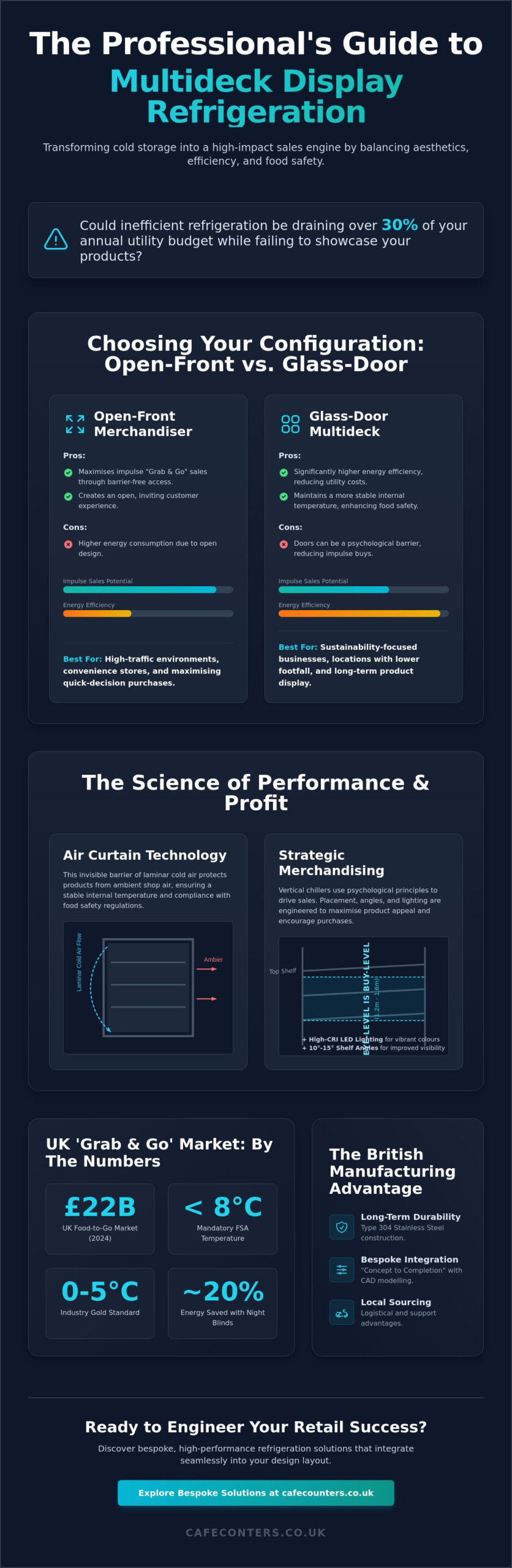
Verticality is a strategic advantage in UK retail where floor space is often at a premium. The “eye-level is buy-level” rule dictates that high-margin items, such as artisan patisserie or premium deli pots, should be placed between 1.2 and 1.6 metres high. Using shelf angling, typically set at 10 or 15 degrees, significantly improves product visibility from a distance. Integrated LED lighting with a high Colour Rendering Index (CRI) ensures that colors appear vibrant, directly influencing the customer’s perception of freshness and quality.
Multidecks vs. Standard Display Fridges
The primary distinction between a multideck and a standard display fridge lies in airflow management and access frequency. Multidecks are engineered for high-traffic environments where the unit is accessed dozens of times per hour. They utilize a powerful “air curtain” technology to maintain a thermal barrier, even when the front is completely open. While a traditional serve-over counter is ideal for assisted service, a multideck is the superior choice for self-service speed. For a deeper dive into choosing the right model for your site, consult our guide on refrigerated grab and go display units. This transition from service-led to consumer-led access is a hallmark of modern, efficient shopfitting.
Engineering Excellence: How Professional Multideck Chillers Maintain Temperature
The primary challenge for any open-fronted multideck display refrigeration unit is the constant battle against ambient shop air. Professional engineering solves this through a precision-engineered air curtain. This invisible barrier uses a laminar flow of cold air, discharged from the top of the unit and pulled into a return grille at the base. This cycle creates a stable internal environment that protects perishable stock. It ensures your business remains compliant with UK food safety regulations, which mandate chilled storage remains below 8°C, though 0°C to 5°C is the industry gold standard for shelf-life extension.
Air Curtain Technology and Thermal Efficiency
Modern multidecks rely on sophisticated sensors to maintain this air curtain. These sensors monitor ambient shop conditions in real-time, adjusting fan speeds to compensate for rising temperatures or humidity. This prevents the “spill” of cold air onto the shop floor, which often leads to cold aisles and wasted energy. To further enhance efficiency, 2026 models feature integrated night blinds. When deployed during closing hours, these blinds act as a physical thermal shield, reducing energy consumption by approximately 20% by cutting the workload on the compressor.
Sustainable Cooling: 2026 Energy Standards
By 2026, Electronically Commutated (EC) fans have become the non-negotiable standard for high-end retail displays. Unlike traditional AC motors, EC fans are infinitely variable. They use intelligent controllers to ramp up during peak midday heat and slow down during quieter periods. This technology reduces fan energy draw by up to 70% compared to older shaded-pole motors.
The transition to natural refrigerants like R290 (Propane) is now central to UK commercial operations. These gases have a Global Warming Potential (GWP) of 3 or less, future-proofing your investment against tightening F-Gas regulations. Modern units also incorporate high-output LED lighting. These bulbs emit negligible heat compared to legacy fluorescent tubes, significantly reducing the internal heat load. For a deeper look at how these components fit into a wider kitchen strategy, our guide to commercial refrigerators
Comparing Configurations: Open-Front Merchandisers vs. Glass-Door Multidecks
Selecting the correct multideck display refrigeration requires a strategic balance between immediate product accessibility and long-term operational costs. In the UK retail sector, this decision often hinges on the specific footprint of the premises and the expected speed of customer turnover. Data from industry installations suggests a 22% increase in retailers opting for closed-front units since 2022, largely as a response to fluctuating energy prices and a collective push toward carbon neutrality.
Open-Front Units: Pros and Cons
Open-front models remove every physical barrier between the consumer and the product. This layout is particularly effective in high-traffic environments like London transit hubs or busy lunchtime delis where speed is the primary driver of sales. The lack of doors encourages “grab and go” behavior, which can increase impulse purchase rates by up to 15% in certain settings.
- Pros: Unhindered access for customers, faster stock rotation for staff, and simplified cleaning routines.
- Cons: Higher energy consumption; these units can also create “cold aisles” in smaller shops, where the spill of refrigerated air makes the environment less comfortable for browsing.
These units remain the gold standard for high-volume sites where the sheer pace of trade justifies the higher electricity draw. However, for smaller independent cafes, the cooling spill can be a significant drawback during the winter months.
Glass-Door Multidecks: The Efficient Alternative
Modern glass-door units utilize frameless technology to maintain high product visibility while significantly lowering overheads. Professional consultants often point to the Carbon Trust for guidance on energy-efficient refrigeration, as switching to glass-door models can reduce a store’s cooling energy consumption by as much as 40%. This makes them a cornerstone of sustainable shopfitting.
- Pros: Exceptional temperature stability, lower carbon footprint, and a premium, high-end aesthetic that suits modern UK cafe designs.
- Cons: The physical door can slightly slow down the customer flow and requires frequent polishing to remove fingerprints.
The Expert Partner Tip: We recommend specifyng self-closing doors for all glass-fronted multideck display refrigeration. This ensures the unit remains efficient even during peak periods when customers might inadvertently leave a door ajar.
Choosing the Right Footprint and Finish
Space is a premium in British high-street retail. Slimline units, typically featuring a 600mm depth, allow for a functional display in narrow corridors where a standard 800mm depth would obstruct foot traffic. Choosing the right footprint is as much about ergonomics as it is about capacity.
For brand alignment, the choice of finish is vital. While brushed stainless steel offers a robust and functional look, bespoke powder-coated finishes in specific RAL colours allow the refrigeration to integrate into the interior design. This transforms a functional appliance into a prestigious design feature that supports your brand identity from the moment a customer walks through the door.
Strategic Integration: Planning Your Layout for Maximum Throughput
Successful retail design requires more than simply selecting a unit from a catalogue. Our Concept to Completion approach ensures that your multideck display refrigeration functions as a high-performing asset within a wider operational ecosystem. By managing the process from the initial architectural drawing to the final installation, we eliminate the friction often found between design intent and physical reality. A well-placed multideck doesn’t just hold stock; it directs the rhythm of your shop floor.
The Role of CAD Modelling in Hospitality Fit-outs
Precision is the foundation of every Cafe Counters project. We utilise advanced 3D CAD modelling to visualise how your equipment sits within the building’s specific dimensions before manufacturing begins. This phase is vital for preventing costly errors, such as miscalculating the swing of a door or failing to account for structural pillars. According to 2024 industry data, UK fit-out projects that utilise 3D spatial planning see a 22% reduction in on-site installation delays.
- Seamless Integration: We design bespoke housings for drop-in refrigerated units, creating a “built-in” look that aligns with your brand’s aesthetic.
- Service Access: CAD allows us to plan for essential maintenance access, ensuring technicians can reach compressors and coils without dismantling your entire counter system.
- Airflow Clearance: We calculate the necessary 100mm to 150mm ventilation gaps required to prevent compressor burnout, directly extending the lifespan of your machinery.
Optimising Customer Flow and Impulse Sales
Strategically positioning your refrigeration can increase grab-and-go revenue by up to 18%, provided the layout avoids common bottlenecks. We often recommend placing multidecks near the end of the customer journey, but far enough from the point of sale (POS) to prevent queue congestion. If your site offers made-to-order items, integrating your refrigeration alongside a deli counter creates a logical flow from fresh service to convenient add-ons like bottled drinks or chilled desserts.
Ergonomics play a dual role in this layout. For customers, the “strike zone” between waist and eye level is where 65% of sales occur. For staff, we ensure the unit’s height and depth allow for rapid restocking during peak hours without obstructing the main thoroughfare. We consider the heat exhaust direction as well; a multideck venting hot air into a narrow queue line creates an uncomfortable environment that discourages browsing. By planning for these technical details during the design phase, we create spaces that are both beautiful and operationally robust.
The British Manufacturing Advantage: Bespoke Multideck Solutions from TFSE Products
Investing in multideck display refrigeration requires a balance between aesthetic appeal and mechanical reliability. At TFSE Products, we believe the most effective way to achieve this is through local, high-precision engineering. Choosing UK-made equipment provides a level of quality control that imported units struggle to match. By manufacturing our solutions in-house, we eliminate the logistical volatility of international shipping. This approach allows us to offer lead times that are frequently 25% to 30% shorter than competitors relying on overseas supply chains. It means your project stays on schedule and your doors open sooner.
Durability is the foundation of our design philosophy. We exclusively use Type 304 food-grade stainless steel for our professional refrigeration units. This high-grade material is essential for commercial environments because it resists the corrosive effects of food acids and harsh cleaning chemicals. While cheaper alternatives may show signs of pitting or rust within three years, Type 304 maintains its structural integrity and polished finish for a decade or more. This longevity ensures your investment remains a prestigious centerpiece of your shop floor rather than a maintenance liability.
In-House Manufacturing and British Craftsmanship
TFSE Products maintains a steadfast commitment to creating robust, functional, and stunning display solutions. Our workshop combines traditional British craftsmanship with modern CNC technology to ensure every joint is seamless and every shelf is perfectly aligned. Buying British isn’t just a mark of quality; it’s a sustainable choice. By sourcing equipment manufactured within the UK, you significantly reduce the carbon footprint of your procurement process by cutting thousands of miles from the transport route.
The value of our local presence becomes even more apparent after the sale. We maintain a comprehensive inventory of UK-based spare parts, ensuring that if a component needs replacing, it’s often available for next-day delivery. This localized support network minimizes operational downtime, protecting your stock and your revenue. Our team understands the unique pressures of the British catering industry, and we build our multideck display refrigeration to thrive under those exact conditions.
Turnkey Solutions: From Initial Design to Final Installation
We provide total peace of mind through our Concept to Completion service. By acting as your single point of contact for both design and manufacture, we ensure that the technical requirements of your refrigeration never clash with your interior design goals. Our bespoke customization options allow you to match the external cladding, lighting, and dimensions of your units to your specific brand identity, creating a cohesive look across your entire facility.
The process concludes with professional installation and commissioning by our own qualified engineers. We don’t simply drop a unit at your door. We calibrate every refrigerated component to your exact site specifications, ensuring the system operates at peak energy efficiency from day one. This meticulous commissioning process guarantees that your food is stored at the precise temperatures required by UK safety regulations. Contact Cafe Counters for a bespoke consultation to discover how we can transform your space with a tailored refrigeration strategy.
Future-Proofing Your Foodservice Strategy
Selecting the right multideck display refrigeration isn’t just about keeping products cold; it’s about maximizing throughput and ensuring long-term operational efficiency. Whether you opt for the accessibility of open-front merchandisers or the energy-saving benefits of glass-door configurations, your choice directly impacts your bottom line. Since 1991, TFSE Products has delivered British-built excellence across the UK, moving beyond standard off-the-shelf units to provide robust, functional solutions tailored to your specific site requirements.
Our Expert Partners guide you through a proven Concept to Completion service, utilizing specialised CAD modelling to ensure every millimetre of your layout is optimized for high-traffic environments. This meticulous approach eliminates the guesswork from commercial renovations, providing a seamless transition from initial design to final installation. Don’t settle for generic equipment when you can invest in durability and precision craftsmanship that stands the test of time.
Explore our bespoke multideck display refrigeration solutions to see how we can transform your vision into a prestigious, high-performing reality.
We’re ready to help you build a space that performs as beautifully as it looks.
Frequently Asked Questions
What is the ideal temperature for a multideck display fridge?
The ideal temperature for most multideck display refrigeration units is between +3°C and +5°C to maintain food safety standards. For high-risk items like fresh meat, settings should be adjusted to between 0°C and +2°C. These precise ranges ensure compliance with UK Food Hygiene Regulations 2006. Maintaining these levels prevents bacterial growth while preserving the texture and visual appeal of your chilled products.
How much energy does a commercial multideck use per day?
A standard 1.2-metre open-front multideck typically consumes between 12 kWh and 18 kWh per 24-hour cycle. Energy consumption varies based on the energy rating, which is now measured on the A to G scale introduced in 2021. Units with glass doors can reduce this daily energy usage by up to 40 percent. We recommend checking the specific EcoDesign label for the exact kilowatt-hour data relevant to your chosen model.
Can I customise the size and colour of my multideck display?
You can customise both the dimensions and the aesthetic finish of your multideck to align with your brand identity. We offer a full range of RAL colour powder coatings and bespoke stainless steel finishes to match your interior design. Our in-house manufacturing team can adjust shelf depths and unit heights to fit specific architectural constraints. This ensures a seamless integration into your retail environment rather than a standard, off-the-shelf appearance.
How often should a multideck chiller be serviced?
You should schedule a professional service for your multideck chiller at least twice every 12 months. Regular maintenance involves cleaning the condenser coils and checking refrigerant levels to prevent compressor failure. F-Gas regulations require leak checks for systems containing certain volumes of refrigerant. Bi-annual inspections help identify wear in fan motors before they cause a total system breakdown, protecting your stock investment.
Is an open-front multideck or a glass-door unit better for my cafe?
Glass-door units are better for long-term energy efficiency, but open-front multidecks are often preferred for high-traffic grab-and-go sections. Glass doors can reduce running costs by 40 percent and offer superior temperature stability in warmer shops. However, open-front designs remove the physical barrier between the customer and the product, which often increases impulse purchase rates in busy cafe environments. Your choice depends on whether you prioritise low overheads or maximum sales volume.
What are the ventilation requirements for a commercial multideck?
Commercial multidecks require a minimum clearance of 100mm at the rear and 150mm above the unit to allow for proper heat dissipation. Without adequate airflow, the compressor works harder, leading to increased energy bills and a shorter equipment lifespan. In confined spaces, we can install integrated extraction systems or remote refrigeration motors to move heat outside the building. Proper ventilation ensures the multideck display refrigeration operates within its intended climate class.
How does air conditioning in my shop affect multideck performance?
Shop air conditioning can negatively affect multideck performance if vents are positioned to blow air directly across the front of the unit. This turbulence disrupts the protective air curtain, causing cold air to spill out and warm air to enter. This leads to internal temperature fluctuations and ice buildup on the evaporator coils. We advise positioning AC outlets at least 3 metres away from open-front displays to maintain a stable cooling environment.
Do multidecks require a floor drain for condensation?
Most modern multidecks come with an internal electric evaporation tray, so they don’t strictly require a floor drain. These trays use heat from the refrigeration cycle to evaporate the water collected during the defrost process. In high-humidity environments or for very large units, we recommend plumbing the condensate directly into a 40mm waste pipe. This prevents the risk of tray overflows and reduces the heat output into your shop.