
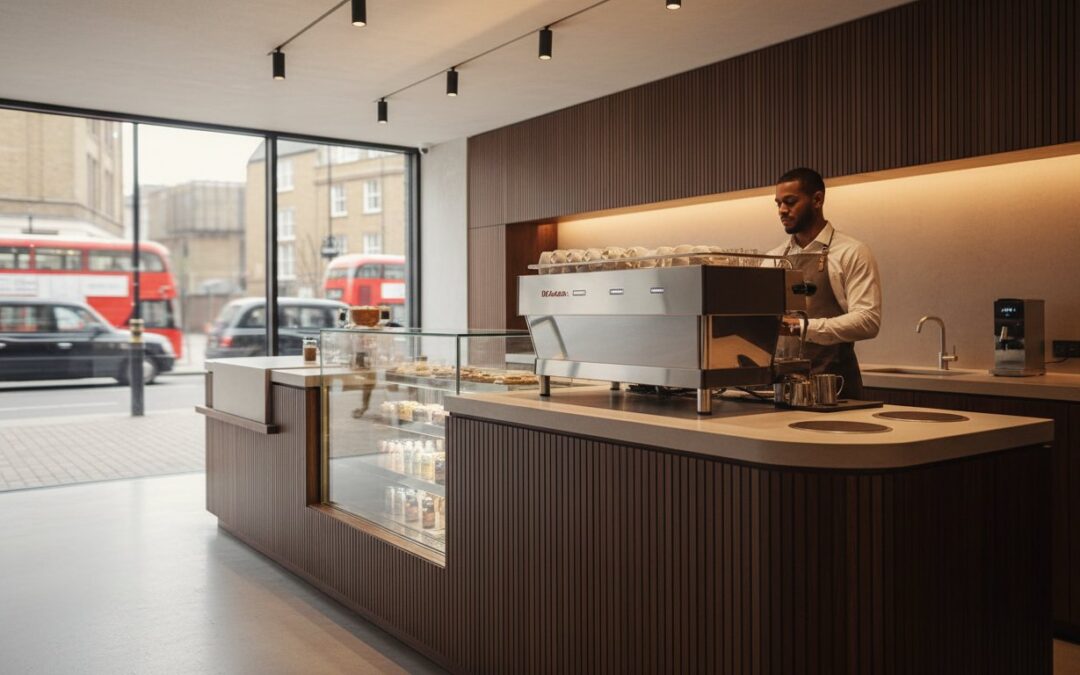
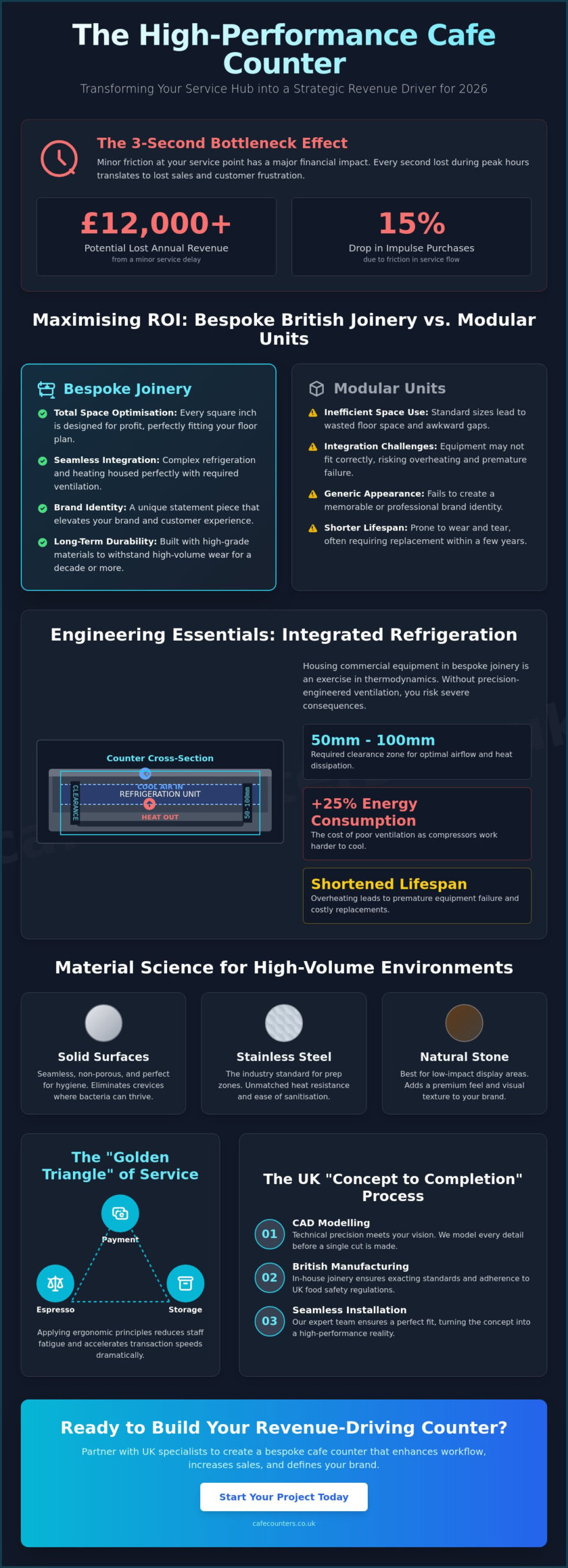
Could a three-second bottleneck at your cafe counter be costing your business over £12,000 in lost annual revenue? Industry benchmarks from 2024 indicate that minor friction in service flow leads to a 15% drop in impulse purchases during the morning rush. You likely already know that a counter is more than just a surface; it’s the engine room of your hospitality space. We understand the pressure of peak hours and the genuine worry that bespoke joinery might fail to house complex refrigeration or that expensive finishes will succumb to high-volume wear within 18 months.
This guide provides the technical roadmap to mastering high-performance design for 2026. You’ll learn how to integrate hot and cold displays seamlessly while ensuring your service point remains ergonomic and robust for the next decade. We will examine the exact specifications required to transform your vision into a high-efficiency revenue driver, moving from initial concept through to final installation.
Key Takeaways
- Understand why your cafe counter is a strategic revenue driver that defines the customer journey and elevates your brand’s professional identity.
- Explore the engineering essentials of housing integrated refrigeration and heating, focusing on the critical ventilation required for high-performance equipment.
- Evaluate the long-term ROI of bespoke British joinery versus modular units to ensure every square inch of your floor plan is optimised for profit.
- Learn to apply the “Golden Triangle” of service design to improve ergonomics, reduce staff fatigue, and accelerate transaction speeds.
- Gain insight into the technical precision of CAD modelling and the advantages of a UK-based “Concept to Completion” manufacturing process.
The Strategic Role of a Cafe Counter in Modern Hospitality
A bespoke cafe counter functions as the operational heart of a hospitality business, acting as much more than a simple point of sale. It serves as the primary touchpoint where brand identity meets functional efficiency. In 2026, the design of this central hub dictates the entire customer journey, from the initial visual impact upon entry to the speed of the final transaction. The history of the coffeehouse reveals a long tradition of social interaction, but modern requirements demand a sophisticated balance between this heritage and rigorous commercial performance.
Successful operators now view the counter as a strategic tool to manage footfall and increase secondary spend. By 2024, industry data indicated that well-designed display zones could increase impulse purchases by up to 22% compared to traditional, flat-fronted designs. This shift requires a meticulous approach to zoning, ensuring that the “wow factor” of high-end aesthetics never compromises strict UK food safety compliance or the ergonomic needs of the baristas. Our approach focuses on a logical progression, guiding the customer through the space while providing the team with a robust, high-performance workspace.
Beyond the Till: The Multi-Functional Service Hub
Modern service environments must accommodate a hybrid of service styles. Whether managing a rapid grab-and-go morning rush or a relaxed sit-down experience, the counter structure must adapt. We’ve seen a 30% increase in requests for “theatre kitchen” elements, where the preparation process is visible to the guest, fostering trust and showcasing craftsmanship. Achieving this requires seamless technology integration. Recessed payment terminals and hidden cable management systems are now standard requirements for maintaining a clean, professional appearance that doesn’t distract from the artisanal quality of the product.
Material Selection for Durability and Hygiene
The choice of material is a critical decision that impacts both long-term operational costs and food safety ratings. While natural stones offer a prestigious look, engineered solid surfaces and stainless steel are often preferred for their superior durability in high-volume UK environments. Non-porous materials are non-negotiable for meeting British food hygiene standards, as they prevent the absorption of liquids and the growth of harmful pathogens.
- Solid Surfaces: These provide a seamless finish that eliminates crevices where bacteria can thrive.
- Stainless Steel: This remains the industry standard for high-intensity prep zones due to its heat resistance and ease of sanitisation.
- Natural Stone: Best utilised in low-impact display areas where the visual texture adds to the brand’s premium feel.
Food-grade materials are specifically engineered substances that are non-toxic and non-absorbent, ensuring they provide a stable surface that prevents cross-contamination and withstands rigorous commercial cleaning protocols. Selecting these materials isn’t just a design choice; it’s a fundamental requirement for meeting the Food Standards Agency’s stringent hygiene criteria. Our in-house manufacturing process ensures that every cafe counter we produce adheres to these exacting standards, providing a turnkey solution that is as safe as it is stunning.
Technical Specifications: Integrating Refrigeration and Heating
Engineering a high-performance cafe counter involves far more than selecting attractive timber or stone finishes. It’s a complex exercise in thermodynamics. Housing commercial-grade refrigeration within bespoke joinery presents significant challenges, primarily regarding heat dissipation. When a cooling unit is encased in a custom counter, it generates substantial exhaust heat. If this heat isn’t managed, the compressor works harder, leading to a 25% increase in energy consumption and a significantly shortened lifespan for the equipment. Our British-led manufacturing process ensures that every counter includes precision-cut ventilation grilles and dedicated airflow channels, maintaining the 50mm to 100mm clearance zones required for optimal performance.
Energy efficiency isn’t just a sustainability goal; it’s a strategy to protect your margins. By 2026, operational costs in the UK hospitality sector are projected to remain a primary concern for 82% of business owners. Integrating high-specification insulation and energy-efficient compressors reduces long-term overheads. We often recommend a hybrid approach for modern service workflows. By incorporating refrigerated grab and go display units directly into the main counter run, operators can cater to both seated diners and the high-speed takeaway market. This dual-service model has been shown to increase average transaction values by 12% in recent high-street retail trials.
The Science of Food Display Temperature Control
Maintaining the cold chain is a non-negotiable legal requirement. We distinguish between forced-air and static cooling based on your specific menu. Forced-air systems use internal fans to circulate chilled air, which is vital for open-front displays where ambient air constantly enters the unit. Static cooling is gentler, making it the preferred choice for delicate patisserie that might dry out under constant airflow. Adhering to modern Coffee shop design standards ensures that digital controllers are positioned for easy staff monitoring. These systems provide real-time data to ensure food remains between 2°C and 5°C, providing a robust audit trail for health and safety compliance.
Integrating Heated Elements for Hot Food Service
Adding hot food capabilities requires a meticulous approach to “heat bleed.” When a heated bain-marie or ceramic hot plate sits next to a chilled sandwich display, the temperature gradient can compromise both units. We solve this by installing 20mm thermal breaks and high-density insulation between sections to ensure the fridge doesn’t work 40% harder than necessary. For those focusing on hot breakfast or lunch trades, our Vision Heated Counters offer the latest in heated gantry technology, using quartz lamps to maintain a core product temperature of 63°C or above. If you’re unsure which technical configuration suits your site, you can speak with our expert consultants to refine your specification.
Bespoke Design vs. Modular Solutions: Maximising ROI
Choosing between a bespoke cafe counter and a modular off-the-shelf unit is a critical decision that impacts your bottom line for a decade or more. While modular units offer a lower initial entry price, they often represent a false economy. These mass-produced units typically rely on thinner laminates and inferior internal structures that fail under the rigours of a high-volume UK high street environment. Replacing a failing counter after just 24 months costs significantly more than investing in a robust, British-manufactured solution from the start.
Bespoke manufacturing eliminates the “dead space” that plagues modular installations. In a typical London or Manchester retail unit where every square foot carries a high premium, losing 5% of your floor plan to awkward gaps is a costly mistake. Custom designs allow us to wrap the counter around structural pillars or integrate it into uneven alcoves, ensuring your operational footprint is 100% efficient. This precision allows for better staff movement and faster service times during the morning rush.
Customisation: Tailoring the Counter to Your Menu
Your menu should dictate your counter, not the other way around. A complex offering requires specific ergonomic zones to maintain a steady flow of service. We design dedicated areas for high-speed coffee production, separate from quiet zones for delicate patisserie handling. If your business focuses on fresh food, our deli counter guide explains how to specify the correct refrigeration and display heights for maximum visibility. Every millimetre of the cafe counter is engineered to house your specific equipment, from recessed knock-boxes to integrated induction hobs.
The Aesthetic Advantage of Bespoke Manufacturing
Visual identity is your strongest marketing tool. Bespoke design allows for the seamless integration of brand colours, textures, and lighting that modular units simply can’t match. We use directional LED lighting and premium tactile finishes to guide the customer’s journey toward high-margin items. Data suggests that a thoughtfully designed, bespoke counter can increase impulse purchase rates by up to 30% compared to standard configurations. This aesthetic consistency builds trust, projecting an image of a prestigious establishment that values quality in every detail.
Our in-house manufacturing process ensures that your brand’s unique signature is etched into the very fabric of the shopfit. Whether it’s integrated digital signage or hand-finished timber cladding, the result is a functional piece of furniture that serves as the heartbeat of your business. By choosing bespoke, you aren’t just buying a surface; you’re investing in a durable asset that’s built to withstand the demands of the 2026 hospitality market.
Ergonomics and Customer Flow: Optimising the Service Point
The cafe counter serves as the operational engine room where precision meets profitability. Getting the dimensions right isn’t just about aesthetics; it’s about the physical endurance of your team and the speed of your service. A standard work surface height of 900mm is the industry benchmark for food preparation, yet we often specify a raised customer ledge at 1150mm. This height difference creates a professional boundary that conceals the functional “mess” of coffee grounds and milk jugs from the guest’s view. If a counter’s depth exceeds 800mm, baristas are forced to overstretch, which can lead to a 15% reduction in drink output during the frantic UK morning rush.
We focus on the “Golden Triangle” of cafe service: the seamless connection between the espresso machine, the till, and the food display. In a high-performance environment, these three points should ideally be positioned within a three-metre radius. This layout minimises the “dance” baristas must perform, ensuring they spend more time engaging with customers and less time navigating around one another. By spec’ing a cafe counter with these ergonomic principles in mind, you’re investing in a workspace that supports long-term operational health.
Designing for Staff Efficiency
Efficiency is won or lost in the inches between the barista and the back-bar. We manufacture bespoke back-bar units to house secondary equipment like grinders and blenders, keeping the main service area clear for transactions. Strategic placement of integrated waste chutes and knock boxes can save a server up to 500 steps during a standard eight-hour shift. Our turnkey approach ensures that storage for cups, lids, and stirrers is built directly into the unit, keeping high-turnover items within arm’s reach at all times.
Managing the Customer Journey
A well-designed layout dictates movement without the need for intrusive signage. By positioning the chilled food display before the till, you capitalise on the 22% increase in average transaction value typically seen when customers are prompted visually before they pay. Clear sightlines are essential; guests should be able to view the full product range from the moment they join the queue. We ensure the “Grab & Go” impulse section is located within the final metre of the journey to maximise last-minute additions to the order.
- Linear Flow: Prevents bottlenecks by moving customers in one direction from entry to collection.
- Accessibility: Compliance with the Equality Act 2010 is a non-negotiable standard. We include a lowered section at 760mm height for wheelchair users.
- Collection Zones: Dedicated areas for mobile orders prevent “counter crowding” and keep the main till area clear.
Inclusive design is a hallmark of a prestigious establishment. Beyond legal requirements, a lowered counter section signals that your brand values every guest. It’s a small but significant detail that reflects the quality of a truly professional build.
Concept to Completion: The UK Manufacturing Process
Choosing a UK-based manufacturer provides a level of quality control that overseas imports cannot match. By centralising production in British facilities, we maintain total oversight of every weld, joint, and finish. This proximity reduces lead times significantly, often by 4 to 6 weeks compared to international shipping schedules. It ensures that your cafe counter is built to withstand the rigours of 2026 hospitality standards. Our end-to-end approach eliminates the friction between design and execution, providing a single point of accountability. This turnkey methodology covers everything from the initial site survey to the final commissioning, ensuring no detail is overlooked during the transition from paper to the shop floor.
The Role of Advanced CAD Modelling
Precision begins long before the first piece of timber or steel is cut. We use advanced 3D CAD modelling to create a digital twin of your service environment. This stage is critical for identifying potential clashes with existing plumbing or electrical circuits that might otherwise cause delays during the build. Visualising the final product helps stakeholders understand the flow of the room before any physical work starts. It ensures that all commercial refrigerators fit perfectly into their designated apertures with the necessary airflow clearances. Technical precision at this stage reduces on-site waste by 15% and guarantees a seamless fit for bespoke components.
Installation and Technical Commissioning
A professional installation is the final bridge between a design and a functional business. Our specialist teams manage the entire physical setup, arriving on-site with a deep understanding of the project’s technical requirements. Technical commissioning is a vital part of this process. It involves testing every integrated component to ensure it meets the manufacturer’s exact specifications and local safety regulations. We don’t just place equipment; we ensure it’s ready for peak-time service.
A standard commissioning checklist includes:
- Leveling the cafe counter structure to prevent drainage issues and surface wear.
- Verifying power loads for heavy-duty coffee machines and grinders.
- Testing temperature pull-down times for integrated cooling units.
- Ensuring ergonomic heights align with staff safety and accessibility guidelines.
High-quality installations rely on skilled tradespeople who have undergone rigorous preparation. For those entering the field or looking to refine their expertise, YTA Training provides the accredited construction courses necessary to ensure every shopfitting project is completed to a professional standard.
Once the counter goes live, our commitment continues through bespoke after-sales support and planned technical maintenance. This proactive approach prevents downtime and ensures your investment remains a high-performing asset for years to come. We believe that a project isn’t finished when the installers leave; it’s finished when your business is thriving and your staff are operating at maximum efficiency.
Securing Long-Term Performance Through Expert Specification
Investing in a high-specification cafe counter is more than an aesthetic choice; it’s a strategic decision that dictates your operational efficiency and long-term profitability. By integrating advanced refrigeration technology and prioritising ergonomic flow, you create a workspace that supports your staff while enhancing the customer experience. Choosing a bespoke solution over modular alternatives ensures your investment is protected by durability and precise technical alignment.
At Cafe Counters, we’ve been refining our UK-based manufacturing processes since 1991 to deliver excellence across the hospitality sector. We use advanced CAD modelling for every project to ensure total accuracy before a single piece of material is cut. Our signature Concept to Completion service means we handle everything from initial design to final installation, removing the stress from your renovation or new build. Whether you’re upgrading a high-street retail unit or a prestigious healthcare facility, we provide the technical expertise required to turn your vision into a robust, functional reality.
Discuss your bespoke cafe counter project with our expert design team today and take the first step toward a more efficient service point. We look forward to building something exceptional with you.
Frequently Asked Questions
How much does a bespoke cafe counter cost in the UK?
Prices for a bespoke cafe counter in the UK vary based on material and size, but a standard 3-metre unit typically starts around £4,500. High-spec installations featuring premium stone and integrated technology often exceed £12,000. We provide transparent, itemized quotes that cover the full concept to completion journey. This ensures your investment aligns with both your operational needs and your budget without hidden surprises.
Do I need a separate refrigerated unit or can it be built into the counter?
You can integrate refrigeration directly into your cafe counter to create a seamless, ergonomic workspace. Built-in units save floor space and improve staff efficiency by keeping chilled items within arm’s reach. We often specify drop-in chilled displays or under-counter drawers that maintain a sleek aesthetic. This approach eliminates the cluttered look of standalone appliances and creates a more prestigious, professional customer experience.
What are the most durable materials for a high-traffic cafe counter?
Solid surface materials like Corian and engineered quartz are the most durable options for high-traffic environments. These non-porous surfaces resist staining and withstand the 2,000 plus daily interactions common in busy city-centre locations. Stainless steel remains the industry standard for internal carcasses and food preparation areas due to its hygiene properties. We select materials that offer a robust lifespan of 10 to 15 years under heavy commercial use.
How long does the design and manufacturing process typically take?
A standard bespoke project typically takes between 6 and 10 weeks from the initial design consultation to the final installation. The design phase usually spans 2 weeks, followed by 4 to 6 weeks for in-house manufacturing in our British workshop. We manage the entire timeline to ensure your site is ready for opening day. This structured approach prevents delays and ensures every technical detail meets our high quality-control standards.
What are the UK food hygiene requirements for cafe counters?
UK food hygiene regulations, specifically EC 852/2004, require surfaces to be easy to clean and, where necessary, easy to disinfect. Your cafe counter must feature smooth, washable, and non-toxic materials like high-grade laminates or stainless steel. We design every unit with coved internal corners and minimal seams to prevent bacteria buildup. This meticulous attention to detail ensures your business remains compliant with local Environmental Health Officer inspections.
Can a bespoke counter be moved if my business relocates?
While we design bespoke counters for specific spaces, we can manufacture them in modular sections to facilitate future relocation. If you anticipate a move, we use a bolt-together construction method rather than permanent site-fixing. This allows our team to dismantle the unit and reinstall it in a new premises with minimal disruption. It’s a practical way to protect your long-term capital investment as your business grows and evolves.
How do I choose between a curved or straight counter design?
Choose a straight counter if you need to maximize throughput and simplify queue management in a narrow space. Straight designs are often more cost-effective and provide a clear, logical path for the customer journey. Curved designs work best in larger, open-plan areas where you want to create a softer, more prestigious aesthetic. We use 3D CAD modeling to show how each shape impacts the flow of your specific cafe counter layout.
What is the ideal height for a commercial service counter?
The standard height for a commercial service counter is 900mm to 950mm for general preparation and service. To comply with the Equality Act 2010, you must also include a lower section at 760mm for wheelchair users. This dual-height approach ensures your cafe is accessible to all customers while maintaining an ergonomic height for your staff. We specify these dimensions to balance operational comfort with legal accessibility requirements.