
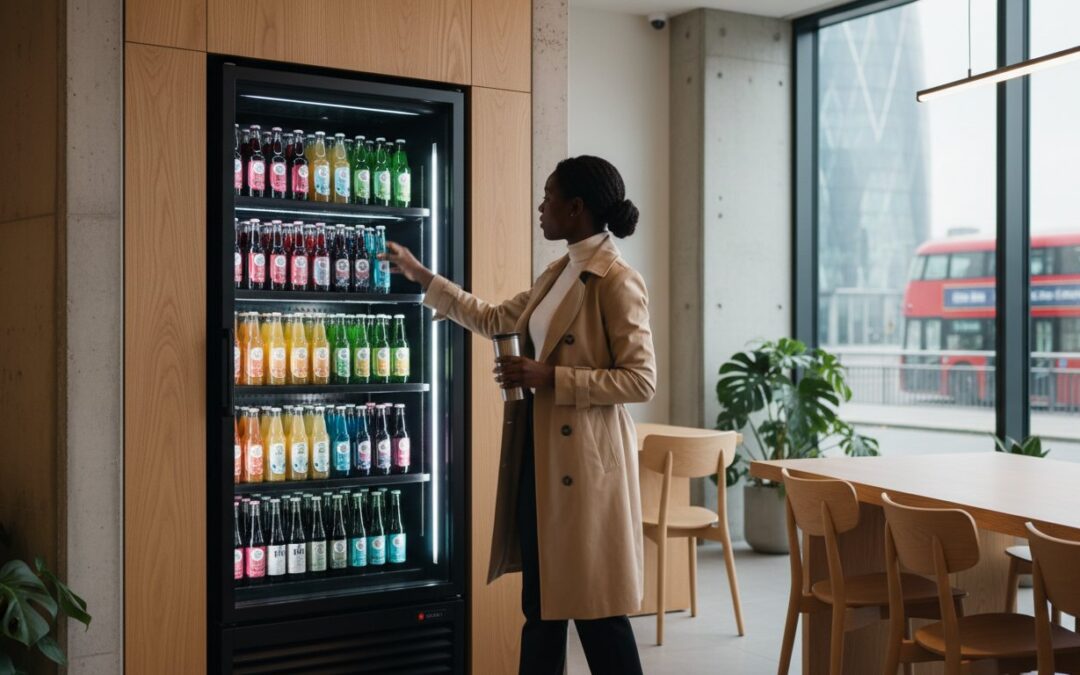
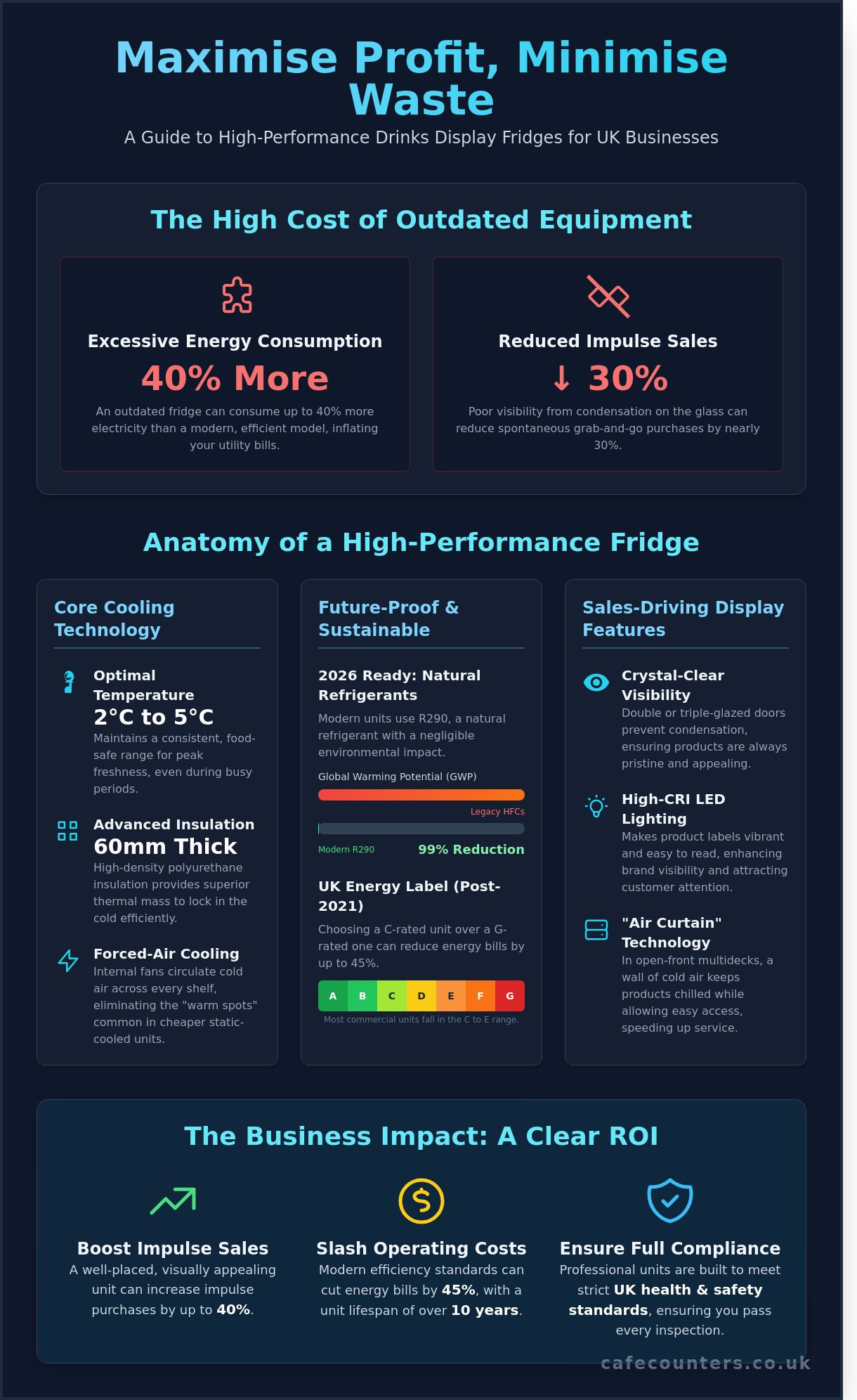
Did you know that an outdated or poorly maintained drinks display fridge can consume up to 40% more electricity than a modern high-specification model, while condensation on the glass can reduce impulse sales by nearly 30%? It’s a common frustration for UK business owners who watch their profit margins vanish into rising energy bills or find their cafe’s atmosphere disrupted by a noisy, struggling compressor. You understand that in a competitive retail environment, your products must look pristine and your equipment must operate with quiet, reliable efficiency.
We’ve designed this guide to help you select, position, and maintain a robust unit that drives grab-and-go sales while ensuring peak energy performance. By choosing a solution that aligns with the latest 2026 energy standards and British manufacturing quality, you can secure a stunning visual display that lasts for over a decade. We’ll walk you through the technical essentials of shopfitting, from achieving a seamless aesthetic to the practical steps of ensuring total food safety compliance.
Key Takeaways
- Understand the psychology behind the UK’s “grab-and-go” culture and how to position your equipment to capture maximum impulse revenue.
- Navigate the latest 2026 energy standards by adopting natural refrigerants and forced-air technology that ensure consistent cooling and lower utility bills.
- Identify the most effective drinks display fridge configuration for your space, comparing the high-impact visibility of multidecks with the efficiency of hinged or sliding doors.
- Apply professional merchandising principles like colour-blocking and height-optimised shelf placement to turn casual browsers into paying customers.
- Learn the long-term operational advantages of investing in bespoke British manufacturing and a seamless “Concept to Completion” installation service.
What is a Drinks Display Fridge and Why Does Your Business Need One?
A professional drinks display fridge is a specialised refrigerated unit engineered specifically for high-visibility beverage retail. Unlike standard back-of-house units, these machines serve as a silent salesperson in your shop, cafe, or restaurant. The UK grab-and-go market is thriving, with the food-to-go sector projected to reach £23.5 billion by 2027 according to IGD data. This growth is driven by a consumer culture that demands speed, convenience, and immediate visual satisfaction.
Domestic refrigeration simply cannot cope with the rigours of a commercial environment. While a home fridge is designed to be opened a few times a day, a retail unit might face fifty door openings every hour during a lunch rush. Commercial cooling technology is built for rapid temperature recovery, ensuring that even with constant use, your stock remains at a safe and refreshing 2°C to 5°C. Relying on inferior equipment leads to lukewarm products and potential health and safety breaches.
The link between product visibility and profitability is well-documented. Strategic placement of a well-stocked unit can boost impulse purchases by as much as 40% in convenience settings. By presenting your inventory at eye level with professional lighting, you directly increase the average transaction value (ATV) of every customer who walks through your door. It’s a fundamental component of modern retail design that turns a simple beverage into an irresistible purchase.
Core Benefits of Professional Display Refrigeration
- Thermal Stability: Advanced compressors maintain consistent internal temperatures despite high footfall and frequent access.
- Brand Authority: High-grade stainless steel and tempered glass finishes project an image of quality and reliability to your clientele.
- Regulatory Compliance: These units are designed to meet strict UK health and safety standards, ensuring your business passes every inspection with ease.
The Difference Between Merchandisers and Storage Fridges
Storage units prioritise volume and insulation, whereas merchandisers prioritise the sale. A professional drinks display fridge utilizes high-CRI LED lighting to ensure product labels are vibrant and easy to read. To maintain this clarity, manufacturers use double or triple glazing to prevent condensation from forming on the glass during humid British summers. In open-front multideck models, sophisticated “air curtains” circulate a wall of cold air across the front of the unit. This technology keeps the stock chilled while allowing customers to grab their drinks without opening a door, streamlining the service process during peak hours.
Understanding the Mechanics: Cooling Technology and Energy Efficiency
By 2026, the transition to natural refrigerants like R290 is a fundamental requirement for sustainable retail. These hydrocarbon gases offer a Global Warming Potential (GWP) of just 3, which is a 99% reduction compared to legacy hydrofluorocarbons. A high-performance drinks display fridge relies on forced-air cooling to maintain a consistent environment between 2°C and 5°C. This system uses internal fans to pull air over the evaporator and distribute it across every shelf. It eliminates the “warm spots” often found in cheaper, static-cooled units. High-density polyurethane insulation, typically 60mm thick, provides the thermal mass needed to hold these temperatures during peak trading hours or short power interruptions.
The technical standards for retail food refrigeration equipment provide a framework for these specifications, ensuring that stand-alone units meet rigorous environmental benchmarks. When you examine the UK Energy Label, the A-G ratings offer a transparent look at annual overheads. Since the 2021 rescaling, an ‘A’ rating represents the absolute pinnacle of efficiency, while most commercial units sit within the C to E range. Choosing a C-rated unit over a G-rated alternative can reduce your carbon footprint and energy bills by as much as 45%.
Energy Efficiency and MEPS Standards in 2026
Minimum Energy Performance Standards (MEPS) ensure that inefficient cooling systems are phased out of the UK market. To understand the true value of your investment, you must calculate the Total Cost of Ownership (TCO) over a five-year period. This formula adds the initial purchase price to the projected energy costs and routine servicing. Daily electricity consumption is significantly lower in modern units because of EC (Electronically Commutated) fans and LED lighting. These components consume 70% less energy than traditional parts and emit less heat, which means the compressor doesn’t have to work as hard. If you’re looking to upgrade, our specialists can help you select the right specification to balance performance with low running costs.
Maintenance for Longevity and Performance
The condenser coil acts as the lungs of your refrigeration system. If dust and grease block this component, the compressor works 30% harder to dissipate heat, leading to inevitable mechanical failure. You should also inspect magnetic gaskets monthly for splits or hardening. A compromised seal allows cold air to leak, which can increase energy consumption by 20% overnight. Replacing a worn gasket is a simple, cost-effective way to protect your stock and your bottom line. A well-maintained UK-manufactured unit typically lasts ten to fifteen years.
Selecting the Right Configuration: Doors, Multidecks, and Drop-ins
Choosing the correct setup for your drinks display fridge depends entirely on your site’s floor plan and customer flow. Hinged doors provide a classic, high-end feel but require at least 600mm of clearance for the door swing. In tight London cafe layouts, sliding doors remove this obstacle entirely; they allow for a double-door footprint in a corridor as narrow as 1.2 metres without obstructing the walkway. We’ve seen a shift where 40% of new urban fit-outs now prioritise these space-saving sliding mechanisms to maintain a fluid customer journey.
High-traffic urban centres have seen a 15% increase in the installation of refrigerated grab and go display units since 2023. These open-front systems eliminate the physical barrier between the product and the shopper, prioritising speed of service during peak lunch hours. The choice between a slimline single-door unit and a wide-span double-door model often comes down to your peak-time volume. A double-door unit offers roughly 900 litres of capacity, which is essential for businesses serving over 200 customers per hour.
The Multideck vs. Glass Door Debate
Multidecks excel in high-volume environments where rapid stock turnover is the priority. While they lack a physical barrier, modern air-curtain technology helps maintain a consistent 2°C to 4°C range. Glass doors offer superior energy retention, often reducing electricity consumption by 35% to 45% compared to open units. This makes them the logical choice for premium delis stocking delicate craft beers or organic juices that require absolute temperature stability. Convenience stores often find a hybrid approach works best, using multidecks for high-turnover water and sodas, while using glass-door units for premium dairy or alcoholic beverages.
Specialised Display Options
Effective space management requires looking beyond standard floor-standing models. Counter-top units allow cafes to showcase high-margin items like £4.50 bottled cold-brew coffees directly at the point of sale. For businesses with limited floor space, a compact fridge for commercial use can be tucked under the counter to keep backup stock chilled without cluttering the front-of-house. This ensures your primary drinks display fridge remains fully faced-up and visually appealing at all times.
Integrating your refrigeration into a bespoke deli counter creates a seamless aesthetic that standalone units cannot match. Custom drop-in units, which sit flush with the counter surface, provide a prestigious look that justifies higher price points for artisanal products. This concept to completion approach ensures your refrigeration works in harmony with your shopfitting. It transforms a functional appliance into a key design feature that reinforces your brand’s commitment to quality and craftsmanship.
Strategic Merchandising: Maximising Revenue through Display
Your drinks display fridge is a silent salesperson that works hardest when its contents are arranged with psychological precision. The “Eye Level is Buy Level” principle remains the gold standard in retail; placing premium, high-margin beverages at the 1.5 metre mark ensures they’re the first items a customer sees. Lower shelves should house larger multi-packs or budget options, providing a visual anchor without distracting from the most profitable stock. We recommend colour-blocking to create a cohesive visual story. By grouping products by brand or liquid colour, you reduce the shopper’s cognitive load, making the selection process feel effortless rather than overwhelming.
Lighting plays a transformative role in how customers perceive freshness. High-CRI (Colour Rendering Index) LEDs, specifically those with a rating above 90, ensure that the vibrant reds of colas and the deep greens of healthy juices appear saturated and appealing. Research from the Point of Purchase Advertising International (POPAI) shows that a well-lit display can increase impulse beverage sales by up to 30%. Beyond illumination, digital shelf-edge labelling allows for real-time price updates and promotional messaging, ensuring your value proposition is always clear and professional.
Optimising the Customer Journey
Strategic placement is essential for capturing the 68% of shoppers who make unplanned purchases. Positioning your drinks display fridge near the point of sale (POS) taps into the “grab and go” mentality of the modern consumer. To maintain the integrity of your stock, your team must strictly follow the FIFO (First In, First Out) method during every restock. This ensures the coldest bottles are always at the front, ready for immediate consumption. We advise maintaining a sense of planned abundance; shelves should look plentiful to signal variety, yet leaving a 2cm gap above the bottle tops prevents the unit from looking cramped or difficult to navigate.
Seasonal and Trend-Based Display Changes
A static display is a missed opportunity. Retailers should pivot their inventory to match the British seasons, prioritising 500ml water bottles and isotonic drinks during July heatwaves, then transitioning to ginger-based health shots and vitamin-boosted juices as winter approaches. There’s a growing demand for authenticity; highlighting local British beverage brands or products with 100% recyclable glass packaging caters to the 55% of UK consumers who now prioritise eco-friendly credentials. This meticulous attention to detail transforms a standard cooling unit into a high-performing retail asset.
The TFSE Advantage: Bespoke British Manufacturing and Installation
Selecting a drinks display fridge involves more than picking a model from a digital catalogue. At TFSE, we operate on a “Concept to Completion” philosophy. This approach eliminates the common pitfalls of sourcing from multiple vendors, such as misaligned dimensions or conflicting technical specifications that can delay a project by an average of 15 working days. By managing the entire lifecycle in-house, we provide a single point of accountability that ensures your retail vision translates perfectly into a functional physical space.
The durability of our equipment stems from our commitment to British manufacturing. While mass-produced imports often rely on thin plastics and low-grade alloys, we utilise heavy-duty 304-grade stainless steel fabrication. This material choice isn’t just about aesthetics; it’s about longevity. A TFSE unit is engineered for a 12 to 15-year operational lifespan, significantly outperforming cheaper alternatives that often require replacement within 36 months due to structural fatigue or cooling failure.
Our bespoke designs are particularly effective for businesses operating within the UK’s 374,000+ listed buildings. These historic structures often feature uneven floors, narrow alcoves, and restricted ventilation paths that standard units simply cannot accommodate. We solve these architectural puzzles by tailoring the chassis of every drinks display fridge to the specific constraints of your site, ensuring a seamless fit that maximises every square centimetre of high-value floor space.
In-House CAD Modelling and Design
Visualising your retail layout before manufacture is essential for ensuring perfect ergonomics and customer flow. Our design team uses advanced 3D CAD modelling to create a digital twin of your environment. This allows you to test the placement of equipment and refine how staff interact with the unit during peak hours. We don’t believe in “one size fits all” finishes. We customise every surface to match your brand’s unique colour palette, ensuring the refrigeration integrates flawlessly into your bespoke cafe counter system. This creates a unified, prestigious look that reinforces brand authority.
Expert Installation and After-Sales Support
A high-performance fridge only works if it’s commissioned correctly. Our turnkey service includes professional on-site installation where our engineers calibrate gas pressures and verify airflow patterns to meet strict F-Gas regulations. This precision setup can improve energy efficiency by up to 18% compared to DIY installations. Because our manufacturing base is in the UK, we maintain a comprehensive inventory of spare parts. You won’t face the 6-week lead times associated with overseas shipping. We provide the technical expertise and rapid response times required to keep your business running without interruption.
Contact TFSE Products for a bespoke drinks display consultation today to discuss your project requirements with our expert design team.
Future-Proofing Your Retail Space with Precision Engineering
Selecting the right drinks display fridge is a critical decision that impacts both your bottom line and your brand’s visual identity. By integrating advanced cooling mechanics with strategic merchandising layouts, you’ll drive immediate revenue growth and ensure your 2026 operational targets are met. Since 1991, Cafe Counters has provided 35 years of British manufacturing expertise to the UK’s most demanding retail and hospitality sectors. We don’t just supply equipment; we act as your expert partner throughout the entire journey. Our advanced CAD modelling provides a detailed digital preview of your bespoke project before any manufacturing begins. This precision ensures that your final installation is both robust and perfectly tailored to your floor plan. Through our comprehensive Concept to Completion service, we handle every technical detail so you don’t have to worry about the complexities of a renovation or new build. It’s time to invest in a solution that combines prestigious design with long-term durability. Explore our range of British-made display solutions to start your transformation today. We’re ready to help you create a retail environment that truly performs.
Frequently Asked Questions
What is the best temperature for a drinks display fridge?
The ideal temperature for a drinks display fridge is between 2°C and 5°C to ensure beverages remain crisp and refreshing for customers. Setting the unit within this specific range complies with UK Food Standard Agency guidelines for chilled storage. Maintaining this consistent thermal environment prevents bacterial growth and extends the shelf life of dairy-based beverages or fresh juices.
How much electricity does a commercial drinks fridge use per day?
A standard double-door commercial drinks fridge typically consumes between 4kWh and 8kWh per day. Based on 2024 UK business energy averages of 25p per kWh, this results in a daily running cost of approximately £1.00 to £2.00. High-efficiency models using R290 refrigerant can reduce this consumption by up to 35% compared to older units manufactured before 2020.
Can I use a domestic fridge for my cafe or shop?
You shouldn’t use a domestic fridge in a commercial setting because it isn’t designed to handle frequent door openings or ambient temperatures above 25°C. Commercial units feature powerful compressors that recover temperatures in under 60 seconds after the door closes. Using a domestic appliance in a shop often voids your business insurance and fails to meet the rigorous Health and Safety Executive standards required for retail food hygiene.
What is the difference between a multideck and a glass door fridge?
A multideck is an open-fronted unit designed for rapid grab-and-go sales, whereas a glass door fridge uses a sealed barrier to maintain internal temperatures. Multidecks offer 100% visibility but consume roughly 40% more energy than their glazed counterparts. For 2026 retail layouts, we recommend glass door models to reduce carbon footprints while still providing a professional, high-end display for your beverage inventory.
How often should I clean the condenser on my display fridge?
You should clean the condenser coil on your drinks display fridge at least once every 30 days to prevent dust buildup. Failure to maintain this component forces the compressor to work 20% harder, which can lead to a total mechanical failure within 18 months. Using a soft brush or vacuum to clear debris ensures the unit operates at peak efficiency and protects your long-term investment.
Are open-front drinks fridges being banned due to energy regulations?
Open-front fridges aren’t currently banned in the UK, but they must comply with the strict Ecodesign and Energy Labelling Regulations introduced in March 2021. New units must meet minimum energy performance standards to be legally sold on the British market. Many retailers are voluntarily switching to glass-fronted units to meet net-zero targets and reduce annual electricity bills by up to £450 per unit.
How do I stop my display fridge glass from fogging up?
You can stop glass fogging by installing units with heated glass or double-glazed panes filled with argon gas. Condensation often occurs when the external humidity exceeds 60% or if the door gaskets are worn and leaking cold air. Replacing a damaged magnetic door seal costs approximately £40 to £80 and immediately restores the clear, prestigious look your retail environment demands.
What is the standard width for a commercial slimline drinks fridge?
The standard width for a commercial slimline drinks fridge is between 380mm and 450mm. These compact units are designed for tight footprints where floor space is limited but vertical capacity is needed. A typical 400mm wide model provides enough internal volume to stock up to 150 standard 330ml cans while maintaining a robust, professional presence behind a cafe counter or within a small alcove.