
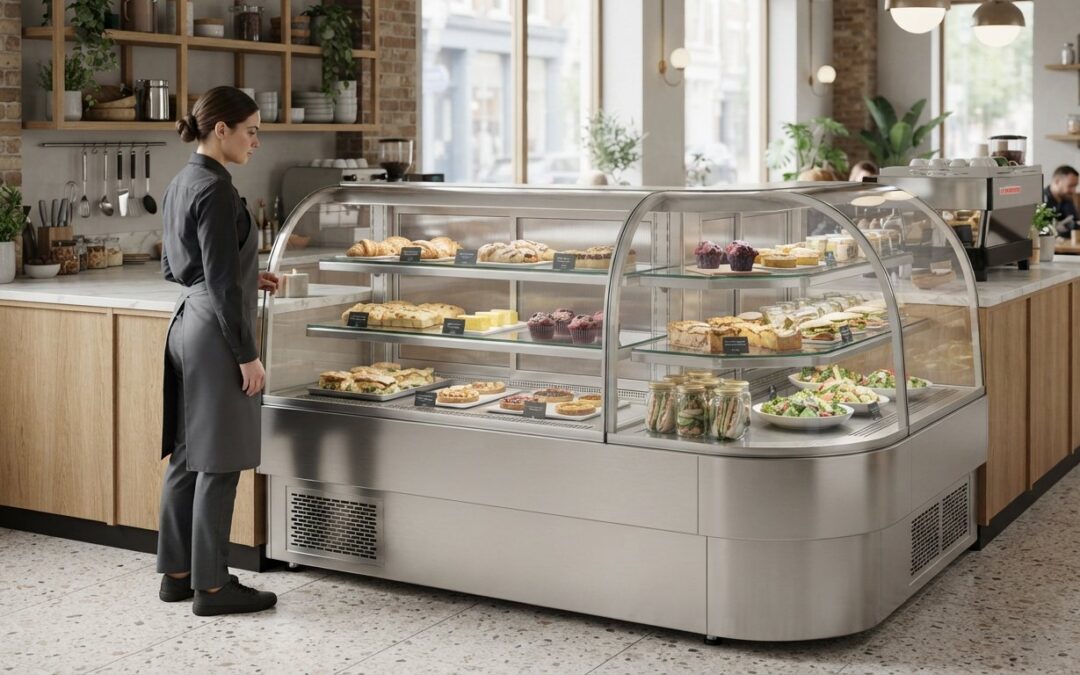
A clip-on acrylic divider isn’t an allergen barrier; it’s a dangerous illusion. When you’re specifying a dedicated food display for vegan and gluten-free products, relying on makeshift counter partitions leaves your business vulnerable to airborne flour, shared convection currents, and costly regulatory penalties. You already recognise the commercial value of plant-based patisserie and certified free-from items, but balancing customer safety with strict UK Food Standards Agency guidance often feels like an impossible operational compromise.
Real allergen integrity requires purpose-built engineering rather than cosmetic separation. In this buyer’s guide, you’ll discover how to choose certified, cross-contamination-free commercial food display units to safely merchandise vegan and gluten-free foods without compromising your operational flow. We’ll walk you through compliant counter configurations, isolated airflows, and seamless stainless steel fabrication techniques that satisfy Natasha’s Law while driving high-margin impulse sales across your servery.
Key Takeaways
- Understand why standard acrylic dividers fail to prevent airborne flour migration and forced-air gluten cross-contact across shared servery shelves.
- Discover how seamless food-grade stainless steel fabrication and full-height glass screens eliminate microscopic crumb traps in high-volume settings.
- Identify the right food display for vegan and gluten-free products, comparing enclosed patisserie displays, grab-and-go units, and integrated drop-in solutions.
- Learn strategic counter layout methods that isolate sensitive items upstream, streamline service flow, and support strict Natasha’s Law compliance.
- Explore how advanced 3D CAD modelling and British manufacturing deliver bespoke multi-temperature serving counters engineered to protect high-margin free-from items.
Why Vegan and Gluten-Free Displays Require Specialized Commercial Counters
A compliant commercial allergen counter is an engineered containment system designed to eliminate physical transfer and airborne particulate migration. Standard retail showcases often rely on open shelving and shared interior cavities. While this setup works for generic baked goods, housing unpackaged plant-based treats alongside traditional items creates immediate contamination risks. UK consumers actively seek out and pay a premium for verified free-from items, but their trust hinges on absolute visible diligence at the point of sale.
Commercial operators frequently underestimate the physical movement of dry food particles within a servery. When selecting a dedicated food display for vegan and gluten-free products, the counter must do more than simply present items attractively; it must control the microclimate surrounding vulnerable foods.
The Science of Airflow and Crumb Migration in Food Displays
Standard ventilated merchandisers circulate chilled air via powerful internal evaporator fans. In an open pastry case, this continuous circulation picks up dried crust fragments, flaky pastry dust, and airborne flour, distributing them directly onto adjacent shelves. Uncovered items with moist glazes or exposed fillings act as traps for these drifting particles.
Adhering to rigorous food safety principles demands counter architecture that manages air movement deliberately. High-performance displays utilize static cooling decks or isolated internal air circuits. By dampening air turbulence across display tiers, these systems stop flour dust from migrating between segregated zones, keeping sensitive surfaces free from stray particles.
Ethical Plant-Based Merchandising vs Medical Gluten Segregation
Specifying the right counter requires understanding the distinct demands of your customer base. Vegan merchandising centers on ethical separation; plant-based diners expect clear, dedicated presentation zones free from animal fats, meat gravies, or dairy drips. A clear visual barrier reassures them that tongs, crumb trays, and display tiers remain uncontaminated by animal products.
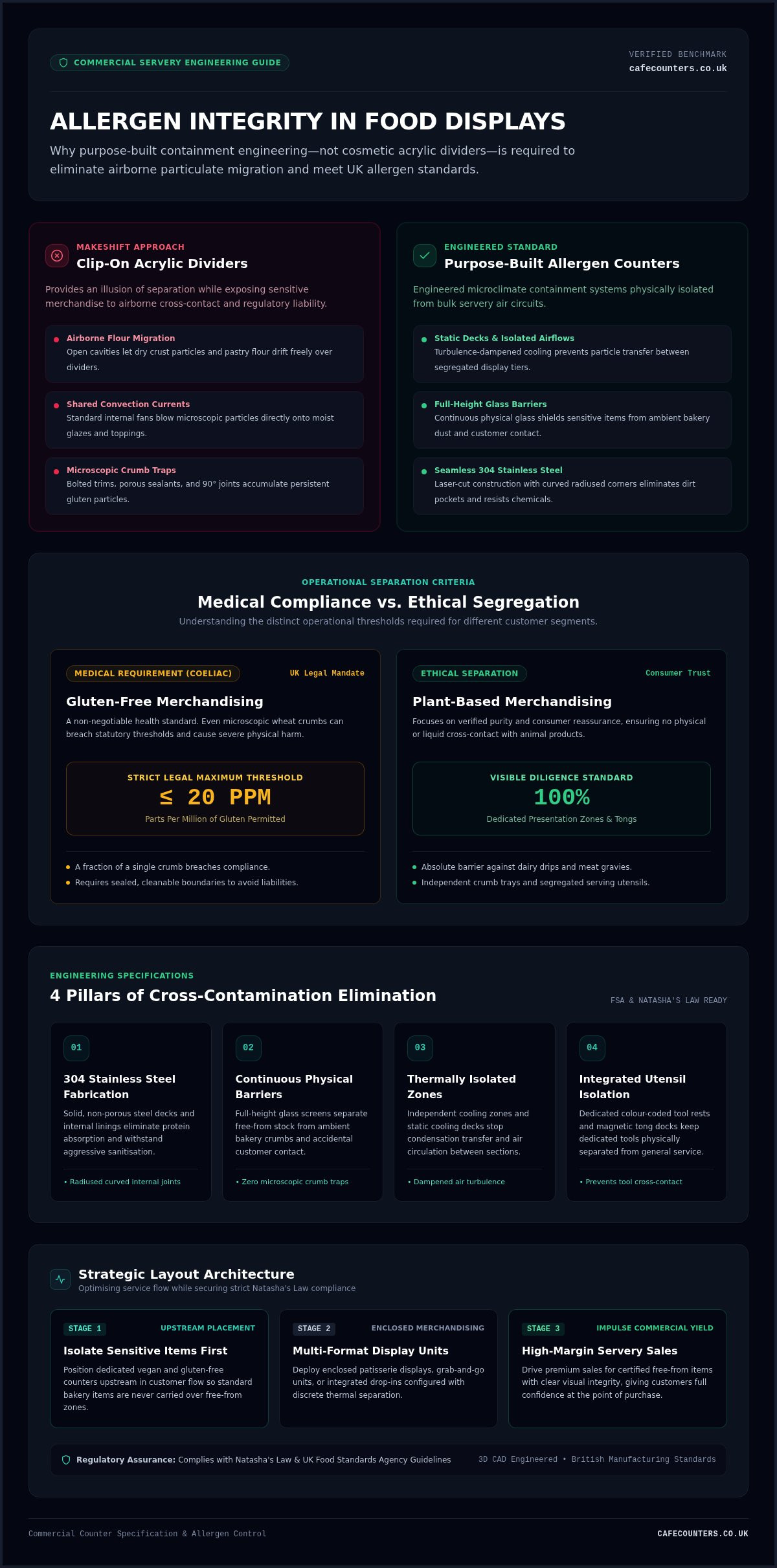
Gluten-free merchandising, however, is a non-negotiable medical requirement. For customers managing coeliac disease, UK regulations mandate that food sold as gluten-free must contain no more than twenty parts per million (20 ppm) of gluten. In a mixed-use retail environment, a fraction of a single wheat crumb can breach that legal threshold. Installing a purpose-built food display for vegan and gluten-free products establishes sealed, cleanable boundaries that safeguard vulnerable customers and shield your business from severe non-compliance liabilities.
Key Counter Design Features for Eliminating Cross-Contamination
Translating back-of-house hygiene protocols to customer-facing serveries requires purpose-built engineering. Off-the-shelf merchandisers often rely on bolted trims, porous sealants, and partial partitions that make cross-contact inevitable during peak service. When designing a high-performing food display for vegan and gluten-free products, four mechanical design features turn an ordinary counter into an impervious allergen barrier:
- Food-grade stainless steel fabrication: Solid, non-porous 304-grade steel decks and interior linings prevent protein absorption and endure aggressive chemical sanitisation.
- Continuous physical barriers: Full-height glass screens separate free-from stock from ambient bakery crumbs and accidental customer contact.
- Thermally isolated compartments: Independent cooling zones prevent condensation transfer, aroma migration, and air circulation between distinct dietary sections.
- Integrated utensil management: Dedicated, colour-coded tool rests and magnetic tong docks keep dedicated utensils physically isolated from general service items.
Hygienic Materials and Seamless Stainless Steel Construction
Microscopic crevices are the primary culprits behind persistent gluten contamination. Fasteners, exposed bolt heads, and silicone seals trap microscopic flour dust, making comprehensive sanitisation nearly impossible. Specifying laser-cut, seamless food-grade stainless steel fabrication eliminates these structural pockets entirely.
Internal display cavities benefit immensely from radiused corners, which replace 90-degree internal joints with smooth, curved transitions. When paired with heavy-duty stainless steel back-bar units, these continuous metal surfaces allow front-of-house teams to complete rapid, thorough sanitiser washdowns between trading shifts without degrading the material finish.
Physical Glass Screens and Separate Service Access Doors
Human error during busy service rushes represents the greatest threat to allergen safety. Partial sneeze screens invite customers to point closely, lean over, or accidentally cross the threshold between display zones. Installing fixed vertical glass partitions that run continuously from the base deck to the counter canopy forms an uninterrupted physical wall between plant-based lines and standard dairy or meat items.
Rear service access requires equal mechanical diligence. Rather than using wide, single-sliding rear doors that expose the entire counter when open, modern counter architecture incorporates independent, rear-loading split doors. Operators can retrieve standard wheat pastries without breaking the sealed micro-environment of adjacent free-from sections. If you’re currently assessing your servery layout, consulting with an experienced counter builder through custom servery counter specialists can help pinpoint precisely where to position these physical boundaries before fabrication begins.
Integrating dedicated tool holders directly into the counter framework completes the system. By giving colour-coded tongs a fixed resting place behind segregated access points, staff naturally maintain separate handling routines without slowing transaction speeds. These deliberate physical configurations protect your brand, reassure diners, and deliver a reliable food display for vegan and gluten-free products that performs under daily commercial pressure.
Evaluating Counter Types for Vegan and Gluten-Free Offerings
Selecting the right commercial counter format depends on your operating model, service pace, and menu structure. A high-turnover city cafe relies on rapid self-service, whereas an artisan bakery trades on the visual theater of delicate, unwrapped bakes. Matching your specific menu items to the correct counter design ensures you deliver a safe food display for vegan and gluten-free products without compromising on presentation or sales velocity.
Three primary equipment categories dominate modern allergen-conscious hospitality:
- Enclosed patisserie displays: Full-glass, service-assisted cabinets that completely protect sensitive, high-margin confectionery from ambient room currents.
- Multi-tier grab-and-go merchandisers: Open-front refrigerated decks designed for high-velocity pre-packaged meal solutions.
- Bespoke combination counters: Tailored serveries integrating chilled, heated, and ambient zones within a unified architectural housing.
Enclosed Patisserie Displays for Artisan Bakes
Delicate gluten-free sponges and vegan pastry crusts dry out far faster than conventional bakes when exposed to forced air. Dedicated patisserie displays solve this by utilizing controlled convection or static cooling, which preserves essential product moisture while stabilizing internal temperatures. Precision-engineered LED lighting highlights glossy vegan ganaches and intricate piping without introducing thermal radiant heat that causes plant-based fats to melt or sweat. For high-ticket items like vegan afternoon tea selections, an enclosed glass vitrine elevates presentation while creating a sealed perimeter against stray gluten dust.
Refrigerated Grab-and-Go Units for Pre-Packaged Safety
Merchandising individually sealed goods eliminates front-of-house cross-contact entirely. Operators shifting toward fast-casual service often specify refrigerated grab and go display units to drive daytime trade. These open-front multidecks maintain uniform curtain airflow, holding salads, wraps, and cold-pressed juices consistently below 5°C. By keeping sensitive items safely sealed behind pre-printed ingredient labels, high-traffic venues eliminate the operational risk of staff using the wrong serving tongs during busy lunch rushes.
Chilled Deli Counters and Salad Bars for Fresh Assembly
Custom build-your-own concepts present unique operational challenges because open food pans sit adjacent to active assembly boards. Specifying commercial deli counters and salad bars with integrated drop-in units allows you to physically isolate sensitive fillings. Deep, individual gastronorm wells paired with independent acrylic lids prevent ingredient spillage from wheat pastas into raw plant-based proteins. When paired with high-performance sneeze screens, these setups give staff a clean, segregated workflow for fresh sandwich and bowl preparation, satisfying customer demands for complete visibility and certified dietary safety.
How to Plan Your Counter Layout for Flow, Safety, and Natasha’s Law
Preventing cross-contamination requires strategic spatial planning long before metalwork begins. Merely placing an allergen-safe case at the end of an existing run invites operational failure during peak service hours. A compliant food display for vegan and gluten-free products demands a methodical, step-by-step layout framework:
- Step 1: Map your menu matrix: Catalogue all ingredients and identifying points where dairy, eggs, nuts, and gluten intersect with sensitive lines prior to locking in counter footprints.
- Step 2: Position sensitive displays upstream: Place free-from zones ahead of conventional bread slicing and high-crumb pastry stations along the customer journey.
- Step 3: Integrate compliance hardware: Engineer permanent ticketing channels directly into shelf nosings to satisfy Prepacked for Direct Sale (PPDS) regulations.
- Step 4: Establish segregated service lanes: Design physical operator routes with dedicated back-bar preparation boards, sanitisation stations, and tool rests.
Zoning Strategy: Upstream Placement Against Crumb Fall
Crumb drift follows the path of customer movement and prevailing room ventilation. Placing your dedicated free-from display downstream from traditional bread slicing stations or under direct HVAC air diffusers exposes unpackaged bakes to circulating wheat dust. Locate sensitive display units to the far left of the customer queue or elevated in the visual line of sight before standard pastry cases. This orientation prevents accidental handling transfer, reassures diners instantly, and positions high-margin vegan and gluten-free items at prime decision-making points.
Ticketing, Labelling, and Natasha’s Law Integration
UK food safety regulations under Natasha’s Law mandate that PPDS foods display full ingredient lists with the 14 major allergens emphasized. Adhesive stickers often curl, peel, or leave gummy residue on refrigerated glass shelves during daily sanitising schedules. Instead, specify counters fabricated with integrated extruded aluminium or stainless steel ticketing channels. These sleek, cleanable rails accommodate legible, branded cards detailing full ingredient profiles, enabling effortless compliance without compromising presentation aesthetics.
Physical workflow engineering protects your staff from high-pressure errors. When customer queues lengthen, forcing an operator to cross active pastry zones to reach a vegan bake creates risk. By establishing independent service access points paired with isolated sanitising wells, your servery functions smoothly under pressure. To start refining your shopfloor footprint with engineered floor plans, request a bespoke counter layout consultation and safeguard your allergen-safe operation from the ground up.
Commissioning Bespoke Counter Solutions with TFSE Products
Off-the-shelf display cabinets rarely solve the structural challenges of allergen containment. Established in 1991, TFSE Products Ltd manufactures high-performance serving counters and display architecture designed specifically around British hospitality requirements. By combining in-house metal fabrication with tailored refrigeration engineering, we transform complex hygiene regulations into elegant, highly profitable retail displays.
Every commercial floor plan presents distinct spatial restrictions. Rather than forcing your menu into standard catalogue footprints, our design team uses advanced 3D CAD modelling to map out segregated servery zones before metal is cut. This technical approach guarantees that your food display for vegan and gluten-free products delivers flawless physical separation while blending into your broader shop aesthetic.
Precision Engineering for Complex Hospitality Demands
Developing a multi-temperature servery requires balancing distinct thermal dynamics within a unified chassis. Our design team integrates ambient patisserie cases, heated gantries, and chilled drop-in units side by side without heat bleeding into delicate cold zones. Each cabinet profile is engineered using food-grade stainless steel fabrication, eliminating the microscopic gaps and silicone seals where flour particulates typically settle.
Air movement receives the same meticulous attention. We calibrate gentle, low-velocity static cooling coils for exposed plant-based and gluten-free pastries, ensuring delicate bakes retain crumb moisture without forced fans blowing dust across internal dividers. The resulting counter protects sensitive lines while presenting high-margin items under warm, energy-efficient LED profiles that entice customers.
Seamless UK Installation and Turnkey Service
A successful commercial servery installation demands complete operational continuity. TFSE Products provides an end-to-end turnkey service, managing the full project lifecycle from initial nationwide site surveys through precision factory assembly to delivery and commissioning. Our dedicated installation engineers handle on-site electrical positioning, structural alignment, and refrigeration validation across the UK.
Before handover, our technical specialists run comprehensive thermal cycle tests to verify that all refrigerated sections hold stable temperatures below critical thresholds under operating conditions. This methodical commissioning process ensures that every bespoke food display for vegan and gluten-free products complies with UK safety standards from the moment your doors open. When you are ready to elevate your servery, discuss your counter requirements with TFSE Products to build a safe, compliant, and beautifully engineered display.
Transform Your Servery into a Safe, High-Margin Showcase
Protecting vulnerable diners while maximising plant-based and gluten-free sales requires deliberate engineering rather than cosmetic guesswork. By eliminating crumb traps with seamless fabrication, isolating internal airflows, and zoning your layout upstream, you turn complex allergen compliance into a distinct commercial advantage.
Investing in a dedicated food display for vegan and gluten-free products safeguards your customers and reinforces your reputation for quality. As a privately owned British catering equipment manufacturer established in 1991, TFSE Products combines advanced 3D CAD modelling with precision stainless steel fabrication to resolve complex servery challenges. From initial site surveys through to turnkey nationwide delivery, installation, and technical commissioning, our engineers deliver complete operational reliability at every stage.
Ready to upgrade your servery layout? Explore bespoke allergen-safe food display counters with TFSE Products and build a counter run where every customer orders with total confidence.
Frequently Asked Questions
Can gluten-free and standard pastries be displayed in the same counter?
Yes, but only if physical separation and airflow containment are engineered into the counter design. You cannot simply leave them side by side on open trays. Unwrapped gluten-free items require completely segregated zones, sealed glass partitions, and dedicated service utensils. If forced-air refrigeration circulates through a shared internal volume, airborne flour crumbs will settle on sensitive foods, breaching legal gluten-free thresholds.
How do I prevent cross-contamination in an open grab-and-go display?
Pre-packaging every individual item is the most reliable method for open-front merchandisers. Individually wrapped wraps, salads, and baked goods prevent physical contact and accidental product drops between shelf tiers. When specifying an open food display for vegan and gluten-free products, position certified gluten-free lines on top shelves above standard sandwiches so falling debris cannot contaminate packaging seals.
What are the legal requirements for displaying vegan and allergen-free food under UK law?
Prepacked for Direct Sale foods must display full ingredient listings with the 14 major allergens emphasized under Natasha’s Law. For non-prepacked foods sold loose from display serveries, allergen information must be immediately available, with the Food Standards Agency recommending clear written records. Claiming an item is gluten-free legally mandates gluten levels remain strictly below twenty parts per million.
Does a display counter need separate refrigeration circuits for gluten-free sections?
Complete separate circuits are not mandatory, but air distribution paths must be physically isolated. Standard forced-fan coils pull air across every shelf, carrying fine particles between sections. Installing dual-zone counters with dedicated evaporators or pairing static chilled wells with independent airflow dampers ensures cold air cycles within isolated compartments without transferring gluten dust or meat aromas.
What is the best way to clean and sanitise stainless steel displays between allergen services?
Use a two-stage cleaning protocol that physically removes protein residues before applying sanitiser. Wipe non-porous 304-grade stainless steel surfaces using clean microfibre cloths and a dedicated degreasing detergent to lift oils and flour dust. Follow with an approved food-safe disinfectant. Never use compressed air or dry dusting brushes, as these methods scatter allergen particles back into the servery atmosphere.
Can I retro-fit physical glass dividers into an existing commercial display counter?
Retro-fitting temporary acrylic dividers into standard cabinets rarely creates an airtight seal. Surface clamps and slotted brackets leave microscopic gaps where fine crumbs accumulate, making full sanitisation difficult. While basic screens deflect direct coughs, they don’t stop fan-driven air circulation. Commissioning a purpose-built food display for vegan and gluten-free products with bonded, full-height glass partitions provides lasting compliance.
How do I showcase vegan food without making standard menu items look unappealing?
Focus on balanced architectural presentation rather than treating plant-based foods as a secondary afterthought. Use matching stainless steel display decks and consistent warm LED lighting temperatures across both sections. Highlighting vibrant vegan ingredients with bespoke serving risers and sleek metal ticketing rails creates an integrated, premium aesthetic that appeals to ethical diners while maintaining the visual draw of your traditional bakes.