
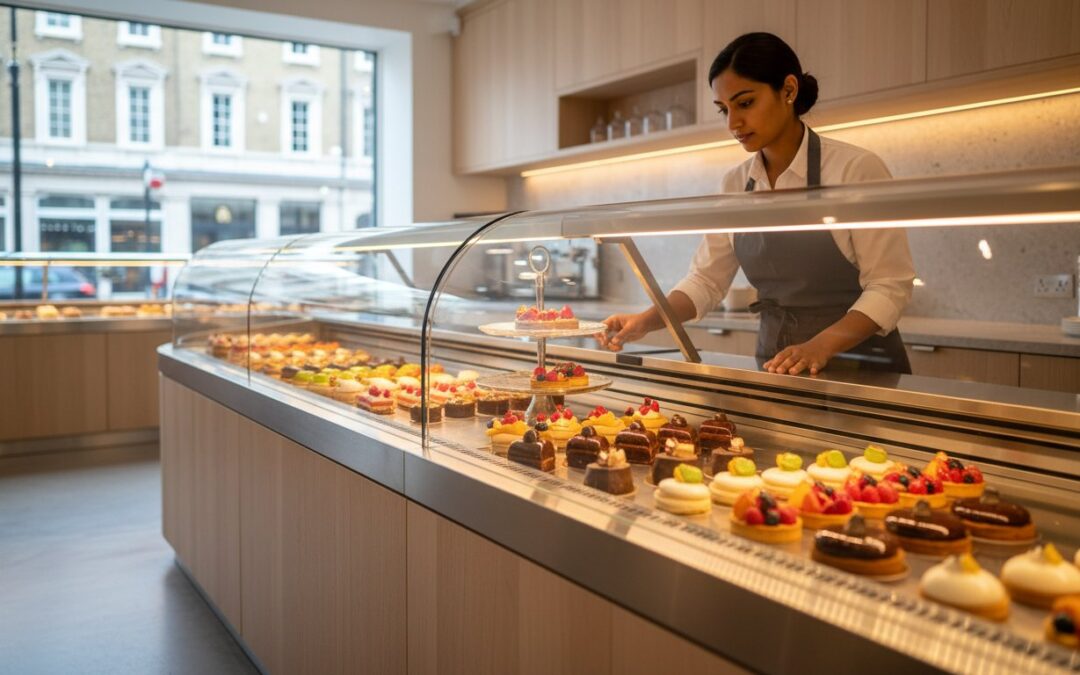
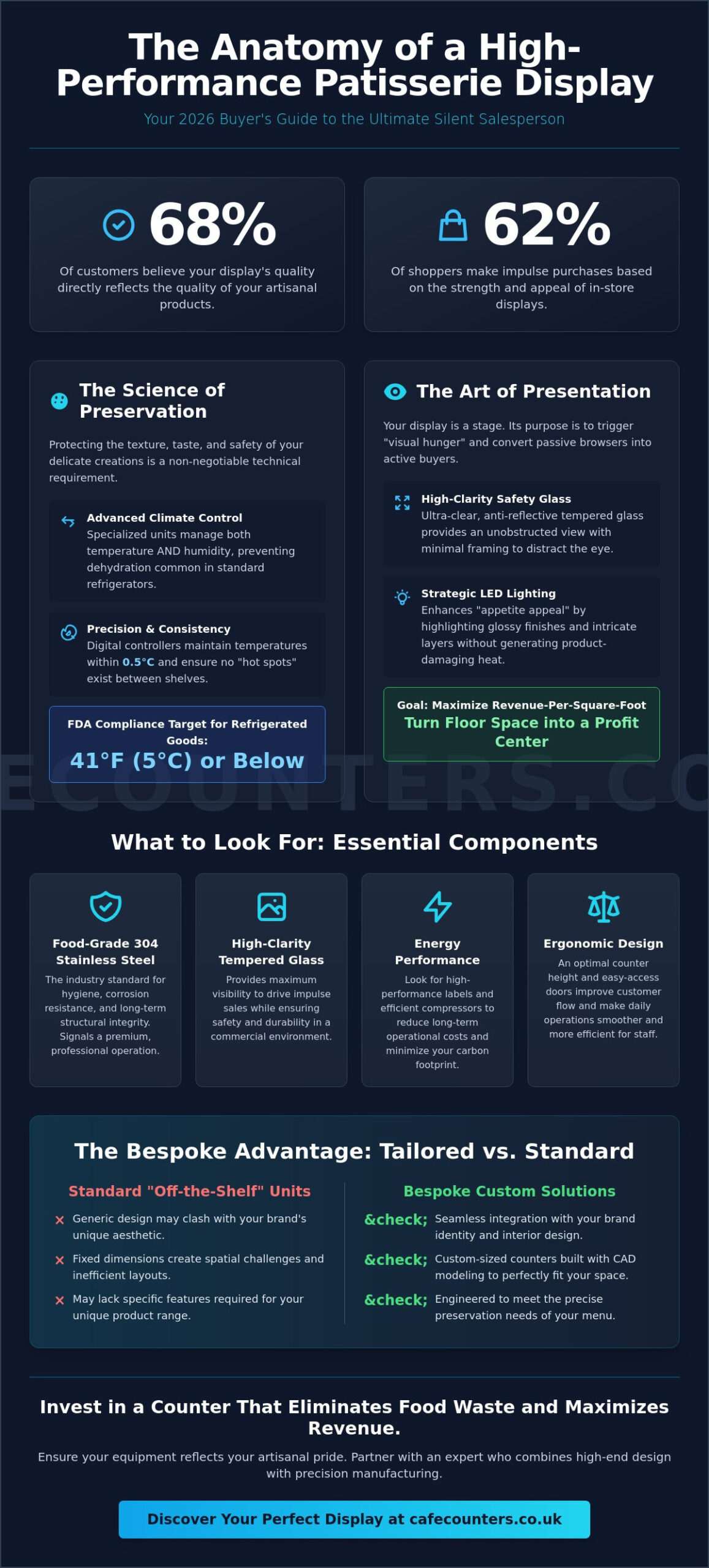
Did you know that 68 percent of customers believe the quality of your shop’s physical displays directly reflects the quality of your artisanal products? Your counter isn’t just a cooling unit; it’s a precision-engineered stage that dictates whether a shopper makes an impulse purchase or walks away. When you are deciding what to look for in a patisserie display, it’s natural to feel the pressure of balancing aesthetic charm with rigorous technical demands. You need a reliable partner that understands how to protect your delicate creations while reducing the stress of commercial management.
We agree that high energy costs and poor humidity control are significant hurdles for any modern bakery. This 2026 buyer’s guide provides the clarity you need to choose a high-performance display that preserves product texture and drives sales. We’ll examine the critical technical specifications required for FDA compliance, such as maintaining a consistent 41°F environment, alongside the bespoke design features that align with your brand identity. From food-grade 304 stainless steel interiors to advanced climate control systems, you’ll learn how to invest in a counter that eliminates food waste and maximizes your revenue through superior presentation.
Key Takeaways
- Understand how high-clarity safety glass and strategic lighting act as a silent salesperson to trigger visual hunger and drive impulse purchases.
- Learn to distinguish between the specific humidity requirements for ambient and refrigerated pastries to prevent dehydration and preserve delicate textures.
- Identify why food-grade 304 stainless steel is the essential material for maintaining hygiene standards and ensuring long-term structural integrity.
- Discover what to look for in a patisserie display regarding energy performance labels and ergonomic heights that optimize both customer flow and operational costs.
- See how bespoke CAD modeling and custom-sized counters solve spatial challenges and ensure your equipment integrates seamlessly with your brand’s unique aesthetic.
Beyond the Glass: Why Your Patisserie Display is Your Silent Salesperson
A patisserie display is much more than a standard refrigerator; it’s a high-visibility retail instrument engineered specifically for the delicate nature of fine confectionery. While its primary technical job is to maintain safe food storage temperatures, its commercial role is to act as a silent salesperson. When you are evaluating what to look for in a patisserie display, you must prioritize its ability to trigger “visual hunger.” This psychological response occurs when the clarity of the glass and the precision of the lighting stimulate a customer’s appetite, directly influencing their decision to buy.
Professional standards in a retail environment are maintained through the seamless integration of form and function. A well-designed counter creates a sense of brand authority, signaling to every visitor that your products are handled with the utmost care. Instead of viewing equipment as a simple overhead cost, successful operators analyze the revenue-per-square-foot ROI. A high-performance display maximizes the value of your floor space by converting passive browsers into active buyers through superior product presentation.
The Impact of First Impressions on Brand Quality
The materials used in your display’s construction speak volumes about the ingredients in your pastries. High-quality food-grade stainless steel and ultra-clear tempered glass signal a premium experience, whereas cheap-looking units can increase customer price sensitivity. As your Expert Partner, we combine the vision of a high-end design consultant with the precision of a practical manufacturer to ensure your equipment reflects your artisanal pride. When a display looks professional and robust, it justifies a higher price point for the delicate items housed within.
Maximising Impulse Purchases Through Visibility
Strategic placement within your cafe or shop layout is essential for capturing foot traffic. Industry data indicates that 62 percent of shoppers make impulse purchases based on the strength of in-store displays. To capitalize on this, your display must offer unobstructed views with minimal framing that could distract from the product. Strategic LED lighting plays a vital role here; it enhances the “appetite appeal” by highlighting the glossy finish of a ganache or the intricate layers of a puff pastry. By choosing a unit that prioritizes visibility, you ensure that your craftsmanship is always the focal point of the customer journey.
Thermal Stability and Humidity: The Science of Pastry Preservation
Precision in thermal management is the hallmark of a professional kitchen. While many operators focus solely on cooling, the true secret to longevity lies in the delicate balance of humidity. When you are determining what to look for in a patisserie display, you must move beyond simple thermometers and examine how the unit manages moisture levels. Temperature is only half the battle; humidity is what preserves the soul of your bake.
Standard refrigeration units are often designed for bottled drinks or pre-packaged goods. These units utilize aggressive airflow that strips moisture from the air, which is fatal for a delicate sponge or a cream-filled éclair. This environment leads to rapid dehydration, making the product taste stale within hours. Proper humidity control also prevents the dreaded sugar bloom on fine chocolates and keeps ganache finishes looking vibrant and glossy rather than dull and brittle. By maintaining a stable internal climate, you protect the structural integrity of your most sensitive items.
Consistency across all tiers is equally vital. A high-performance unit ensures that the temperature on the top shelf is identical to the bottom, preventing “hot spots” that could compromise food safety. Modern 2026 digital controllers now offer precision within 0.5°C, providing the steady, reliable hand needed for temperamental ingredients. This level of control allows you to showcase your craft with total confidence in its freshness.
Refrigerated vs. Ambient: Which Does Your Menu Need?
Your choice depends entirely on your specific product range. Items containing cream, custard, or fresh fruit require strict refrigeration at 41°F (5°C) or below to meet safety standards. Conversely, viennoiserie like croissants or sourdough loaves thrive in ambient conditions where they remain crisp. For many artisanal businesses, a bespoke patisserie display that integrates both refrigerated and ambient sections into a single, cohesive counter is the most efficient and visually stunning solution.
Airflow Mechanisms and Temperature Recovery
Forced air cooling is excellent for rapid temperature recovery after a customer or staff member opens the display. However, it must be balanced with gentle distribution to avoid the drying effects mentioned earlier. Static cooling is gentler but slower to react to external temperature changes. High-performance insulation and triple-pane glass further support this by reducing the workload on the compressor, which minimizes energy consumption and extends the life of your equipment. This logical progression from technical feature to functional benefit ensures your operation remains both sustainable and profitable.
Structural Integrity and Materials: Building for Longevity
Longevity in a high-traffic commercial setting is non-negotiable. While the visual appeal captures the customer’s eye, the internal build quality determines your long-term operational costs and peace of mind. When considering what to look for in a patisserie display, you must look beneath the surface at the materials that provide structural stability. A front-of-house asset is only as reliable as its back-of-house durability. We believe that a counter should be built to withstand the rigors of daily service without compromising its elegant profile.
Internal fabrication relies heavily on the quality of metal used. We specify 304-grade stainless steel because it is essential for longevity in the UK climate, offering superior resistance to corrosion and pitting. This material is non-porous, which prevents bacterial build-up and facilitates effortless cleaning. It also provides the necessary strength to support heavy stone or composite countertops, ensuring the unit remains level and stable over years of service. For a cohesive and hygienic environment, many operators pair these displays with matching stainless steel back-bar units to create a streamlined, professional workflow.
Stainless Steel: The Gold Standard for Hygiene
The use of 304-grade steel isn’t just about strength; it’s about maintaining a sterile environment for your food products. This grade of steel handles frequent sanitisation without degrading, which is vital for meeting modern food safety standards. When your internal components are fabricated from high-grade steel, you reduce the risk of hidden rust or contamination in hard-to-reach corners. This choice reflects a commitment to quality that extends from your kitchen to your customer’s plate.
Glass Options: From UV Protection to Double Glazing
Some competitors advocate for acrylic due to its shatter resistance, but professional-grade glass remains the superior choice for luxury retail environments. Acrylic scratches easily and loses its clarity over time, creating a dull look that can diminish the perceived value of your pastries. In contrast, toughened safety glass maintains a pristine, high-end appearance that is easy to wipe down. When evaluating what to look for in a patisserie display, consider the specific environmental challenges of your shop. UV-filtered glass is a critical feature that prevents product discoloration caused by natural light, protecting the vibrant colors of fruit tarts and delicate macaron shells from fading.
Condensation is the enemy of visibility and sales. Double-glazed units are vital for preventing external “misting,” which can obscure your products and frustrate customers. In high-humidity environments, heated glass technology provides an active solution by keeping the surface clear regardless of external temperatures. These material choices aren’t just about aesthetics; they are about maintaining a perfect window into your craftsmanship. By choosing robust, high-specification materials, you ensure your display remains a reliable partner in your business’s success. This methodical approach to material selection mirrors the precision you bring to your own baking, ensuring a finished physical space that is both beautiful and resilient.
Operational Efficiency: Customer Flow and Energy Performance
A patisserie display should never be treated as an isolated piece of equipment. Instead, it’s a vital component of an integrated counter system that dictates the rhythm of your service. When you are assessing what to look for in a patisserie display, you must consider how its physical dimensions influence the ergonomics of your staff and the movement of your customers. A display that’s too deep can hinder a server’s reach, while one that’s too high might create a visual barrier that disconnects the artisan from the guest. Our methodical approach to design ensures that every millimetre of your counter serves a functional purpose.
In the 2026 commercial landscape, operational efficiency is also measured by environmental impact and running costs. Choosing a unit that meets Enhanced Capital Allowance (ECA) compliance is a strategic financial move that rewards investment in high-performance technology. By looking for energy labels that reflect modern standards, you ensure your business remains sustainable while reducing monthly overheads. Integrating a hybrid model that includes refrigerated grab and go display units alongside your traditional service counter allows you to capture different customer needs without sacrificing the flow of your shop.
Ergonomics and Server Efficiency
Staff comfort directly impacts the speed and quality of service. Rear-loading units are often preferred in busy cafes as they allow for replenishment without interrupting the customer’s view or blocking the aisle. You should also prioritize shelf adjustability. This flexibility is essential for seasonal menu changes, such as accommodating tall tiered cakes during wedding season or dense displays of festive treats. By integrating till points and dedicated prep areas into your bespoke serving counters, you create a seamless workflow that minimizes unnecessary movement and maximizes throughput during peak hours.
Sustainable Cooling and Energy Management
The industry’s shift toward natural refrigerants, such as R290, is a significant step in reducing environmental footprints. These refrigerants offer excellent thermodynamic properties, which lead to lower energy consumption and better temperature stability. Additionally, modern LED lighting serves a dual purpose; it provides brilliant illumination to showcase your work while emitting significantly less heat than traditional bulbs. This reduced heat load means your refrigeration system doesn’t have to work as hard to maintain the set temperature. We take pride in our UK manufacturing facilities, which not only ensures rigorous quality control but also reduces the carbon footprint associated with long-distance delivery. If you are ready to optimize your retail space with high-performance equipment, explore our range of bespoke patisserie displays today.
The Bespoke Advantage: Why Tailored Displays Outperform Standard Units
Standard modular units might appear convenient at first glance, but they frequently lead to dead space and awkward cleaning gaps that compromise both hygiene and aesthetics. When you’re considering what to look for in a patisserie display, the ability to integrate the unit into your specific architectural environment is a significant advantage. A tailored solution ensures that every square millimetre of your retail floor is optimized for revenue, eliminating the inefficiencies often found in off-the-shelf models. This precision is what separates a generic shop from a true destination for artisanal pastry.
Choosing a bespoke approach allows for the seamless integration of unique brand aesthetics. Instead of a generic metal box, your display can feature custom finishes and materials that align perfectly with your shop’s interior design. This level of customization transforms a functional appliance into a centerpiece of your brand identity. Our end-to-end project management, from the initial site survey to final commissioning, alleviates the stress of commercial projects by providing a single, reliable hand to guide the entire process. This Expert Partner approach ensures that your vision is never lost in translation between the design phase and the final physical installation.
Precision Engineering with CAD Modelling
We utilize advanced CAD modelling to visualize your display long before a single piece of steel is cut in our factory. This technical precision ensures that your unit integrates perfectly with existing utilities like floor drains and electrical points, preventing costly on-site adjustments. Virtual modelling also allows us to test customer flow and server ergonomics, ensuring your bespoke cafe counters perform as well as they look. This methodical planning phase is where we translate your vision into a viable, high-performance physical space that supports your team’s daily workflow.
British Manufacturing and After-Sales Support
The reliability of your equipment is underpinned by its origin. Our commitment to British manufacturing means you benefit from localized technical support and the ready availability of spare parts, which is vital for minimizing downtime. We ensure that every display meets rigorous UK health and safety regulations, providing you with total confidence in your operational compliance. This regional pride in craftsmanship means we don’t just sell you a unit; we provide a steady, reliable hand in a complex field. If you’re ready to bring your vision to life with a partner who values precision and quality, contact TFSE Products Ltd for a professional site survey to begin your journey.
Elevate Your Retail Space with Precision Engineering
Selecting the right equipment is a pivotal decision that impacts your daily workflow and long-term profitability. Throughout this guide, we’ve explored how technical stability and bespoke design work in tandem to protect your craftsmanship and drive impulse sales. Knowing what to look for in a patisserie display means prioritizing units that offer both climate precision and seamless aesthetic integration. By focusing on high-grade materials and ergonomic flow, you ensure your counter remains a durable asset for years to come.
Since 1991, we’ve utilized our internal UK-based manufacturing facilities to deliver high-performance solutions tailored to the unique pressures of the commercial retail sector. Every project we undertake begins with advanced CAD modelling to ensure perfect spatial alignment and concludes with our comprehensive installation and commissioning service. This end-to-end approach guarantees that your vision is realized with total technical competence and reliability. Explore our range of bespoke patisserie displays and start your project today. We are ready to help you build a retail environment that truly reflects your artisanal pride and professional standards.
Frequently Asked Questions
Do I need a refrigerated or ambient display for my bakery?
The choice between a refrigerated or ambient display depends entirely on your product ingredients. Items containing dairy, cream, or custard require refrigeration to meet food safety standards, while breads and dry pastries are best presented in an ambient environment to maintain their crust. If your menu is diverse, a bespoke counter integrating both climate zones is often the most efficient solution for your space.
How do I prevent my cakes from drying out in a display fridge?
Preventing dehydration in delicate sponges requires precise humidity management and controlled airflow. Standard refrigeration often utilizes aggressive fans that strip moisture, but a high-performance unit uses gentle distribution to protect the product’s texture. When evaluating what to look for in a patisserie display, ensure the system is designed to maintain a moist environment that prevents cakes from becoming brittle or stale during service.
What is the ideal temperature for a patisserie display?
The ideal temperature for a refrigerated patisserie display is 41°F (5°C) or below. This specific threshold is mandated by food safety regulations to prevent bacterial growth in perishable items like mousses and cream cakes. Maintaining this consistent thermal zone across all shelves ensures that your products remain safe for consumption while preserving the integrity of their delicate ingredients.
How much energy does a commercial patisserie display use?
Energy consumption for commercial displays varies based on size, insulation quality, and the type of refrigerant used. Modern units utilizing natural R290 refrigerants and LED lighting are significantly more efficient than older models. To minimize operational costs, look for equipment that is ECA compliant and features high-performance double or triple-glazed glass to reduce the workload on the compressor.
Can a patisserie display be integrated into an existing counter?
Yes, you can integrate high-performance cooling into existing furniture using specialized drop-in units. These integrate drop-in units allow you to maintain a consistent counter aesthetic while adding professional-grade refrigeration or heating where it is needed most. This approach is ideal for businesses that want to upgrade their display capabilities without undergoing a full shop refit or changing their brand’s visual style.
Is glass better than acrylic for food displays?
Toughened safety glass is the superior choice for professional displays due to its clarity and durability. While acrylic may resist shattering, it scratches easily and can become cloudy over time, which diminishes the visual appeal of your pastries. Glass provides a pristine, high-end finish that is easy to sanitize and maintains its transparency throughout years of heavy commercial use in a busy retail environment.
What maintenance is required for a refrigerated patisserie counter?
Regular maintenance involves cleaning the condenser coils and inspecting the door seals to ensure thermal efficiency. You should also sanitize the food-grade stainless steel interiors daily to prevent bacterial build-up and maintain hygiene standards. Checking the digital temperature controllers periodically ensures the unit continues to operate within the safe parameters required for your specific confectionery items.
How long does it take to manufacture a bespoke display unit?
The manufacturing timeline for a bespoke display unit depends on the complexity of the design and the specific materials required. When you are determining what to look for in a patisserie display, the lead time is a critical operational factor that we manage through a structured project journey. The process begins with meticulous CAD modelling before production starts in our UK facility, ensuring that every technical detail is perfect before installation.