
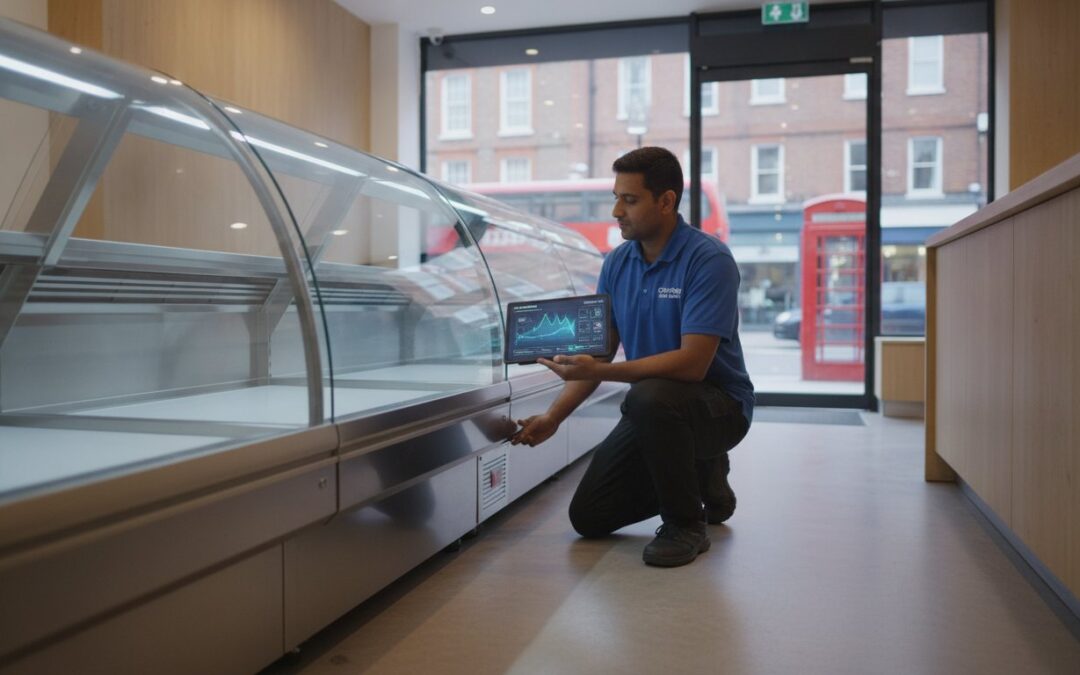
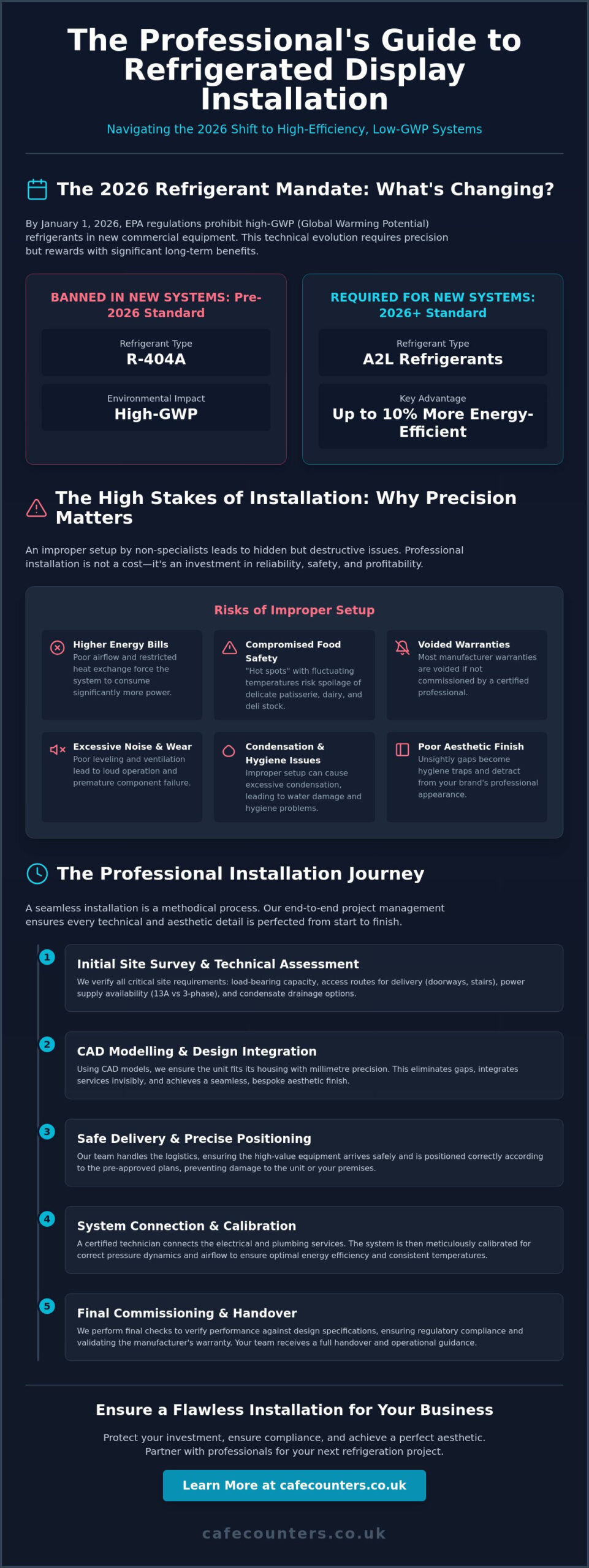
By January 1, 2026, the landscape of commercial cooling shifted permanently as the EPA prohibited the use of high-GWP refrigerants like R-404A in new systems. This means your next refrigerated display cabinet installation must now utilize A2L refrigerants to meet strict AIM Act mandates. While these modern systems require a more meticulous setup and a higher initial investment, they offer the reward of being up to 10% more energy-efficient than previous generations. It is a technical evolution that rewards precision and professional foresight.
We recognize the stress that comes with integrating high-performance equipment into a bespoke shop design. You need the assurance that your patisserie display or deli counter will not only fit your aesthetic vision but also operate with total reliability and regulatory compliance. This guide promises to walk you through the essential technical requirements and planning steps for a seamless transition to 2026 standards. We will preview the critical GWP limits, safety protocols for A2L systems, and the practical steps to ensure your installation protects your stock while enhancing your professional environment.
Key Takeaways
- Understand the critical link between precise calibration and consistent food safety temperatures to protect your inventory and maintain compliance.
- Identify the specific electrical and ventilation requirements needed to prevent equipment failure and ensure long-term operational efficiency.
- Learn how a professional refrigerated display cabinet installation bridges the gap between technical cooling requirements and bespoke shop-floor aesthetics.
- Master the step-by-step journey from initial site surveys and CAD modelling to the final commissioning of your high-performance units.
- Discover the advantages of end-to-end project management through internal production facilities for a truly seamless aesthetic finish.
Professional Refrigerated Display Cabinet Installation: Why Precision Matters
A professional refrigerated display cabinet installation represents the critical bridge between high-end manufacturing and daily operational success. It isn’t merely about positioning a unit on the shop floor; it’s the technical integration of complex cooling systems into a living commercial environment. For 2026, this process has become even more specialized due to the mandated transition to A2L refrigerants and lower Global Warming Potential (GWP) limits. These modern systems operate under different pressure dynamics, making the precision of the initial setup the primary factor in whether your equipment meets its promised energy-efficiency gains or fails under the pressure of a busy service.
Correct calibration ensures that food safety temperatures remain consistent, even during peak hours when doors are frequently opened. When a unit is installed with meticulous attention to airflow and ambient conditions, the compressors and evaporators don’t have to work overtime to compensate for heat ingress. This directly extends the lifespan of these expensive components, preventing the premature wear that often plagues poorly planned retail spaces. We view every installation as a collaborative effort to protect your inventory and your long-term profitability.
The Consequences of Improper Setup
If the setup is rushed or handled by non-specialists, the results are often hidden but destructive. Poor airflow leads to restricted heat exchange, which forces the unit to consume significantly more energy to maintain its set point. Beyond the utility bills, you risk “hot spots” within the case where temperatures fluctuate, potentially compromising delicate stock like patisserie or fresh dairy. We often see units plagued by excessive condensation or loud operational noise, issues that typically stem from poor leveling or inadequate ventilation. Crucially, most manufacturer warranties are voided if the commissioning isn’t handled by a certified professional who can verify the system’s performance against its design specs.
Balancing Aesthetics with Technical Functionality
A high-end display cabinet should look like an intentional part of your brand’s architecture, not a bulky afterthought. Achieving a seamless aesthetic finish requires more than just good looks; it requires deep technical planning. By using CAD modelling during the design phase, we ensure that every refrigerated display cabinet installation fits its housing with millimetre precision. This eliminates unsightly gaps that act as hygiene traps for dust and food debris. It’s about creating a space where the technical requirements of refrigeration are hidden behind a polished, professional facade that encourages customer trust and increases impulse sales. Precision in the planning stage ensures that your bespoke counters and cooling units function as one cohesive, high-performance system.
Technical Site Requirements for Commercial Refrigeration
A successful refrigerated display cabinet installation begins long before the equipment reaches your doorstep. It’s a methodical process of verifying that your physical environment can support the technical demands of high-performance cooling. We often see projects delayed because a doorway was measured without accounting for the frame, or a floor’s load-bearing capacity wasn’t checked for a heavy, stone-clad deli counter. These details aren’t just trivial; they’re the difference between a smooth launch and a costly logistical nightmare. Precision in the pre-installation phase ensures that the delivery and positioning are as seamless as the final design.
Managing condensate water is another critical factor that requires early attention. While some smaller units utilize internal evaporation trays, larger displays or those in high-humidity environments require dedicated floor drains or internal pumps. Planning this plumbing early prevents water damage and hygiene issues down the line. If you’re still in the design phase, our team can help you map out bespoke serving counters that integrate these services invisibly within the counter structure.
Power Supply and Electrical Safety
Most stand-alone patisserie displays run on a standard 13-amp dedicated circuit. However, larger integrated systems or multi-deck units may require hardwired 3-phase power to handle the higher starting currents of industrial compressors. It’s vital that isolation switches remain accessible for maintenance but don’t disrupt the clean lines of your shop floor. We also recommend installing surge protection for the sensitive digital controllers found in 2026 models. These controllers manage the precise temperature cycles necessary for food safety, and they’re vulnerable to the electrical noise often found in busy commercial kitchens.
Airflow and Heat Dissipation
Refrigeration is essentially the process of moving heat from inside a cabinet to the outside air. If your unit is tucked into a “hot spot” near an oven or under direct sunlight, it will struggle to dissipate that heat. This leads to the compressor running constantly, driving up energy costs and risking a total system lockout. Modern A2L systems, governed by updated EPA regulations, include specific safety components like leak detection sensors that require unobstructed airflow to function correctly. When we design bespoke housings, we calculate the minimum clearance for air-cooled condensers and integrate ventilation grilles that maintain the aesthetic while ensuring the hardware breathes. Precision here guarantees that your energy-efficiency targets are actually met in practice.
Bespoke vs. Standard: Integrating Refrigerated Units
Choosing between a standalone unit and a fully integrated solution is often the most significant design decision a business owner makes. Standard units are often marketed as convenient, but they frequently create dead space in high-end cafe layouts, forcing your staff to work around the equipment rather than with it. In contrast, a bespoke refrigerated display cabinet installation allows the cooling technology to disappear into the architecture of your shop. This integration isn’t just about aesthetics; it’s about maximizing every square inch of your floor plan to drive customer flow and increase impulse sales. When your deli counters and patisserie displays align perfectly with your brand’s visual identity, the equipment stops being a tool and starts being a part of the customer experience.
This principle of maximizing space through bespoke design is a universal challenge; for instance, those looking to optimize their home storage can explore Sliding Wardrobes from specialists like Finest Furniture Studio to see how custom solutions eliminate dead space.
The initial investment in bespoke integration often pays for itself through improved operational efficiency and a higher per-customer spend. By eliminating the visual clutter of standalone boxes, you create a premium environment that justifies premium pricing for your products. We find that a cohesive design, where the refrigerated sections feel like a permanent part of the building, builds a level of customer trust that “plug-and-play” units simply can’t match.
Integrating Drop-in Units for a Seamless Finish
Utilizing drop-in refrigerated display units offers the ultimate flexibility for modern retail. These systems require precise cut-outs in the counter substrate, necessitating a high level of coordination between the manufacturer and the installer. We hide technical components like motors and compressors within the counter structure using ventilated acoustic housings. This keeps the front-of-house appearance clean while ensuring the hardware remains cool. Following a professional commissioning guide during this phase ensures that these hidden components still receive the airflow they need to operate within their design parameters. It’s a delicate balance of concealing the mechanics while maintaining easy access for routine service.
Material Synergy in Counter Design
Achieving a professional finish requires a deep understanding of material synergy. We often match stainless steel internal finishes with bespoke exterior cladding like stone, timber, or high-pressure laminates. It’s vital to ensure thermal breaks exist between refrigerated sections and Vision Heated Counters. Without these breaks, heat transfer can compromise the efficiency of your cooling units, leading to increased energy consumption. We use hygiene-grade materials throughout the construction of our bespoke counters to ensure that your display is as easy to clean as it is beautiful. This attention to detail prevents the formation of hygiene traps and ensures your installation remains compliant with food safety regulations for years to come.
The Installation Journey: From Site Survey to Commissioning
A professional refrigerated display cabinet installation is a structured progression that demands technical oversight at every stage. It is the physical realization of weeks of planning and manufacturing. We treat this journey as a methodical transition from a conceptual CAD model to a high-performance piece of equipment that’s ready for the rigors of a commercial environment. Success depends on a strict adherence to a five-step process that ensures your unit is positioned, connected, and calibrated for long-term durability. Our role as your expert partner is to manage these complexities so you can focus on your grand opening with total confidence.
The Importance of the Site Survey
The journey begins with a comprehensive site survey. We verify floor levels and wall verticality with precision because even a slight incline can affect how a unit sits within its bespoke housing. We also identify hidden obstacles such as underfloor heating pipes or electrical conduits that might interfere with drainage or power feeds. A thorough site survey is the single most effective method to prevent unforeseen delays on the day of installation by ensuring the physical environment perfectly matches the engineered design. This level of foresight allows us to adjust the manufacturing of our bespoke serving counters before they ever leave our facility.
Once the site is ready, the physical installation moves through delivery and positioning. We utilize specialized handling equipment to avoid any frame distortion that could compromise door seals. Following positioning, our certified engineers perform the leveling and sealing. This step is critical for hygiene, as it prevents food debris from accumulating in gaps between the unit and the floor. The final stage of the physical setup involves electrical and plumbing connections. Every connection is verified against the original technical specifications to ensure the unit is safely integrated into your building’s infrastructure.
Commissioning and Staff Training
The commissioning phase is where we bridge the gap between hardware and operational performance. We don’t simply turn the unit on and leave. Our engineers conduct rigorous performance testing, including measuring temperature pull-down times and verifying thermostat accuracy against independent probes. This data ensures the refrigeration system is operating exactly as intended before you load your stock. It’s a vital step for warranty validation and helps identify any environmental factors that might affect cooling efficiency.
We conclude the process by training your staff on daily maintenance routines. We demonstrate how to make simple controller adjustments and explain the correct cleaning protocols for condensers and filters. You’ll receive a full set of O&M (Operation and Maintenance) manuals, which are essential for health and safety compliance and future service visits. To see how we bring this level of precision to every project, view our full range of bespoke serving counters and integrated cooling solutions.
Optimising Performance with TFSE Professional Services
Choosing the right partner for your refrigerated display cabinet installation is as vital as the hardware itself. At TFSE, we position ourselves as more than just a supplier; we act as your Expert Partner throughout the entire lifecycle of your project. By managing every stage from the initial design to the final commissioning, we eliminate the friction often found when dealing with multiple contractors. This end-to-end project management ensures that technical requirements never clash with your aesthetic goals. Our clients in the high-end retail and hospitality sectors rely on this methodical approach to deliver spaces that are both visually striking and operationally robust.
Precision is the hallmark of our process. We utilize advanced CAD modelling to verify every dimension of our bespoke cafe counters before a single piece of material is cut. This technical foresight ensures that your integrated cooling units fit perfectly every time, leaving no room for the hygiene traps or dead space that compromise standard installations. It is this commitment to detail that allows us to bridge the gap between complex refrigeration mechanics and high-end interior design, providing a seamless finish that enhances your brand’s physical presence.
Our In-House Manufacturing Capabilities
There is a distinct advantage to working with a UK-based manufacturer rooted in regional artisanal pride. Our internal production facilities allow for total quality control, ensuring that every component meets our rigorous standards for durability and finish. We specialize in customising refrigerated grab and go display units to your specific site dimensions, rather than forcing you to compromise with off-the-shelf sizes. Our facility integrates advanced technology to ensure every unit is optimized for 2026 energy standards, providing you with British-made quality that performs as well as it looks.
Long-Term Support and Maintenance
Our relationship with your business doesn’t end when the installation is complete. We provide the professional commissioning and after-sales support necessary to protect your investment for the long term. By transitioning from a successful installation to a structured preventative maintenance schedule, we help you avoid the stress of emergency repairs and equipment downtime. We remain committed to providing technical advice and genuine spares throughout the life of your equipment, ensuring your shop floor continues to operate at peak efficiency. If you are ready to bring your vision to life with a team that values precision and quality, contact TFSE Products for a professional installation consultation today.
Securing Your Commercial Future with Precision Cooling
Mastering your refrigerated display cabinet installation is about more than just meeting the 2026 EPA standards; it’s about creating a durable foundation for your retail success. We’ve explored how technical site requirements like electrical capacity and airflow directly impact your unit’s longevity. You now understand that a professional commissioning phase is the only way to ensure your equipment operates at its peak energy efficiency from day one.
By choosing an expert partner who manages the process from CAD modelling to final delivery, you eliminate the risks of poor fitment and premature failure. Since 1991, we’ve utilized our UK-based manufacturing facilities to deliver precision-engineered solutions that blend technical excellence with high-end aesthetics. This steady, methodical approach ensures that your shop floor looks as professional as it functions. We include professional commissioning in our service to give you total peace of mind before your first customer walks through the door.
Ready to elevate your display? Discuss your bespoke counter and installation requirements with our experts to ensure your project is handled with total competence and care. We look forward to bringing your vision to life.
Frequently Asked Questions
Do I need a special electrical supply for a refrigerated display cabinet?
Most smaller units like patisserie displays operate on a dedicated 13-amp circuit, but larger integrated systems often require a hardwired 3-phase supply. It is essential to verify your building’s capacity before delivery to ensure the infrastructure can handle the higher starting currents of industrial compressors. We also recommend installing surge protection to safeguard the sensitive digital controllers found in modern 2026 refrigeration models.
How much ventilation does a commercial display fridge actually need?
Air-cooled units typically require a minimum clearance of 50mm to 100mm around the condenser to ensure effective heat dissipation. Without this space, the unit will struggle to move heat away from the cabinet, forcing the compressor to work harder and increasing your energy bills. We calculate these airflow requirements during the CAD design phase to integrate discreet ventilation grilles into your counter structure without compromising the aesthetic.
Can I install a refrigerated display unit myself to save on costs?
We strongly advise against self-installation because modern systems using A2L refrigerants require certified technical handling for safety and compliance. A professional refrigerated display cabinet installation ensures that the unit is correctly leveled, sealed, and calibrated to meet strict food safety regulations. Attempting a DIY setup usually voids the manufacturer’s warranty and risks expensive component failure due to incorrect electrical or drainage connections.
What is commissioning in commercial refrigeration and is it mandatory?
Commissioning is the formal process of testing a system to verify it operates at its specific design parameters, such as temperature pull-down times and thermostat accuracy. While not always a legal requirement for every small unit, it is mandatory for validating manufacturer warranties and ensuring long-term energy efficiency. Our engineers provide a full commissioning report that acts as a performance baseline for your health and safety records.
How do I ensure my bespoke counter can support the weight of a display unit?
Support is managed through the use of structural steel sub-frames and reinforced internal substrates within the counter design. We use CAD modelling to calculate the exact load-bearing requirements for heavy equipment like stone-clad deli counters before manufacturing begins. This methodical approach prevents the counter from bowing or cracking over time, ensuring the structural integrity of your shop floor remains intact for years.
What happens if a refrigerated unit is installed in a room that is too hot?
High ambient temperatures force the refrigeration system to run constantly, which leads to premature compressor wear and significantly higher utility costs. If the room temperature exceeds the unit’s climate class rating, the system may suffer a total lockout to prevent permanent hardware damage. We assess your site’s ambient conditions during the initial survey to ensure your chosen equipment is capable of maintaining safe temperatures in your specific environment.
How long does a typical professional installation take?
A standard professional refrigerated display cabinet installation usually takes between four and eight hours to complete. This timeframe includes the physical positioning of the unit, leveling, final electrical and plumbing connections, and the initial performance testing. More complex projects involving multiple integrated drop-in units or bespoke counter cladding may require additional time, which we always communicate clearly during the project management phase.
How often should I have my installed refrigerated units serviced?
We recommend a professional service every six months to maintain peak operational efficiency and comply with updated 2026 energy standards. Regular maintenance involves cleaning the condenser coils, checking door seals for leaks, and verifying the refrigerant charge levels. This preventative approach identifies minor issues before they become expensive emergency repairs, ensuring your stock remains protected and your equipment lasts well beyond its standard life expectancy.