

92% of UK consumers recognise the Food Hygiene Rating Scheme sticker, and over half will actively check your score before making a purchase. In a competitive high-end market, your refrigerated counter isn’t just a piece of equipment; it’s your most hardworking salesperson. We understand that the fear of a sudden breakdown during a Saturday rush or the anxiety of an unannounced EHO inspection can be overwhelming. Learning how to maintain a deli display case isn’t just about ticking a compliance box. It’s about protecting a significant investment and ensuring your artisanal products are presented with the pride they deserve.
This professional guide provides a methodical approach to technical and hygienic protocols, designed to eliminate downtime and lower your energy bills through peak operational efficiency. We’ll walk you through everything from the legalities of the Food Safety and Hygiene Regulations 2013 to the practicalities of F-Gas compliance and condenser maintenance. By following this structured routine, you’ll transform a complex refrigeration system into a reliable asset that drives impulse sales and secures your reputation for excellence.
Key Takeaways
- Learn how to maintain a deli display case using a methodical checklist that protects your investment and ensures your products remain the focal point of your shop.
- Discover why the condenser coil is the heart of your refrigeration system and how simple cleaning routines can significantly lower your monthly energy expenditure.
- Master the essential temperature monitoring protocols required to satisfy 2026 UK food safety regulations and secure a high Food Hygiene Rating.
- Identify the early warning signs of mechanical distress to prevent emergency breakdowns and avoid the high costs of unplanned call-out fees.
- Understand how choosing UK-manufactured equipment simplifies long-term maintenance through better parts availability and professional commissioning.
The Strategic Importance of Deli Counter Maintenance
Your display counter is far more than a storage vessel; it’s your “silent salesperson” that frames the quality of your craft. When the glass is obscured by smudges or temperature-sensitive products lose their vibrancy, the artisanal pride you’ve invested in your business is compromised. Learning how to maintain a deli display case ensures that your presentation remains as impeccable as your produce. In high-volume UK hospitality environments, the financial impact of equipment failure is severe. Beyond the immediate loss of stock, the reputational damage and the cost of emergency call-outs can significantly disrupt your operational stability.
There’s a direct correlation between component cleanliness and your monthly energy expenditure. Dust-clogged condensers and blocked vents force the system to work significantly harder, leading to inflated utility bills. With the UK’s tightening Energy Performance Certificates (EPC) standards, maintaining efficient refrigeration isn’t just good practice; it’s a commercial necessity for long-term survival.
UK Food Safety and EHO Compliance
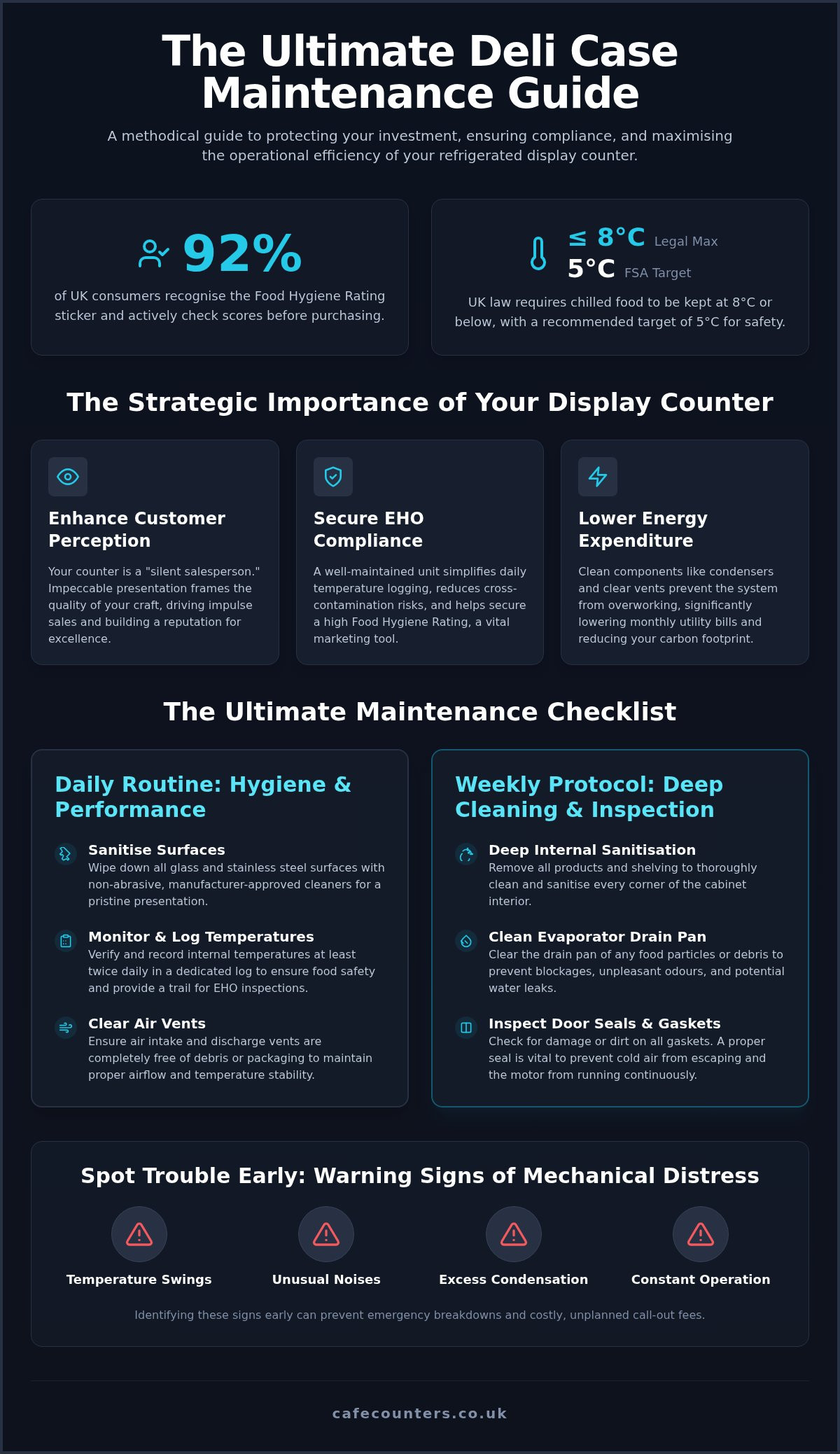
Under The Food Safety and Hygiene (England) Regulations 2013, chilled food must legally be kept at 8°C or below. To ensure a margin of safety, the Food Standards Agency recommends a target of 5°C. A meticulously maintained unit makes the daily task of temperature logging straightforward and reliable. Since 92% of UK consumers recognise the Food Hygiene Rating Scheme (FHRS) sticker, your score is a vital marketing tool. A well-kept counter simplifies inspections and reduces the risk of cross-contamination, ensuring that your deli counters remain a safe environment for high-risk foods.
Maximising Operational Efficiency
Modern refrigeration technology relies on unobstructed airflow to transfer heat effectively. When airflow is restricted, the compressor experiences excessive wear, which drastically shortens the lifespan of even the most robust bespoke serving solutions. This technical strain doesn’t just invite mechanical failure; it increases your business’s carbon footprint. By prioritising regular maintenance, you ensure that UK-manufactured equipment operates at its designed peak, reducing strain on the motor and aligning your shop with current F-Gas regulations regarding refrigerant efficiency. Professional commissioning is the foundation of this process, setting the stage for years of reliable, high-performance service.
The Ultimate Deli Case Maintenance Checklist
Consistency is the cornerstone of equipment longevity. While many operators rely on infrequent, intensive cleaning sessions, a methodical daily and weekly routine is far more effective for preserving the internal components and external aesthetics of your investment. Effective management requires clear accountability. Integrating these tasks into your staff’s opening and closing rotas ensures that no detail is overlooked. When considering how to maintain a deli display case, always prioritise manufacturer-approved cleaning agents. Harsh chemicals can degrade high-end stainless steel finishes and cloud acrylic components, undermining the premium visual impact of your store.
Daily Sanitisation and Temperature Monitoring
Your daily routine should focus on hygiene and immediate performance indicators. Wipe down all glass surfaces and stainless steel decks using non-abrasive cleaners to maintain a pristine presentation. It’s essential to verify internal temperatures at least twice daily. Recording these figures in a dedicated log, ideally a digital one to align with modern enforcement models, helps you adhere to established food safety guidelines and provides a paper trail for EHO inspections. Ensure that both air intake and discharge vents remain completely free from food debris or stray packaging. Even minor obstructions can disrupt the air curtain, leading to temperature fluctuations and increased energy use.
Weekly Deep Cleaning Protocols
Once a week, perform a more thorough internal sanitisation. This requires the complete removal of all products and shelving to reach every corner of the cabinet. Pay close attention to the evaporator drain pan; food particles can often find their way here, leading to blockages and unpleasant odours. Inspecting door seals and gaskets is equally vital. Damaged or dirty gaskets allow cold air to escape, forcing the motor to run continuously. If you notice persistent issues during these checks, it might be time to consult experts in bespoke deli counters to ensure your layout still meets your operational needs.
Monthly Technical Inspections
Monthly tasks move beyond hygiene into technical preservation. Use a vacuum with a brush attachment to clean the condenser coils, as dust buildup is the primary cause of compressor failure. This is also the ideal time to check the integrity of your patisserie display lighting and electrical connections. Finally, test the defrost cycle. Efficient defrosting prevents ice from insulating the evaporator coils, which is crucial for maintaining the precise thermal control required for delicate artisanal goods.
Technical Care for Refrigeration and Electrical Components
While daily cleaning addresses hygiene, technical care protects the mechanical heart of your investment. Understanding how to maintain a deli display case requires a shift from surface-level aesthetics to the complex refrigeration and electrical systems beneath the counter. These components work tirelessly to maintain the precise thermal environments required by FDA safe food storage guidelines and UK safety standards. Neglecting the technical side doesn’t just risk stock loss; it leads to a gradual decline in energy efficiency that erodes your profit margins.
Condenser Coil and Airflow Management
The condenser coil is the primary heat-exchange component that requires monthly vacuuming. It’s the engine room of your display, responsible for releasing the heat extracted from the cabinet. In a busy commercial kitchen, these coils act like a magnet for dust and airborne grease. To clean them safely, disconnect the power and use a vacuum with a soft brush attachment to remove debris. If the fan runs constantly or the unit feels unusually warm to the touch, these are clear warning signs of restricted airflow. Ignoring these symptoms puts immense strain on the compressor, which is the most expensive part to replace.
Gasket Integrity and Door Seal Maintenance
Air leaks are the primary cause of energy waste in refrigerated counters. You can verify your seal’s effectiveness using the “dollar bill test.” Simply close the deli display door on a bank note; if the note slides out easily without resistance, your gasket is no longer airtight. To prevent this, clean seals weekly with mild soap and warm water. Avoid harsh chemicals or bleach, as these cause the material to become brittle and crack. A leaky seal forces the refrigeration system to work twice as hard to compensate for the lost cold air, significantly inflating your utility bills.
Lighting and Glass Care
The visual impact of your display relies on high-quality LED lighting to create the “ambient glow” that drives impulse sales. LED components are durable, but they still require attention to maintain the correct colour rendering for your produce. If you notice flickering or dimming, replace the components immediately to ensure your products look their best. When cleaning curved glass, use dedicated microfibre cloths to avoid unsightly streaks. It’s also vital to protect bespoke counter surfaces from scratches during cleaning; always use soft cloths and ensure no grit is trapped in the fabric before wiping down stainless steel or acrylic finishes.
Technical needs can vary depending on your equipment style. For instance, refrigerated grab and go display units often require more frequent coil checks because their open-front design processes a higher volume of ambient air. By mastering these technical nuances, you ensure your equipment remains a reliable partner in your business’s success.
Troubleshooting Common Deli Counter Performance Issues
Even the most meticulously crafted equipment can encounter operational hurdles during its lifespan. Mastering how to maintain a deli display case means developing an intuitive sense for your unit’s normal rhythm versus signs of mechanical distress. A sudden increase in compressor noise or a slight shift in the “ambient glow” of your lighting can be early indicators of a system under strain. We recommend keeping a dedicated “quirk log” at your serving station. By recording the exact timing of temperature fluctuations or unusual sounds, you provide engineers with the data they need to diagnose issues faster, reducing the duration of any necessary repairs.
Temperature Fluctuations and Frost Buildup
Inconsistent temperatures often stem from simple airflow obstructions or incorrect sensor placement. Ensure that your internal thermostat sensor isn’t pressed against a warm food container or blocked by a display tray. If you notice thick ice forming on the evaporator coils, it’s rarely a sign of a healthy unit. This typically occurs when warm, humid air enters the cabinet through a faulty seal or when a door is left open during peak service. While modern units have automated defrost cycles, a technical fault can lead to excessive buildup that chokes the refrigeration process. If a manual defrost is required, turn the unit off and allow the ice to melt naturally. Never attempt to scrape ice away; the risk of puncturing a refrigerant line is too great and could result in a costly, irreversible repair.
When to Call a Professional Engineer
There’s a clear line between routine care and the need for a qualified technician. If you encounter persistent temperature alarms, electrical faults, or suspected refrigerant leaks, professional intervention is non-negotiable. These complex systems fall under strict UK F-Gas regulations, requiring certified handling to ensure environmental compliance. Much of this stress can be avoided through professional installation and commissioning at the start of your project. This process ensures that your unit is perfectly calibrated for its specific location, accounting for local ambient temperatures and ventilation. For businesses relying on high-end UK manufacturing, it’s vital to use engineers who respect the artisanal pride and technical precision of your counter. If you’re experiencing recurring issues with your current setup, it may be time to discuss a more robust solution with our experts in bespoke deli counters.
Long-Term Reliability Through Expert Design and Support
The foundation of equipment longevity begins long before the first product is displayed. While the previous sections of this guide detailed the daily and technical routines, the ease of how to maintain a deli display case is largely determined during the initial CAD modelling and manufacturing phases. A bespoke approach allows us to engineer solutions that prioritise serviceability, ensuring that technical components aren’t hidden behind inaccessible panels or complicated assemblies. When maintenance is made simple by design, it’s far more likely to be performed consistently by your team.
The Role of CAD Modelling in Maintenance
Advanced CAD modelling is a critical tool for long-term operational efficiency. It allows for the precise placement of refrigeration lines and electrical runs, ensuring that engineers have clear access points for monthly inspections without dismantling the entire counter. Beyond technical access, design influences hygiene. By minimising “dirt traps”, those small crevices where food particles and bacteria can accumulate, we simplify the daily sanitisation process and reduce the risk of EHO non-compliance. This level of detail is especially important when integrating Vision Heated Counters with refrigerated units. A seamless transition between thermal zones prevents heat transfer issues that could otherwise force your refrigeration system to work harder, ultimately protecting your investment.
Partnering with a British Manufacturer
Choosing a UK-based manufacturer like TFSE Products Ltd offers a distinct advantage in reliability. Since 1991, we’ve operated from our own manufacturing facility, which means we maintain total control over every component used in our bespoke serving counters. When you need technical support or replacement parts, you aren’t dealing with a distant supply chain; you’re speaking directly with the experts who designed and built your counter. This direct communication is invaluable for maintaining peak performance over the life of the product.
Professional installation and commissioning act as the final, most critical step in a deli counter’s life. This ensures the unit is perfectly calibrated for its specific environment, setting the standard for easy maintenance from day one. Investing in quality equipment built for durability doesn’t just reduce the frequency of repairs; it reflects your brand’s commitment to artisanal pride. A well-maintained counter is a testament to your standards, proving to your customers and inspectors alike that excellence is at the heart of your operation.
Securing Your Operational Future with Professional Care
Mastering how to maintain a deli display case transforms your equipment from a potential liability into a high-performing asset. By integrating daily sanitisation with monthly technical checks of condenser coils and gaskets, you ensure your business remains compliant with the latest UK food safety standards. These routines don’t just prevent emergency breakdowns; they lower your energy expenditure and preserve the visual impact of your artisanal products. Consistency in care is the only way to protect the long-term value of your investment.
Success in the hospitality sector relies on equipment that’s built for purpose and supported for life. Since 1991, we’ve utilised our UK-based manufacturing facility and advanced CAD design to create bespoke solutions that prioritise both aesthetics and serviceability. Our professional installation and commissioning services ensure your counter is calibrated for peak efficiency from day one, providing a steady hand in a complex field. We understand the unique pressures of your industry and position ourselves as your collaborative partner in quality.
If you’re ready to elevate your retail space with a counter designed for durability, consult with our experts for your bespoke deli counter project. We’re here to help you bring your vision to life with technical expertise you can rely on.
Frequently Asked Questions
How often should I clean the condenser coils on my deli display case?
You should clean the condenser coils on your deli display case at least once a month. In high-traffic environments or kitchens with significant airborne grease, you might need to do this more frequently to prevent buildup. Dust and debris act as insulation, preventing heat from escaping and forcing the compressor to work harder. Regular vacuuming with a soft brush attachment ensures the system operates at peak efficiency.
What is the best way to clean the glass on a commercial deli counter?
The most effective method is using a clean microfibre cloth with warm water and a mild, pH-neutral detergent. This approach removes fingerprints and grease without leaving unsightly streaks or chemical residues that can cloud the view. Start from the top and move downwards in a consistent motion. Always ensure the cloth is free from grit to prevent scratching the high-end glass surfaces that frame your produce.
Why is my deli display case making a loud humming noise?
A loud humming noise often indicates a vibration issue or a component under mechanical distress. It could be as simple as a loose panel or a fan blade hitting a small obstruction within the unit. However, a persistent, deep hum might signal that the compressor is struggling due to dirty coils or restricted airflow. If the noise continues after basic cleaning, it’s essential to contact a professional engineer.
Can I use standard household glass cleaner on my professional display case?
We recommend avoiding standard household glass cleaners on professional display cases. Many domestic products contain ammonia or abrasive chemicals that can degrade the integrity of your gaskets and seals over time. Some cleaners can also leave a film that clouds the glass under refrigerated conditions. Stick to manufacturer-approved solutions or mild soapy water to maintain the pristine presentation required for your high-end retail environment.
How do I know if my deli counter gaskets need replacing?
You can identify failing gaskets through visual inspection or the “dollar bill test.” Look for visible cracks, stiffness, or food debris trapped in the folds. If you can slide a bank note easily through the door seal while it’s closed, the airtight integrity is compromised. Failing gaskets allow cold air to escape, which significantly increases energy bills and puts unnecessary strain on the refrigeration motor’s lifespan.
What should I do if my display counter temperature starts to rise?
First, verify that the doors are fully closed and the air vents aren’t obstructed by products or packaging. Check the condenser coils for dust buildup and ensure the power supply is stable. If the temperature continues to rise beyond the legal 8°C limit, move your stock to a backup refrigerated unit immediately. This is a critical step in learning how to maintain a deli display case and ensuring safety compliance.
Does a bespoke deli counter require more maintenance than a standard unit?
A bespoke deli counter doesn’t require more maintenance; in many cases, it’s actually easier to care for. Because units from TFSE Products Ltd are designed using advanced CAD modelling, we ensure that technical components are accessible and dirt traps are minimised. Professional commissioning at the start of your project sets the foundation for a durable, reliable system that integrates seamlessly into your specific hospitality environment without added stress.
How can I reduce the energy consumption of my refrigerated display?
To reduce energy consumption, prioritise monthly condenser cleaning and weekly gasket inspections. Ensuring the unit isn’t overstocked is also vital, as blocked air discharge vents force the system to work harder. Keeping the ambient temperature of your shop stable and ensuring the unit is professionally commissioned will help you achieve lower utility bills while maintaining the precise thermal control required for your high-quality artisanal products.