
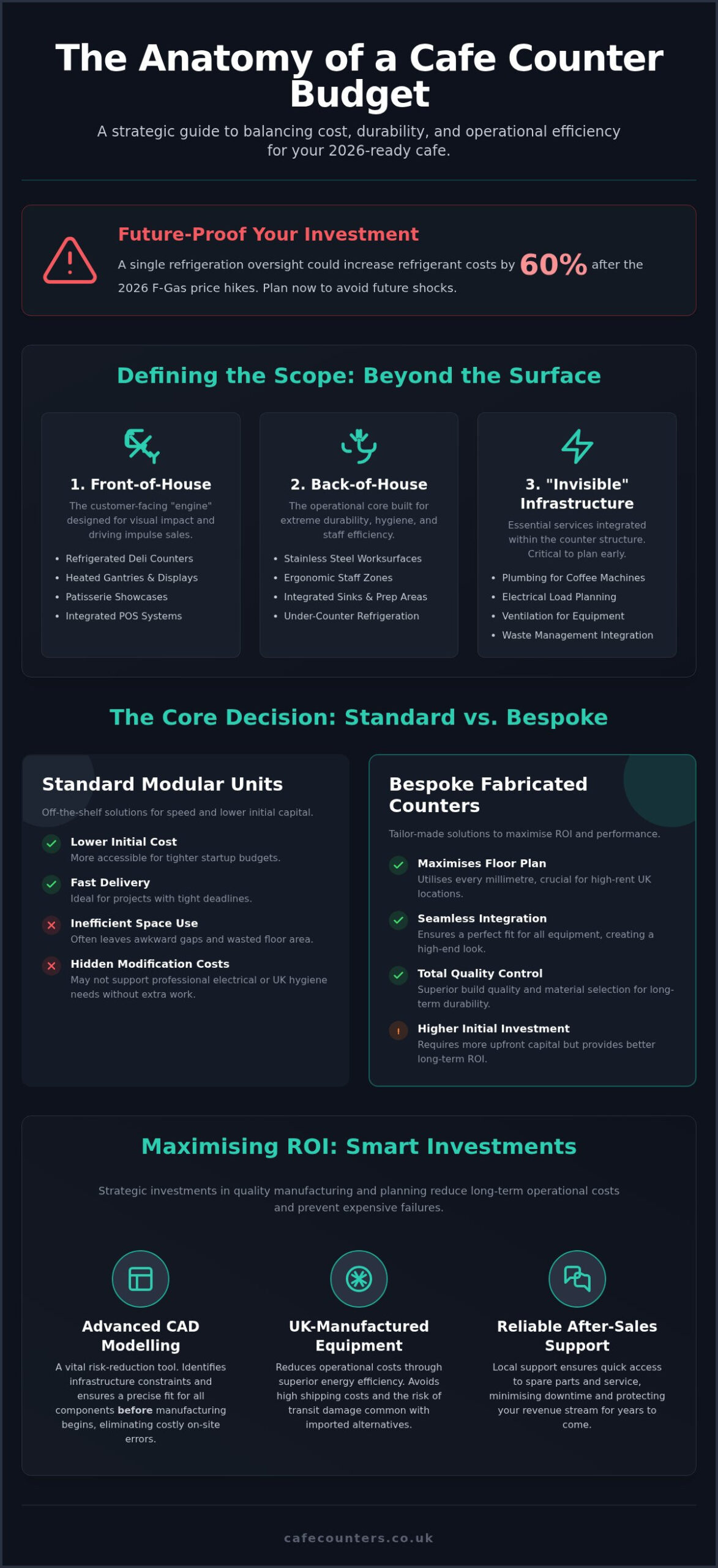
Would you believe that a single oversight in refrigeration specifications could increase your refrigerant costs by 60% following the 2026 F-Gas price hikes? For many UK entrepreneurs, creating a budget for a new cafe counter is a daunting task because the unit is often viewed as mere furniture, yet it is actually a high-performance engine that dictates your daily workflow. We understand the pressure of balancing an aesthetic vision with the harsh realities of commercial durability and strict Environmental Health Officer standards.
This guide provides a clear framework to help you master these financial complexities, ensuring you can present a robust plan to banks or investors. We’ll examine the cost-to-benefit ratio of materials like quartz and granite, the impact of new Use Class E regulations on your layout, and where to strategically invest for long-term operational efficiency. By leveraging technical insights and precise CAD modelling, you’ll gain the knowledge required to move from an initial concept to a fully functional, compliant physical space that’s built for the rigours of the 2026 market. We’ll help you decide where to save and where to invest to ensure your counter remains a reliable asset for years to come.
Key Takeaways
- Understand the critical distinction between structural counter carcasses and integrated equipment, such as patisserie displays, to ensure your initial financial planning is comprehensive.
- Evaluate the long-term ROI of bespoke serving counters against modular units to determine the most effective way to maximise your floor plan and customer throughput.
- Learn why stainless steel back-bar units remain the industry standard for hygiene and how specific material choices impact your ongoing maintenance and durability.
- Discover how advanced CAD modelling serves as a vital risk-reduction tool when creating a budget for a new cafe counter, ensuring a precise fit for all integrated components.
- Identify how UK-manufactured equipment reduces operational costs through superior energy efficiency and the reliability of local after-sales support and spare parts.
Defining the Scope: What Does a Cafe Counter Budget Include?
The counter isn’t just where money changes hands; it’s the operational heart where retail design principles meet logistical reality. When creating a budget for a new cafe counter, you must look beyond the surface aesthetics. A well-planned counter balances customer flow with staff efficiency, ensuring that a high-volume morning rush doesn’t result in a bottleneck. We see the counter as a high-performance engine that requires meticulous planning to succeed. It must serve as a point of sale, a preparation area, and a showcase for your products simultaneously.
It’s vital to distinguish between the counter carcass, which is the structural framework, and the integrated equipment. While the carcass provides the physical presence and branding, the equipment determines your revenue potential. This includes essential items such as patisserie displays or grab & go units. Off-the-shelf solutions often seem cost-effective initially. However, they frequently lead to hidden modification costs when you realise they cannot accommodate professional-grade electrical loads or specific UK food hygiene requirements. Custom fabrication ensures every millimetre is utilised, which is essential for smaller UK footprints where space is at a premium.
Front-of-House vs. Back-of-House Requirements
Your budget should reflect the dual nature of the counter. Front-of-house areas require high-impact visual displays to drive impulse purchases. These might include refrigerated deli counters or heated gantries. Conversely, the back-of-house zones demand extreme durability and ease of cleaning. We often recommend stainless steel back-bar units for these areas. They withstand the rigours of commercial use while meeting EHO standards for sanitisation. You should also allocate funds for ergonomic staff zones and integrated POS systems with dedicated cable management to keep the workspace professional and safe. For business owners who need to secure daily takings or sensitive documents, learn more about certified storage and armored safes.
The “Invisible” Budget Lines
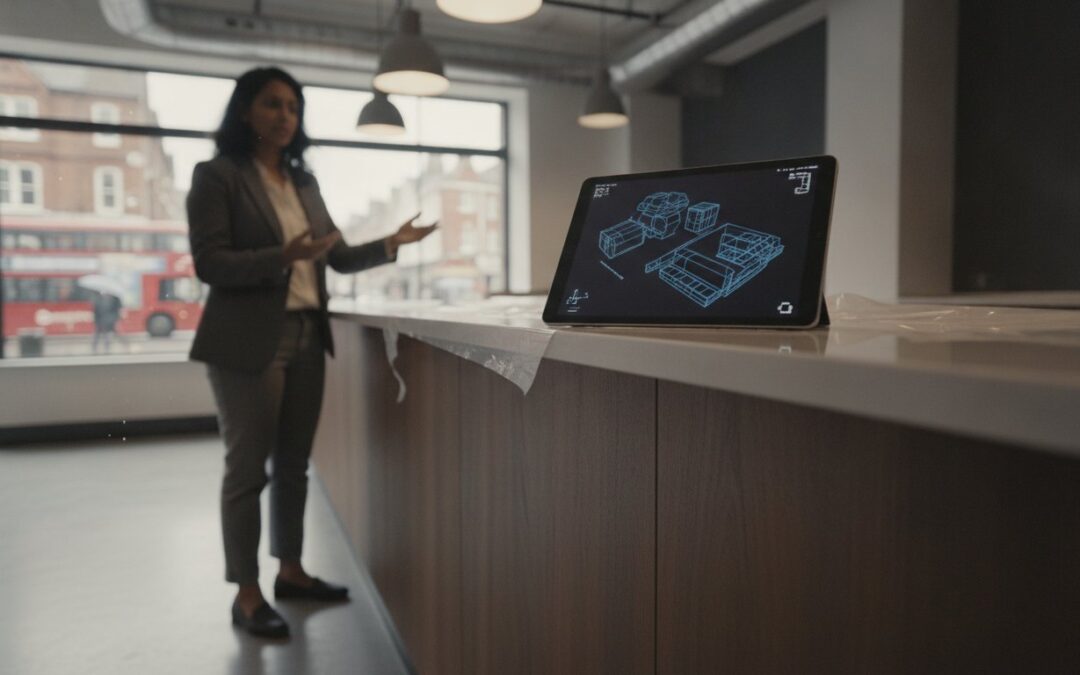
The most successful projects account for what lies beneath the counter top. Plumbing for espresso machines and waste management integration are essential for a functional layout. Ventilation is another critical factor. Refrigerated units and heated displays generate significant heat. This must be managed to prevent equipment failure and maintain a comfortable temperature for staff. Planning your electrical load early avoids expensive post-installation upgrades. By including these “invisible” lines when creating a budget for a new cafe counter, you protect yourself from the stress of unexpected technical hurdles. We use advanced CAD modelling to identify these constraints before manufacturing begins, ensuring a seamless installation.
The Anatomy of Counter Costs: Standard vs. Bespoke
Choosing between a standard modular unit and a bespoke solution is a pivotal decision when creating a budget for a new cafe counter. Standard units are often favoured for their speed of delivery and lower initial capital expenditure. They suit businesses with straightforward requirements and standard room dimensions. However, bespoke serving counters allow you to maximise every square inch of your floor plan. This is vital in high-rent UK high streets where space is at a premium. We often recommend a hybrid approach where standard high-performance equipment is integrated into custom-fabricated housing. This provides the aesthetic of a high-end design with the practical cost-efficiency of proven hardware. By manufacturing these units in our own UK facility, we significantly reduce shipping costs and the risk of transit damage compared to imported alternatives. This artisanal approach ensures total quality control from the first weld to the final installation.
Integrated Display Equipment Costs
When creating a budget for a new cafe counter, consider that impulse sales are the lifeblood of a profitable business. Budgeting for refrigerated grab and go display units ensures that your high-margin chilled products are always within the customer’s line of sight. There’s a notable price difference between drop-in units, which sit flush within the counter, and standalone displays. Drop-in units offer a sleeker, more professional appearance but require precise fabrication of the counter carcass to ensure a perfect fit. Additionally, deli display counters require specific ventilation budgets to ensure the compressor functions efficiently within the enclosed counter space. Compliance with UK food business regulations is non-negotiable. Your financial plan must account for equipment that maintains strict temperature controls to guarantee food safety and satisfy Environmental Health Officers.
Heating and Ambient Zones
A versatile counter often requires both hot and cold zones to cater to changing consumer habits throughout the day. You should allocate a specific portion of your investment for Vision Heated Counters if you plan to serve hot savoury items or morning pastries. Integrating heated gantries alongside ambient shelving for baked goods creates a layered visual appeal that encourages upselling. It’s essential to balance the thermal load between these sections. Placing a high-heat gantry directly next to a refrigerated patisserie display without proper thermal breaks can force both units to overwork. This leads to increased energy consumption and risks premature equipment failure. Our meticulous CAD design process identifies these potential thermal conflicts early. This protects your long-term operational ROI and ensures a reliable, energy-efficient service environment.
Material Selection: Balancing Aesthetics with Operational ROI
Material selection is where your aesthetic vision meets the reality of daily commercial wear. When creating a budget for a new cafe counter, you must weigh the initial purchase price against the projected lifecycle costs. We consider stainless steel back-bar units the non-negotiable foundation for any professional setup. This material remains the gold standard for hygiene and durability, resisting the scratches and dents that compromise lesser materials. While solid surfaces like quartz or granite offer a premium appeal, they require a higher initial investment. Quartz typically costs between £100 and £200 per linear meter, whereas granite ranges from £75 to £150. These materials provide excellent heat resistance and a sophisticated finish that can significantly enhance your brand’s perceived value.
Wood finishes are often requested to create a sense of regional artisanal warmth. However, wood requires regular maintenance, such as oiling, to prevent water damage and bacterial growth. It’s a choice that balances atmosphere with a commitment to ongoing care. Ultimately, the materials you select today dictate the long-term depreciation of your counter. High-quality surfaces retain their integrity and visual appeal, which protects the resale value of your assets should you choose to upgrade or relocate in the future. Investing in durability now prevents the need for a costly mid-term refurbishment.
Surface Durability and Maintenance
Laminate is often viewed as a budget-friendly option, costing between £20 and £40 per linear meter. In a high-volume commercial environment, it’s frequently a false economy. Laminate is prone to heat damage and chipping, which can lead to replacement costs within just three to five years. By contrast, solid surfaces and stainless steel withstand commercial-grade cleaning chemicals and constant use without degrading. When creating a budget for a new cafe counter, we advise clients to look at the ten-year cost of ownership rather than just the day-one invoice. A durable countertop ensures your service area remains pristine and professional, even during the busiest trading periods.
Hygiene and Compliance
UK commercial food service standards are stringent, and your material choices must reflect this. Non-porous surfaces are essential to prevent bacterial growth and simplify the sanitisation process. We recommend budgeting for seamless joints and easy-clean corners, particularly in areas where food preparation occurs. These technical details are often overlooked but are vital for passing Environmental Health Officer (EHO) inspections. Every material used in our manufacturing process meets the necessary UK certifications for food safety. Choosing compliant, high-quality materials provides the peace of mind that your operation is safe, legal, and built to last.
A Step-by-Step Guide to Calculating Your Investment
Calculating the total investment for your project requires a methodical, four-step approach. When creating a budget for a new cafe counter, the initial quote for the carcass is only one component of the final figure. We recommend starting with a professional site survey to identify structural constraints. This is particularly important for older UK buildings where floor load-bearing capacity might be an issue. A fully equipped counter with integrated patisserie displays and stone surfaces can weigh several hundred kilograms; ensuring the sub-floor can support this weight is a critical safety step that must be costed early.
Next, invest in advanced CAD modelling. This serves as a vital risk-reduction tool, allowing you to visualise the workflow and ensure every piece of equipment fits perfectly before manufacturing begins. You must also factor in installation and commissioning fees. These aren’t just delivery charges; they cover the technical setup of refrigeration and heated units. Finally, always set aside a 10% contingency for site-specific surprises. Whether it’s an outdated electrical board or unexpected plumbing configurations, having a financial buffer prevents project delays and protects your cash flow.
The Role of Professional Planning
Professional planning bridges the gap between a design concept and a physical reality. CAD modelling prevents expensive on-site errors by ensuring that all integrated components, such as grab & go displays, align with existing utilities. This process facilitates coordination with other trades. Plumbers and electricians need precise specifications to ensure their first-fix work matches the counter’s requirements. This level of detail is what distinguishes a professional installation from a DIY attempt. To ensure your project is handled with this level of precision, you can view our bespoke serving counters to see how we integrate technical planning into every build.
Installation and Commissioning
The final phase involves more than just placing units in a row. Professional setup is critical for maintaining refrigeration warranties. If a unit isn’t commissioned correctly by a qualified engineer, you risk voiding the manufacturer’s guarantee. We often suggest budgeting for out-of-hours installation. While this may carry a premium, it avoids business disruption during your primary trading hours. A thorough technical handover is also essential. Your staff must be trained on how to operate and clean the equipment to ensure long-term operational efficiency and compliance with hygiene standards.
Maximising ROI: Why Quality Manufacturing Saves Money
Quality manufacturing is a calculated financial strategy rather than an indulgence. When creating a budget for a new cafe counter, the initial purchase price is merely the first chapter of your financial story. High-quality units engineered in the UK are designed to lower monthly utility bills through superior insulation and precision-engineered refrigeration systems. It’s particularly vital given the volatility of energy prices. A well-built counter also acts as a silent salesperson. A premium aesthetic, achieved through meticulous craftsmanship, directly correlates with higher brand perception and often leads to a measurable increase in your average transaction value.
Reducing downtime is another critical factor in your ROI. If an imported unit fails, you may face weeks of lost revenue while waiting for international shipping of spare parts. By contrast, British manufacturing ensures that engineers and components are readily available. We design modularity into our counters, allowing you to adapt to future trends without a total refit. Whether you need to expand your grab & go displays or accommodate new service styles, a flexible layout ensures your initial investment remains relevant as your menu evolves.
Energy Efficiency as a Budget Strategy
Calculating the five-year operational cost of your refrigerated displays is more important than the ticket price alone. Modern units featuring high-grade insulation and LED lighting significantly reduce overheads. These technologies don’t just save on electricity; they also reduce the ambient heat in your cafe, lowering the load on your air conditioning systems. You might also find that investing in energy-efficient technology makes your business eligible for specific UK tax incentives or green grants, effectively reducing the net cost of your procurement while positioning your brand as a leader in sustainability.
To ensure your building’s heating and hot water systems are as energy-efficient as your new kitchen equipment, visit CFS group Limited for expert property maintenance and refurbishment support.
The Expert Partner Advantage
Choosing an expert partner provides a level of security that second-hand marketplaces cannot match. End-to-end project management reduces total project stress by ensuring that every phase is handled by a single, accountable team. In a volatile global supply chain, the reliability of a UK-based manufacturing facility since 1991 is a significant asset. It guarantees that your project stays on schedule and meets all local regulations. To ensure your vision is realised with technical precision, you can consult with TFSE Products Ltd for a bespoke counter design that fits your budget.
Securing Your Vision with Technical Precision
Establishing a successful cafe requires more than just an eye for design; it demands a deep understanding of the technical and financial variables that dictate daily performance. When creating a budget for a new cafe counter, you must look beyond the initial aesthetics and prioritise the structural and operational integrity that protects your long-term profit margins. We’ve explored how professional CAD modelling acts as a vital safeguard against installation errors while ensuring compliance with evolving UK food safety and refrigeration regulations. Precision planning isn’t just a cost; it’s the foundation of your brand’s future stability.
By focusing on British-made quality, you secure the after-sales support and operational reliability necessary for a high-volume environment. As specialists in high-performance refrigerated displays with a UK-based manufacturing facility since 1991, we’re ready to bring your concept to life. Contact TFSE Products Ltd for a Bespoke Counter Consultation and benefit from our advanced CAD modelling and end-to-end project management. Your vision deserves a steady, reliable hand to navigate the complexities of modern commercial design.
Frequently Asked Questions
How much does a bespoke cafe counter cost in the UK?
Bespoke cafe counters in the UK typically range from £2,000 to over £10,000, depending on dimensions, material selection, and technical complexity. While standard modular units are available for roughly £730 to £1,045, they often lack the durability required for commercial environments. When creating a budget for a new cafe counter, you must account for the specific requirements of your site to ensure the final product supports your operational workflow and brand identity.
What is the most durable material for a high-traffic cafe counter?
Stainless steel is the industry standard for back-bar units due to its exceptional hygiene and resistance to heavy use. For front-of-house surfaces, quartz and granite offer the best balance of aesthetics and longevity. These non-porous materials withstand commercial cleaning chemicals and high customer volume without degrading. Investing in these high-grade materials ensures your counter remains a professional asset for years, reducing the need for premature and costly refurbishments.
Should I buy my display equipment separately or integrated into the counter?
Integrating display equipment, such as patisserie displays or grab & go units, into the counter structure is generally more efficient than using standalone models. Integration creates a seamless customer journey and maximises available floor space. By using CAD modelling, we ensure that drop-in units fit perfectly within the carcass, which simplifies the installation process and ensures that all ventilation and electrical requirements are met from the outset.
How long does the design and manufacturing process take for a custom counter?
The design and manufacturing process for a bespoke counter typically spans four to eight weeks, depending on the complexity of the fabrication. This timeline includes the initial site survey, CAD modelling, internal production in our UK facility, and final installation. We move with a deliberate pace to ensure precision and quality. Planning your procurement well in advance of your launch date is essential to avoid unnecessary stress and project delays.
Do I need a site survey before getting a quote for a new counter?
A site survey is a non-negotiable step in the procurement process to ensure your quote is accurate and realistic. It allows us to identify structural constraints, such as floor load-bearing issues or existing utility locations, which can significantly impact installation costs. Conducting this survey early in the process of creating a budget for a new cafe counter prevents expensive on-site modifications and ensures a seamless transition from design to physical space.
Are there energy-efficient grants for new cafe equipment in 2026?
Various local and national schemes in the UK provide financial support for businesses investing in energy-efficient equipment. In 2026, many grants focus on transitioning to low-GWP refrigerants following the updated F-Gas regulations. You may also be eligible for tax incentives that reduce the net cost of your investment. We recommend checking with your local authority or a specialist financial advisor to identify current green business funding opportunities available in your region.
What are the most common hidden costs in cafe counter installation?
Hidden costs often arise from necessary electrical upgrades, plumbing modifications, and the requirement for out-of-hours installation labour. You must also account for the rising cost of refrigerants, which saw significant price hikes in mid-2026; for instance, R410A prices increased by 60%. Setting aside a 10% contingency fund is a prudent strategy to manage these site-specific surprises. This buffer ensures that your project remains on track even if technical challenges emerge during final commissioning.
Is it better to lease or buy commercial cafe counters?
Buying a counter outright provides long-term ROI and full ownership of a high-value asset, whereas leasing can help preserve your initial capital. High-quality UK-manufactured counters are built for longevity, often making purchase the more cost-effective choice over a five-to-ten-year period. If you choose to buy, you benefit from the durability of professional-grade materials and the security of British-made equipment, which typically retains a higher resale value than budget alternatives.