
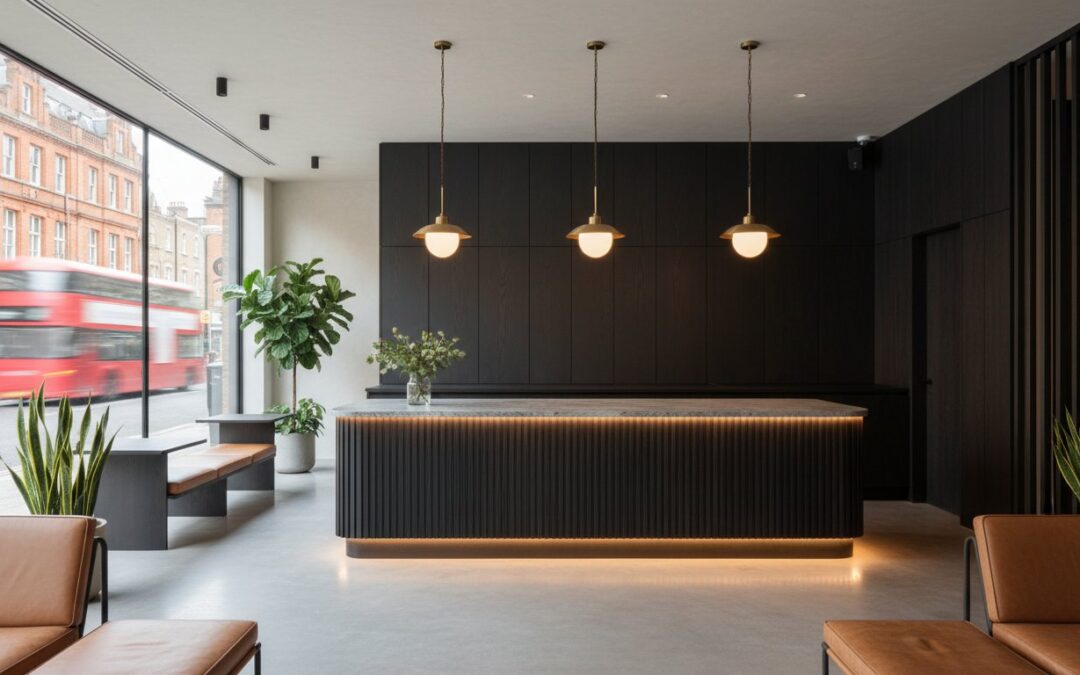
A premium aesthetic isn’t about chasing the latest Instagram trend; it’s about the precision of British manufacturing and the durability of the materials you choose. When designing a premium looking cafe interior, the difference between a high-end destination and a standard coffee shop lies in the details that customers feel before they even take a sip. You likely recognize that a prestigious space commands a higher average transaction value, yet the fear of an investment between £30,000 and £87,000 looking dated within two years is a common anxiety for many operators.
We’ll show you how to transform a standard unit into a sophisticated destination through strategic layout and sensory design. You’ll learn which materials signal authentic quality and how to make your service counter the undeniable focal point of the room. This guide provides a step by step plan to balance bespoke craftsmanship with strict hygiene regulations and BS EN 12464-1 lighting standards. By the end, you’ll have the technical knowledge to move from a broad concept to a completed, high performance physical space.
Key Takeaways
- Learn why authenticity and intentional textures are more effective than following fleeting trends when designing a premium looking cafe interior.
- Discover how a bespoke service counter acts as the functional masterpiece of your space, elevating the customer journey through high-end customization.
- Identify the specific materials that signal luxury to your patrons while maintaining the robust durability required for high-traffic commercial environments.
- Understand the technical nuances of layered lighting and why a professional site survey is essential to ensure a seamless “concept to completion” fit-out.
Defining the Premium Aesthetic: Beyond Fleeting Design Trends
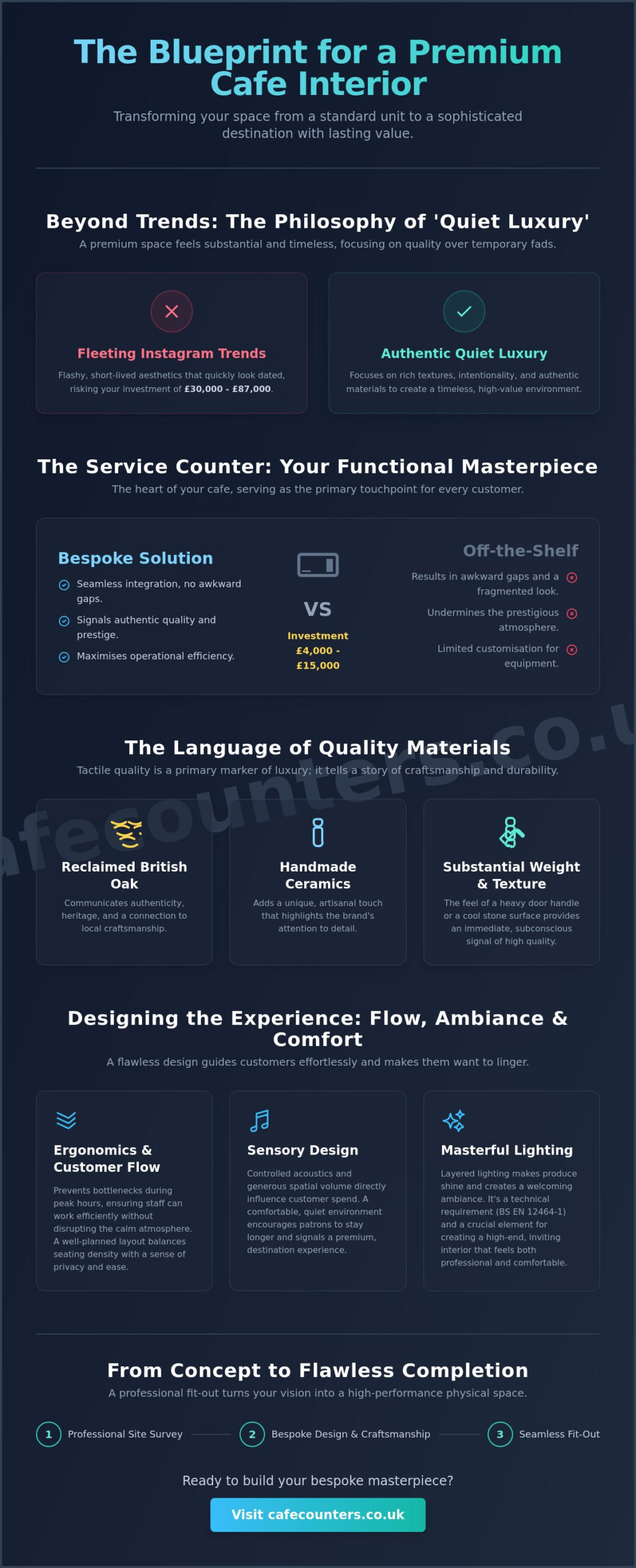
In 2026, designing a premium looking cafe interior requires moving past superficial aesthetics. High-end design has shifted toward “quiet luxury,” where the focus is on authenticity, rich textures, and intentionality rather than flashy, short-lived trends. A premium space doesn’t just look expensive; it feels substantial. This feeling is created through the deliberate application of fundamental design principles like balance, rhythm, and emphasis. When these elements align, they create a cohesive narrative that resonates with a discerning clientele who value quality over clutter. It’s about creating a space that feels timeless the moment the doors open.
The psychology of luxury plays a critical role in your commercial success. Research into high-end hospitality environments suggests that spatial volume, controlled acoustics, and layered lighting directly influence customer spend. A cramped or noisy environment signals a fast-casual experience, whereas a space that provides physical breathing room and acoustic comfort encourages patrons to linger. By focusing on these sensory details, you position your cafe as a destination rather than a mere utility stop. This methodical approach ensures your investment remains relevant long after current design fads have faded, protecting your brand’s longevity.
To further enhance this sense of destination, consider how visual storytelling through decor can elevate the space. Incorporating high-quality prints and bespoke framing from the First4Frames Gallery allows you to introduce British craftsmanship into your wall design, reinforcing the premium feel of the interior.
Identifying Your Signature Design Narrative
A successful interior isn’t a collection of random beautiful objects. It’s a physical extension of your brand’s values and your menu. If your brand focuses on artisanal, locally sourced ingredients, your interior should reflect this through raw, tactile materials like reclaimed British oak or handmade ceramics. We recommend developing a physical mood board that includes material samples you can actually touch. Tactile quality is a primary marker of luxury; the weight of a door handle or the texture of a bespoke counter surface tells the customer everything they need to know about your standards. Balancing modern technology with traditional British craftsmanship markers allows you to offer a seamless service while maintaining a prestigious, professional atmosphere.
The Role of Ergonomics in High-End Spaces
Customer flow is the invisible backbone of any premium experience. Even the most stunning design fails if the space feels chaotic during peak morning hours. Designing for comfort requires a careful balance between generous seating and efficient operational paths. High-end spaces prioritize the customer’s journey from the entrance to the point of sale without creating confusion. Utilizing ergonomic counter design is essential here, as it prevents bottlenecks and ensures that staff can work efficiently without disrupting the calm atmosphere. A well-planned layout allows for high seating density while maintaining a sense of privacy and ease, proving that functionality and luxury aren’t mutually exclusive in a professional fit-out.
The Service Counter: Centring Your Interior on a Bespoke Masterpiece
The service counter is the heart of any successful hospitality venue. It serves as the primary touchpoint where every customer interaction begins and ends. When designing a premium looking cafe interior, relying on off-the-shelf modular units often results in awkward gaps and a fragmented aesthetic that undermines the prestigious atmosphere you’re trying to build. A bespoke cafe counter, however, is manufactured to your specific site dimensions, allowing for a seamless integration that modular systems simply cannot match. This level of customization is a significant investment; industry data from August 2025 suggests a custom-built counter typically costs between £4,000 and £15,000. The return on this investment is found in the operational efficiency and the immediate signal of quality it sends to your patrons.
Choosing a bespoke solution allows you to treat the counter as the “jewel” of the room. It becomes a functional sculpture that guides the customer journey while housing the heavy-duty equipment required for modern service. By integrating your equipment directly into the cabinetry, you eliminate the visual clutter of standalone machines. This approach creates a unified look that reinforces the “quiet luxury” mentioned in previous sections. It’s about ensuring that every millimetre of the counter serves a purpose, from the ergonomic height of the worktop to the precise placement of the point-of-sale system.
Integrating Patisserie and Deli Displays
High-end food presentation requires more than just a shelf. By using a patisserie display counter, you create a “jewellery box” effect that elevates your cakes and pastries into luxury items. The use of glass-to-glass joints is essential here. It removes the bulky frames that distract the eye, providing an unobstructed view of your produce. Similarly, incorporating a deli counter signals freshness and artisanal quality. These units shouldn’t feel like an afterthought; they must be flush with the counter front to maintain a continuous, professional profile.
The Seamless Look: Drop-in Units and Hidden Tech
A truly premium aesthetic is defined by what you don’t see. Integrated drop-in units allow refrigerated displays to sit flush with the counter surface, creating a clean, architectural line. We ensure that technical necessities, such as refrigeration vents and power cables, are hidden within the bespoke cabinetry to maintain this uncluttered look. For hot food offerings, Vision Heated Counters provide elegant presentation without the industrial appearance of standard warming equipment. If you’re ready to move from a concept to a physical reality, our team can help you design a counter that balances these technical requirements with stunning visual impact.
Selecting Materials That Signal Quality and Longevity
Designing a premium looking cafe interior requires a shift in focus from how a space looks in a photograph to how it performs under the pressure of daily service. While aesthetics capture initial attention, the longevity of your brand is built on the tactile quality of your surfaces. When a customer rests their hand on a service counter, the material should feel solid, temperature-stable, and meticulously finished. Choosing British-made components ensures that your interior outlasts cheaper imported alternatives that often degrade within 18 to 24 months of high-volume use. This commitment to robust construction is what separates a professional fit-out from a temporary setup.
Material choice also dictates your long-term maintenance costs. For instance, while commercial vinyl costs between £30 and £70 per square meter, investing in engineered wood at £65 to £145 per square meter provides a significant uplift in perceived value and durability. Every material in your cafe should serve a dual purpose: it must be stunning to the eye and functional for the operator. We focus on selecting finishes that can withstand the rigours of a high-street environment without losing their prestigious edge, ensuring your space looks as fresh in 2028 as it does on opening day.
Natural vs. Engineered Surfaces
The debate between natural and engineered materials often comes down to the balance of prestige and practicality. Real marble is a classic marker of luxury, but its porous nature makes it a maintenance challenge in a busy cafe environment where acidic coffee and citrus spills are common. High-quality quartz or solid surfaces offer a non-porous, hygienic alternative that replicates the depth of natural stone without the risk of staining. To add warmth and a bespoke feel, the 2026 trend for sustainability favours reclaimed wood or bamboo. These natural accents soften the interior and provide a unique character that mass-produced materials cannot replicate.
The Role of Custom Stainless Steel Fabrication
High-grade stainless steel is the foundation of a professional back-bar unit. It provides a robust, easy-to-clean surface that is essential for maintaining strict hygiene standards behind the scenes. Custom fabrication is vital here; it ensures a turnkey fit that eliminates the awkward, unhygienic gaps often found with modular, off-the-shelf equipment. We utilize 304-grade stainless steel as the industry standard for hygiene because its high chromium and nickel content prevents corrosion and ensures a non-porous surface. This precision manufacturing guarantees that your back-bar is as efficient and professional as your front-of-house is prestigious.
Masterful Lighting: Making Your Produce and Interior Shine
Lighting is the final, critical layer in designing a premium looking cafe interior. It acts as the bridge between your architectural choices and the customer’s emotional response. While basic fixtures provide visibility, masterful lighting defines the mood and directs the patron’s journey. According to 2026 industry data, LED light fixtures for a commercial space typically cost between £50 and £200 per unit, excluding wiring. This investment is essential to meet the BS EN 12464-1 standard for indoor workplace lighting while simultaneously creating an atmosphere of prestigious “quiet luxury.” Poorly planned, flat lighting can make even the most expensive bespoke counter look cheap and uninviting.
A professional lighting plan utilizes three distinct layers: ambient, task, and accent lighting. Ambient lighting provides the base level of illumination, ensuring the space feels open and safe. Task lighting is functional, focused on areas like the espresso station and preparation zones to ensure staff can work with precision. Accent lighting is the most strategic element for a premium operator. It allows you to guide the customer’s eye toward high-margin items or architectural features, such as a hand-crafted back-bar or a specific patisserie display. By creating intentional highlights and soft shadows, you avoid the sterile atmosphere of a canteen and instead build a space with depth and character.
Layering Your Lighting Strategy
The most effective way to anchor your interior is by using statement pendants over the service counter. These fixtures serve as a visual focal point, signalling the primary point of interaction. It’s vital to install dimmable systems that allow you to transition the atmosphere as the day progresses. A bright, energizing light is appropriate for the morning coffee rush, but a softer, warmer glow is required if you host evening events or late-night dessert service. Avoid the common mistake of over-lighting the entire room; contrast is what makes a space feel high-end and intimate.
Specialist Food Display Lighting
When displaying fresh produce, the Colour Rendering Index (CRI) of your bulbs is non-negotiable. Cheap LED lighting often has a low CRI, which can make vibrant cakes and fresh salads look grey or unappealing. High-end displays require a CRI of 90 or above to ensure colours look natural and enticing. Many of our refrigerated grab and go display units feature integrated LED strips designed specifically for this purpose. These modern LEDs produce minimal heat, ensuring that your lighting doesn’t compromise food safety or quality. To ensure your lighting plan meets both aesthetic and regulatory standards, consult with our expert team to integrate specialist illumination into your bespoke furniture.
From Concept to Completion: Executing a Flawless Fit-Out
The final stage of designing a premium looking cafe interior is the transition from a digital blueprint to a physical reality. This phase is where many projects falter if they lack a structured, professional approach. A flawless fit-out relies on a methodical shopfitting process that begins long before the first counter is installed. Given that a premium fit-out in 2026 can exceed £87,000 for a 600 sq ft space, there is no room for error. We advocate for a “Concept to Completion” model, which acts as a thematic anchor for our service, ensuring that the design intent is never lost between the drawing board and the manufacturing floor.
The foundation of this journey is a comprehensive site survey. This step is essential to identify structural nuances, such as uneven flooring or existing electrical layouts, that could disrupt the installation of bespoke furniture. By conducting a survey early, we prevent the costly delays and mid-project adjustments that often plague commercial builds. Managing your timeline effectively requires a clear understanding of these technical constraints, allowing you to coordinate with other trades and ensure your cafe opens on schedule without compromising on the prestigious finish your brand demands.
Utilising CAD Modelling to Visualise the Space
We use advanced 3D CAD modelling to provide a digital twin of your proposed interior. This technology allows us to identify potential ergonomic bottlenecks and workflow issues before a single piece of timber is cut. It ensures that every bespoke counter and integrated display unit fits perfectly into your unique site dimensions, regardless of architectural complexity. CAD modelling is the bridge between a vision and a physical build. By seeing the space in three dimensions, you can make informed decisions about customer flow and seating density, ensuring the “quiet luxury” aesthetic remains functional and spacious.
The Importance of Professional Installation
Handing over a high-end cafe requires more than just placing furniture; it involves the expert commissioning of complex equipment. Professional installation ensures that your refrigerated patisserie displays and heated gantries are calibrated for peak performance and warranty compliance. Using a UK-based manufacturing and installation team provides you with reliable after-sales support and the peace of mind that comes with British craftsmanship. Our goal is to ensure that every joint is seamless and every surface is prestigious upon handover. This meticulous attention to detail during the final installation phase guarantees a robust, high-performance environment that is ready to welcome your first customers immediately.
Elevating Your Vision into a High-Performance Reality
Mastering the art of designing a premium looking cafe interior requires a delicate balance between prestigious aesthetics and operational grit. You’ve seen how a bespoke service counter serves as the functional heart of your space; while technical layers like CRI-accurate lighting and 304-grade stainless steel ensure your investment stands the test of time. These details define the difference between a fleeting trend and a lasting destination that commands customer loyalty and higher transaction values.
At Cafe Counters, we’ve refined this methodical approach through high-quality UK-based manufacturing since 1991. Our Expert Partners utilize advanced CAD modelling and energy-efficient technology to ensure every millimetre of your fit-out is optimized for long-term operational efficiency. Whether you’re planning a high-street renovation or a new commercial build, our Concept to Completion service removes the technical stress from the journey. We invite you to Contact Cafe Counters for a Bespoke Design Consultation and take the first step toward a stunning, professional physical space. Your vision deserves the precision of British craftsmanship.
Frequently Asked Questions
How can I make a small cafe look premium?
Designing a premium looking cafe interior in a compact unit requires maximizing vertical space and using bespoke furniture to avoid wasted floor area. Integrated drop-in units sitting flush with the worktop create a streamlined look that makes small areas feel intentional and high-end. High-quality lighting and strategic mirror placement can also enhance the sense of space while maintaining a prestigious, professional atmosphere.
What is the most durable material for a commercial cafe counter?
304-grade stainless steel is the industry standard for back-bar durability and hygiene, while quartz or non-porous solid surfaces are best for customer-facing areas. These materials withstand heat, acidic coffee spills, and heavy impacts without staining or cracking. Choosing robust materials ensures your counter remains functional and visually stunning for years, providing a better long-term return than cheaper, porous alternatives.
Does a premium interior really increase cafe profits?
A prestigious interior directly influences average transaction values by justifying premium price points and encouraging longer dwell times. Customers are willing to pay more in environments that feel authentic and comfortable. While a premium fit-out can cost over £87,000 for a 600 sq ft space according to 2026 data, the increase in brand equity and customer loyalty often leads to higher long-term profitability.
How do I choose the right lighting for a food display?
Choose lighting with a Colour Rendering Index (CRI) of 90 or higher to ensure your produce looks vibrant and natural. Integrated LED strips in refrigerated grab and go displays provide targeted illumination without generating heat that could affect food safety. This level of detail ensures that your high-margin items remain the focal point of the customer’s journey from the moment they enter.
How long does a bespoke cafe counter take to manufacture?
The manufacturing timeline for a bespoke counter depends on design complexity and material availability, typically moving from CAD approval to physical build in several weeks. Our Concept to Completion service ensures a structured progression through site surveys, technical drawings, and in-house manufacturing. This methodical approach guarantees that the final product fits your site dimensions perfectly upon installation.
Can I integrate my existing brand colours into a premium design?
Brand colours are best integrated through subtle material choices, such as bespoke powder-coated metal or specific upholstery textures, rather than aggressive signage. This approach maintains the “quiet luxury” aesthetic while reinforcing your brand identity. We use advanced CAD modelling to help you visualize how these colours interact with natural light and other premium finishes before production begins.
What are the key hygiene considerations for a luxury cafe interior?
Hygiene in a luxury setting relies on non-porous surfaces and seamless fabrication to eliminate dirt traps. Using 304-grade stainless steel for preparation areas and ensuring all display units are flush-mounted provides a professional, easy-to-clean environment. These choices satisfy strict hygiene regulations while maintaining the prestigious, uncluttered look expected in a high-end establishment.
Why should I choose a UK manufacturer for my cafe fit-out?
Choosing a UK manufacturer provides direct access to the craftsmen building your interior and ensures compliance with specific UK regulations like BS 5266 for emergency lighting. You benefit from shorter lead times, reduced shipping risks, and reliable after-sales support for your integrated equipment. British craftsmanship since 1991 ensures that your cafe is built to a robust, professional standard that imported modular units often fail to meet.