
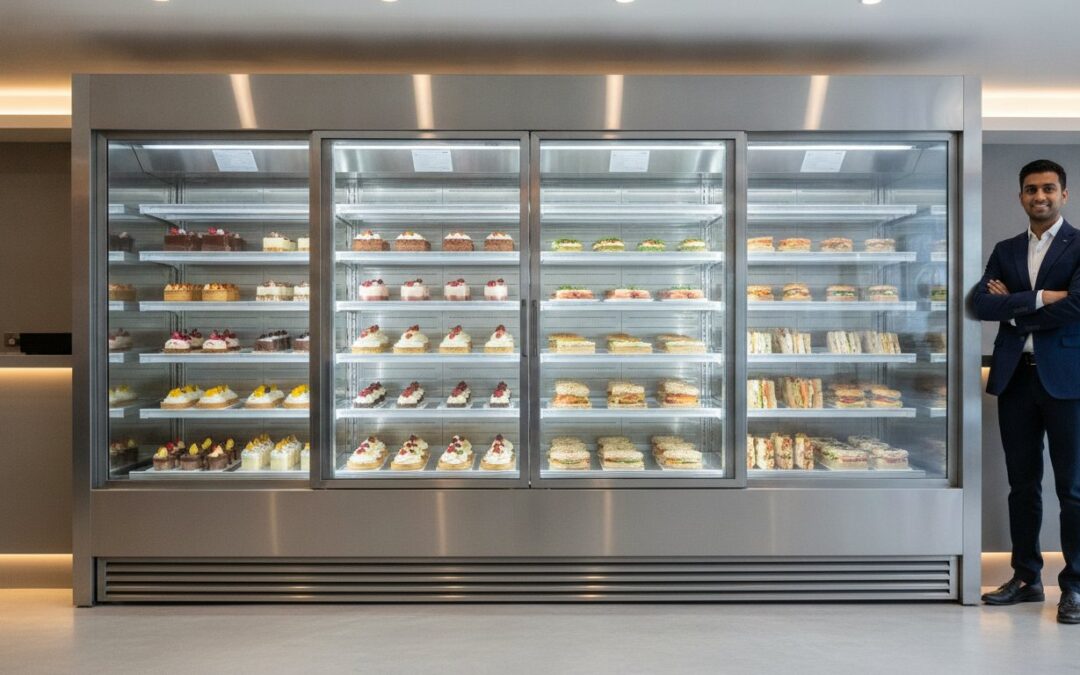
Did you know that a poorly specified refrigeration unit can account for up to 40% of a cafe’s total energy budget? When condensation clouds your glass, it’s doing more than just hiding your artisanal cakes or fresh deli selections. It’s a clear signal that your equipment is struggling against its environment. We understand the frustration of constantly wiping down doors while worrying about hygiene compliance and rising utility costs. It’s a common challenge, but it’s one that can be solved with the right technical approach.
This guide provides the professional strategies you need to master climate control in your retail space. You’ll learn exactly how to prevent condensation on display fridges to ensure crystal-clear visibility and long-term equipment reliability. We will examine the balance between engineering and environment, covering everything from ambient humidity management to the 2026 energy labelling standards. By the end of this article, you’ll have a methodical plan to protect your investment and keep your products looking their absolute best.
Key Takeaways
- Understand the scientific relationship between dew points and the “Retail Humidity Trap” to identify why moisture accumulates in your specific space.
- Master the technical strategies on how to prevent condensation on display fridges by utilizing high-performance double glazing and integrated thermal breaks.
- Learn to optimize your shop’s environment through strategic equipment placement and effective coordination with your building’s HVAC system.
- Implement a methodical maintenance schedule focusing on drainage efficiency and gasket integrity to ensure long-term operational reliability.
- Discover the benefits of bespoke UK manufacturing and CAD modelling in predicting airflow patterns for superior thermal performance.
Understanding the Science of Display Fridge Condensation
Condensation is more than an aesthetic nuisance; it’s a physical symptom of an environment out of balance. At its most basic level, condensation occurs when moisture-laden air comes into contact with a surface that is cooler than the surrounding air’s dew point. In a retail setting, this usually manifests as a persistent fog on the glass of your Patisserie Displays or Deli Counters. Understanding the science of the dew point is the first step in learning how to prevent condensation on display fridges effectively.
The “Retail Humidity Trap” is a phenomenon common in high-traffic environments. Every customer who enters your shop brings in external moisture, while the physical activity of a busy lunch rush naturally raises humidity levels. This spike in moisture makes it significantly harder for standard refrigeration units to maintain clear glass. When visibility is obscured, impulse purchase rates in cafes can plummet. Customers eat with their eyes first; if they can’t see the texture of a pastry or the freshness of a salad, the perceived value of the product diminishes instantly.
Professional-grade equipment is engineered specifically to handle these extreme temperature differentials. While budget units often rely on basic single-pane glass, high-performance displays use advanced thermal management to keep the external surface temperature above the saturation point. This technical resilience ensures that even during peak hours, your products remain the focal point rather than the moisture on the glass.
What is the Dew Point in a Commercial Kitchen?
In a commercial kitchen or cafe, the relationship between air temperature and relative humidity is constantly shifting. As air cools, its capacity to hold water vapour decreases. The dew point is the specific temperature where air becomes saturated and water vapour begins to transform into liquid droplets. In an environment where coffee machines and soup kettles are constantly emitting steam, the local dew point rises sharply. This makes it much easier for condensation to form on the cold glass of your Grab & Go Displays, as the gap between the glass temperature and the air’s saturation point narrows.
The Hidden Costs of Persistent Moisture
Ignoring persistent moisture leads to significant hygiene risks. Damp environments are breeding grounds for mould growth, particularly on door gaskets and in hard-to-reach corners. This doesn’t just look unprofessional; it can lead to bacterial contamination that threatens your food safety compliance. Beyond hygiene, there is a heavy financial toll. A fridge obscured by fog is often working significantly harder to maintain its internal temperature, with some industry professionals observing an increase in energy consumption of up to 20% when systems are fighting high humidity.
Long-term exposure to this moisture also threatens the lifespan of your equipment. Internal components, such as LED lighting systems and electronic controllers, aren’t designed to sit in a permanent state of dampness. By addressing the root causes of condensation now, you protect both your daily sales and the long-term durability of your professional catering assets.
Engineering Solutions: Glass Technology and Thermal Breaks
While many operators reach for anti-fog sprays, these are merely temporary patches for a fundamental engineering issue. To truly master how to prevent condensation on display fridges, we must look at the structural integrity of the unit itself. High-performance refrigeration relies on keeping the external surface of the glass above the dew point of the room. This is achieved through a combination of advanced materials and meticulous assembly that budget-grade units simply don’t offer.
A critical feature in professional units is the thermal break. This is a non-conductive barrier placed within the frame to stop cold air from migrating from the interior to the exterior casing. Without this, the metal frame becomes a “cold bridge,” causing moisture to settle on the outside of the unit. In environments with exceptionally high ambient humidity, we often integrate heated glass technology. This uses a transparent, conductive coating to gently warm the glass surface, ensuring it remains clear regardless of the internal temperature settings. Following professional ASHRAE humidity control recommendations is central to our design philosophy, ensuring every unit is built to withstand the unique pressures of a busy retail environment.
Single vs. Double Glazing in Patisserie Displays
Modern patisserie display counters utilize sophisticated double-glazing techniques to create a robust thermal buffer. The air gap between the two panes serves as a high-performance insulator, which drastically reduces the thermal transfer that leads to fogging. For maximum efficiency, professional units are often filled with argon gas. Argon is significantly denser than air and provides superior thermal resistance. This is essential for maintaining the 1°C to 5°C range required for food safety while keeping the exterior crystal clear. Budget single-pane units simply can’t provide this level of control in the variable climates of most UK cafes.
The Anatomy of a High-Quality Gasket
The gasket is the frontline of moisture control. While mass-produced units often rely on basic compression seals that lose their shape over time, professional displays use multi-chamber magnetic gaskets. These provide a consistent, airtight barrier that prevents warm, moist air from leaking into the cabinet. We use UV-resistant materials in our bespoke builds to prevent the drying and cracking that typically occurs in cheaper alternatives. This level of precision ensures that your bespoke serving counters maintain their efficiency and aesthetic appeal for years. Bespoke manufacturing allows us to achieve much tighter tolerances, ensuring that every seal is perfectly aligned to the specific dimensions of your retail space.
Controlling the Shop Environment to Reduce Moisture
While precision engineering provides a robust foundation, your shop’s internal layout acts as the second line of defence. Even the most advanced refrigeration cannot fully compensate for a room that is working against it. When considering how to prevent condensation on display fridges, you must treat your retail space as a holistic system where the unit and the air around it interact constantly. Proper environmental management doesn’t just clear the glass; it protects your equipment from the mechanical strain of overworking.
Strategic positioning is the first step in this process. You should never place a display unit in direct sunlight or directly beneath an HVAC vent. Sunlight creates localized heat on the glass surface, while air vents can blow warm or moist air across the unit, disrupting its thermal balance. These environmental stressors force the compressor to run more frequently, which increases energy costs and shortens the lifespan of the components. By creating a stable “micro-climate” around your displays, you ensure the technical features of the unit can perform as intended.
HVAC and Airflow Management
The efficiency of your refrigeration is inextricably linked to your building’s climate control. For a professional cafe or retail environment, maintaining a Relative Humidity (RH) between 40% and 60% is the industry standard. An ASHRAE-sponsored study on humidity highlights that controlling ambient moisture is one of the most effective ways to reduce condensation and lower energy consumption in refrigerated cases. In many historic or poorly ventilated UK buildings, achieving this balance may require the use of industrial-grade dehumidifiers. It’s also vital to ensure that your air conditioning system isn’t blowing directly onto the display glass, as this can cause the surface temperature to drop below the dew point regardless of the internal settings.
Strategic Placement of Grab & Go Units
Open-fronted refrigerated grab and go display units present a unique set of challenges. These units rely on a delicate “air curtain” to maintain a thermal barrier between the cold interior and the warm shop floor. If these units are placed in a “wind tunnel” near an entrance door or a high-traffic draught, that air curtain is easily breached. This leads to immediate moisture buildup and internal temperature fluctuations. To maintain visibility and food safety, these displays should be situated in “quiet air” zones where the airflow is predictable and steady. Using air curtains effectively in your merchandisers ensures that the cold air remains trapped inside, keeping your products fresh and the glass clear for every customer who walks through your door.

Operational Maintenance: Preventing Daily Buildup
While high-end engineering and environmental controls provide the framework for clear glass, your daily operational habits determine the long-term success of these systems. Maintenance in a commercial setting is not merely about aesthetics; it is a technical requirement for system longevity. If you are struggling with persistent fogging, the solution often lies in a methodical approach to how the unit is handled and serviced. Establishing a structured schedule for cleaning and loading is the most practical way to master how to prevent condensation on display fridges.
Standing water is the primary enemy of internal humidity control. When drainage systems become sluggish or blocked, moisture that should be removed from the cabinet remains trapped, raising the internal dew point. Similarly, neglected condenser coils force the system to work harder to reject heat, leading to temperature fluctuations that encourage moisture to settle on the glass. By treating your refrigeration as a precision tool that requires regular calibration, you protect both your food safety standards and your energy budget.
Cleaning Protocols for Drainage and Coils
A clear evaporator drain line is essential for moisture removal. You should inspect the drain hole weekly, using a flexible pipe cleaner or a dedicated drainage tool to remove any debris or biofilm buildup. This prevents water from pooling in the base of the unit. Monthly, you must vacuum the condenser coils to remove dust and grease. This ensures efficient heat exchange and prevents the compressor from overheating. When cleaning the exterior and interior of your displays, always use pH-neutral cleaning agents. Harsh chemicals can degrade high-end stainless steel and damage the delicate seals of your gaskets over time.
Proper Loading and Temperature Management
Effective air circulation is the foundation of a stable thermal environment. We recommend the “two-inch rule,” ensuring there is always at least a 50mm gap between your products and the internal walls or glass. Overfilling your shelves blocks the essential airflow paths, creating “hot spots” where condensation can rapidly form. It is also vital to never place warm products directly from the oven into the chiller. This introduces a sudden surge of moisture and heat that causes instant fogging and forces the unit into an intensive cooling cycle.
Modern units utilize advanced digital controllers to manage these variables. You can use these systems to monitor “swing” temperatures and ensure your unit stays within the optimal 1°C to 5°C range. If you find your current equipment lacks this level of precision, you may need to consult a refrigerator commercial specialist to upgrade your setup. For businesses looking to optimize their workflow through better equipment design, our team can help you integrate bespoke serving counters that prioritize both visibility and ease of maintenance.
Investing in Quality: The Advantage of Bespoke UK Manufacturing
Off-the-shelf refrigeration units are typically designed for generic “average” conditions, but retail environments in the UK are rarely average. Many businesses operate from repurposed historic buildings with poor ventilation or modern glass-fronted spaces that face significant solar gain. When you invest in a bespoke solution, you aren’t just buying a cabinet; you’re securing an engineered environment tailored to your specific site. This high-end approach is the most effective way to master how to prevent condensation on display fridges, as it addresses the unique thermal pressures of your shop floor.
At TFSE Products Ltd, we leverage our internal production facilities to bridge the gap between aspirational design and practical manufacturing. By managing the entire journey from an initial idea to a finished physical space, we ensure that every thermal break, glass pane, and magnetic seal meets our rigorous quality standards. British-made quality represents more than just a geographic origin; it’s a commitment to long-term operational efficiency and the reliability of local after-sales support. We integrate energy-efficient cooling systems directly into our custom designs, ensuring your Patisserie Displays or Deli Counters exceed the stricter 2026 energy labelling thresholds.
The Role of CAD Modelling in Counter Design
Our engineering process begins with advanced CAD modelling, which allows us to visualise complex airflow patterns before a single sheet of stainless steel is cut. We don’t leave thermal performance to chance. By simulating how air moves within your specific counter configuration, we can tailor insulation thickness and glass specifications to counteract your site’s ambient humidity. This methodical preparation ensures that your bespoke units integrate seamlessly with your existing shop fittings while maintaining the crystal-clear visibility required to drive impulse sales.
Why Professional Installation Matters
A high-performance display unit is only as effective as its installation. If a fridge isn’t perfectly level, the evaporator drain lines cannot function correctly, leading to the standing water issues that cause persistent fogging. Our expert installation teams manage every detail, including the critical commissioning of the digital thermostats. We calibrate your equipment to suit your specific ambient environment, ensuring the system doesn’t overwork. This meticulous attention to detail during the final setup protects your equipment’s lifespan and guarantees food safety compliance from day one.
If you’re ready to eliminate visibility issues and enhance your product appeal through superior engineering, our team is here to help. Contact TFSE Products Ltd today for a bespoke cafe counter consultation and bring your vision to life with technical excellence.
Mastering Your Commercial Climate for Lasting Impact
Achieving crystal-clear visibility is a matter of aligning professional-grade engineering with disciplined environmental management. By addressing the science of the dew point and implementing rigorous maintenance schedules, you’ve taken the first steps toward protecting your inventory and your energy budget. You now understand that knowing how to prevent condensation on display fridges requires a holistic approach, from the initial CAD modelling phase to daily operational protocols. It’s about ensuring your equipment works with your space rather than against it.
At TFSE Products Ltd, we’ve been refining this process through our UK-based manufacturing facilities since 1991. We integrate advanced energy-efficient technologies into every build, ensuring that your equipment meets the highest standards of durability and performance. Our team is ready to help you translate your vision into a precision-engineered reality that stands the test of time. Explore our range of high-performance Patisserie Displays to see how bespoke quality can transform your retail environment. We look forward to helping you showcase your products in their best possible light.
Frequently Asked Questions
Is condensation on the outside of my display fridge normal?
Occasional condensation during extreme weather is common, but persistent moisture suggests an engineering or environmental imbalance. It usually indicates that the glass surface temperature has fallen below the room’s dew point. In high-performance units, features like thermal breaks and double glazing are designed to prevent this; so constant sweating often signals that the unit is struggling with high ambient humidity or a faulty seal.
Why does my grab-and-go fridge have moisture on the shelves but not the glass?
Moisture on shelves often points to restricted airflow or a breach in the unit’s air curtain. If products are packed too tightly, the cold air cannot circulate properly, leading to localized cold spots where moisture settles. While the glass may remain clear due to external air movement, internal dampness suggests that the evaporator is not effectively removing humidity from the cabinet.
Can I use anti-fog sprays on professional patisserie displays?
We don’t recommend relying on anti-fog sprays as they only treat the symptom rather than the cause of the problem. These chemical coatings can leave residues that dull the glass and may degrade the high-quality seals of your display over time. To learn how to prevent condensation on display fridges permanently, focus on environmental controls and professional engineering solutions like heated glass or argon-filled panes.
How often should I clean the condenser coils to prevent fogging?
You should vacuum or brush your condenser coils at least once a month to ensure efficient heat rejection. When coils are blocked by dust or grease, the system must work harder to maintain temperature, which leads to the thermal fluctuations that cause fogging. Regular cleaning is a technical requirement that protects the compressor and maintains the crystal-clear visibility of your food products.
Does the type of lighting inside the fridge affect condensation?
Yes, older fluorescent lighting can emit heat that disrupts the internal micro-climate and contributes to moisture buildup. Modern LED systems are the professional standard because they run much cooler and don’t introduce unnecessary heat into the refrigerated space. Switching to LED not only improves product appeal but also helps maintain a stable temperature, reducing the risk of persistent condensation on the glass.
What is the ideal humidity level for a cafe to keep display glass clear?
The ideal relative humidity for a commercial retail environment is typically between 40% and 60%. When humidity levels exceed this range, the air becomes saturated, making it much easier for moisture to settle on cold surfaces. Maintaining this balance is a critical part of knowing how to prevent condensation on display fridges, as it ensures your HVAC system and refrigeration work in harmony.
Will a dehumidifier help stop my fridge from sweating?
A dehumidifier can be an effective tool, especially in historic UK buildings where natural ventilation is limited. By lowering the ambient moisture in the room, you reduce the dew point, which prevents water vapour from turning into liquid on your display glass. It is a practical environmental strategy that supports your refrigeration equipment and helps maintain a comfortable atmosphere for your customers.
When should I replace the gaskets on my commercial fridge?
Gaskets should be replaced as soon as you notice any signs of cracking, hardening, or loss of magnetic suction. Even a tiny gap allows warm, moist air to enter the cabinet, which causes immediate condensation and forces the unit to overwork. Regular inspections every three months ensure that your seals remain airtight, preserving both food safety and the aesthetic clarity of your display.