
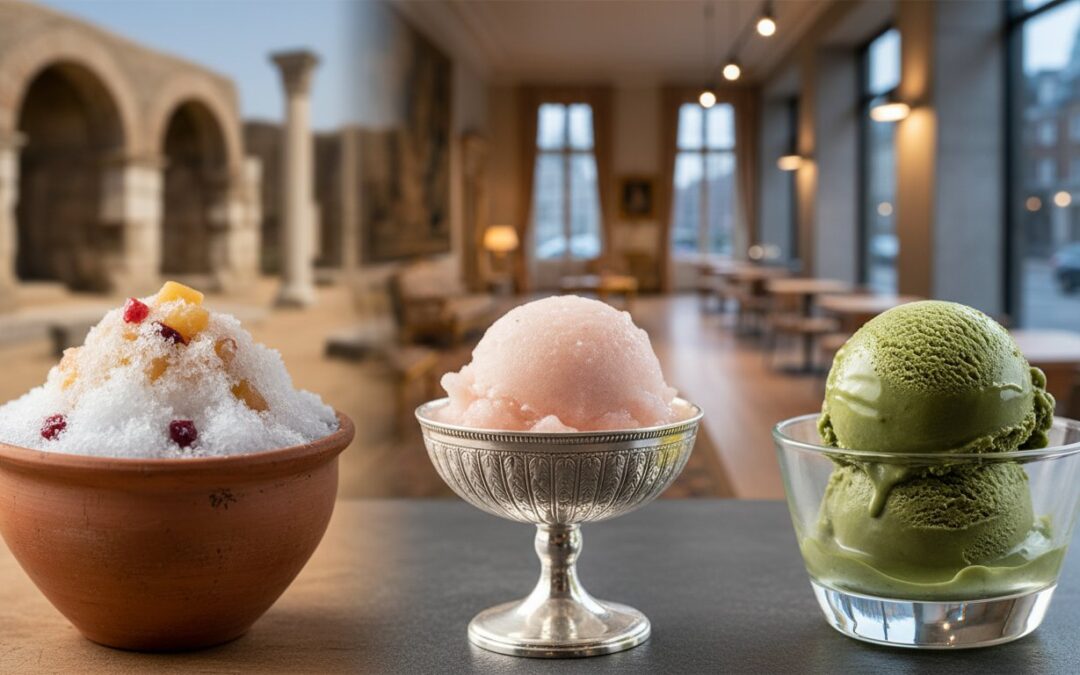
If you think ice cream began with the Victorian seaside or a 1950s American soda fountain, you’re missing over 2,000 years of engineering and ambition. Most of us agree that a perfectly chilled scoop is the ultimate reward, yet the history of how this treat reached our UK high streets is often clouded by marketing myths and conflicting dates. Pinpointing exactly when ice cream was made requires looking past the 1920s commercial boom to the snow-chilled delicacies of the Tang Dynasty in 618 AD and the elaborate ice houses of 17th-century British estates.
We’ve crafted this guide to provide a definitive timeline of this frozen evolution. You’ll discover how refrigeration technology moved from a royal luxury to a robust retail staple, moving from the first hand-cranked churns patented in 1843 to the high-tech, bespoke commercial displays of 2026. This journey from concept to completion explains the transition from ancient ice pits to modern shopfitting, offering the historical context and technical inspiration you need to design a prestigious and functional dessert space.
Key Takeaways
- Trace the evolution of frozen desserts back to the Roman Empire to discover exactly when ice cream was made into the global phenomenon we recognize today.
- Debunk common historical myths and learn how ice cream transitioned from an exclusive royal luxury into a symbol of prestige across 17th-century Europe.
- Understand the 19th-century industrial shift where mechanical refrigeration and insulated ice houses revolutionised food safety and mass-market accessibility.
- Explore how the post-war retail revolution transformed ice cream into a visual experience, prioritising ergonomic design and high-impact “impulse buy” merchandising.
- Discover why a “Concept to Completion” approach and bespoke British craftsmanship are vital for ensuring the longevity and technical performance of modern dessert parlours.
The Earliest Origins: When Was Ice Cream First Made?
Identifying exactly when ice cream was made requires looking beyond the modern supermarket freezer and back into the annals of ancient history. There is no single inventor of this treat; instead, it evolved through centuries of culinary experimentation and technical innovation. Early precursors were often simple combinations of nature’s resources. In the Roman Empire during the 1st century AD, for example, runners fetched snow from the mountains to be mixed with honey and fruit for the Emperor’s table. While refreshing, these were more akin to shaved ice than the creamy textures we manufacture for modern commercial spaces today.
The transition from ice-based treats to dairy-based delicacies was a significant milestone in the history of ice cream, marking the birth of the dessert’s recognizable form. This evolution reflects the same commitment to material quality and process that defines high-end British craftsmanship. By the time we reach the 7th century, the technical foundations for dairy preservation and cooling were already being established in the East.
The Tang Dynasty and the Birth of Dairy Ices
The first true iteration of a dairy-based frozen dessert appeared in China. During the Tang Dynasty (618-907 AD), a chilled mixture of heated milk, flour, and camphor was created, representing the first recorded instance of a dairy-based frozen treat. To produce this, chefs used milk from buffalo, cows, and goats, which was fermented and thickened with flour to create a robust consistency. Camphor, a substance harvested from evergreen trees, served as the primary flavouring agent, providing a cooling, aromatic quality that complemented the richness of the milk.
Managing these frozen stores was a logistical feat that required precision and dedicated staff. King Tang of Shang employed 94 “ice-men” whose sole responsibility was to maintain the ice houses and manage the cooling of these prestigious dishes. This level of end-to-end management mirrors the turnkey solutions we provide in modern catering design, where every detail of temperature control and storage is meticulously planned for operational efficiency. It’s a reminder that even 1,400 years ago, the success of a premium product relied on the quality of the infrastructure behind it.
Ancient Cooling: The Science of Salt and Ice
The ability to freeze ingredients without a natural mountain source relied on the discovery of endothermic reactions. By adding salt to ice, ancient innovators could lower the freezing point of the mixture, allowing them to freeze a separate container of cream or water. Arab medical historians first documented this technical ice-making process in the 13th century, providing a scientific blueprint that would eventually travel to Europe. This discovery was the catalyst for change, allowing the industry to move away from simple chilled drinks. By the 1660s, “water ices” or sorbets had become a staple in the elite social circles of Paris and Naples, setting the stage for the global expansion of the frozen dessert market.
The European Arrival: From Royal Courts to British Streets
Popular legend often suggests that Marco Polo returned from China in 1295 with secret recipes for water ices. Modern historians generally agree that this narrative is a piece of Victorian fiction designed to add a sense of adventure to the dessert’s origins. The genuine history of The European Arrival of chilled sweets is actually found in the high-stakes diplomacy of 17th-century royal banquets. During this period, ice cream was an ultimate symbol of prestige. Only the wealthiest estates could afford the massive ice houses and intensive manual labour required to harvest and store frozen blocks through the summer months.
The first recorded instance of when ice cream was made and served in England was at the Feast of St George at Windsor Castle in 1671. Records show that King Charles II was the only person at the table served a single plate of “iced cream”. The surrounding nobility had to watch the monarch enjoy the rare delicacy without a taste for themselves. By the early 1700s, the secret began to leak into the public domain. Mary Eales, a confectioner to Queen Anne, published the first English ice cream recipe in 1718, marking the start of a slow move toward wider availability.
The Italian Influence and the Gelato Legacy
Italian “gelatieri” were the true pioneers who brought professional ice cream production to the masses. These artisans migrated to London and Paris, opening the first dedicated cafes that served ices to a growing middle class. In 1686, Francesco Procopio dei Coltelli opened Café Procope in Paris, which became a blueprint for the modern dessert parlour. These early establishments made a clear distinction between fruit-based sorbets and dairy-based creams. They used “sorbetto” for refreshing, water-based treats and “crema” for richer, egg-thickened varieties. This era established the need for high-quality presentation and durable service areas. Operators today still rely on bespoke catering counters to manage the specific temperature requirements of these diverse products.
Agnes Marshall: The British Queen of Ices
The late 19th century saw a technical revolution led by Agnes Marshall. She was a formidable entrepreneur who modernised how the British public consumed frozen treats. In 1885, she launched the “Marshall’s Patent Freezer”, a device that could freeze a pint of cream in under five minutes. This was a significant leap from the hours of hand-cranking previously required. Marshall was also a scientific visionary. In 1901, she suggested using liquid air to create ice cream, a concept that wouldn’t be fully realised until the advent of modern molecular gastronomy. Her 1888 cookbook even included one of the first descriptions of an edible “cornet”, which laid the groundwork for the global popularity of the ice cream cone.

The Industrial Shift: How Mechanical Refrigeration Changed Everything
The 1800s marked the era when The Industrial Shift occurred, moving ice cream from an elite luxury to a staple of the British high street. Before this period, when ice cream was made, it required an arduous process of hand-cranking and expensive natural ice. Jacob Fussell transformed the market in 1851 by opening the first commercial ice cream factory in Baltimore. He utilised surplus cream to create a reliable supply chain, proving that mass production was not only viable but highly profitable. This transition relied heavily on the development of the insulated ice house, which improved food safety and allowed for longer storage cycles before the product reached the consumer.
From Ice Harvesting to Mechanical Cooling
Harvesting natural lake ice was a brutal, dangerous trade during the early 19th century. Workers risked their lives on frozen waters to supply urban centres with the cooling power needed for food preservation. This volatile industry changed forever in the 1870s when Carl von Linde invented the ammonia refrigerator. It was a technical milestone that paved the way for modern commercial refrigerators, which are now the backbone of any professional catering environment. By the 1920s, the introduction of continuous process freezers allowed for a smoother, airier texture. This innovation meant manufacturers could finally guarantee a consistent product, standardising the quality of the treat for a global audience.
The Rise of the Soda Fountain and Ice Cream Parlour
The late 19th century saw the emergence of the “soda jerk” as a professional icon. These individuals managed complex dispensing systems with precision and speed. Interestingly, the invention of the ice cream sundae was a direct response to local “blue laws” that restricted the sale of carbonated sodas on Sundays. The sundae provided a legal, “Sabbath-friendly” alternative that quickly became a cultural phenomenon. These early parlours functioned as vital community hubs, serving as social landmarks in towns across the country.
At Cafe Counters, we recognise that the legacy of the ice cream parlour as a functional yet stunning space remains vital. We design and manufacture bespoke environments that honour this history while providing the robust, ergonomic infrastructure needed for modern high-volume service. Whether it is a turnkey installation or a specific equipment upgrade, our British-made solutions ensure your space is built for long-term operational efficiency. Understanding when ice cream was made on a commercial scale highlights the importance of reliable cooling, a principle that still guides our design process today.
- 1851: First commercial factory opens, shifting ice cream to a mass-market industry.
- 1870s: Mechanical refrigeration replaces the dangerous ice harvesting trade.
- 1926: Continuous process freezers are perfected, creating the smooth texture we recognise today.
The 20th century further refined these processes, turning ice cream into a global powerhouse. The integration of advanced cooling systems allowed businesses to move from small-batch production to the seamless, high-capacity operations that define the modern hospitality sector.
The Retail Revolution: How Ice Cream Became a Visual Experience
The post-war era in Britain marked a seismic shift in how desserts reached the consumer. Before the 1950s, ice cream was typically hidden in deep, opaque freezers, served by a clerk who scooped from sightless pits. As retail technology evolved, the industry moved toward visual merchandising, transforming ice cream from a hidden commodity into a primary impulse buy. While the historical record of when ice cream was made stretches back to ancient empires, the 20th century democratised the treat through visibility. Retailers realised that seeing the product, specifically the vibrant colours and textures of a premium deli counter filled with artisan gelato, increased sales by over 40% in high-traffic environments.
Maintaining this visual appeal presents a significant engineering challenge. Temperature stability is the primary hurdle for modern retailers; a fluctuation of just 2 degrees Celsius can compromise the silky texture of a batch. Our bespoke counters are designed to mitigate these risks, ensuring that the product remains as perfect as the moment it was churned. We focus on creating a seamless bridge between robust industrial refrigeration and elegant retail presentation.
The Psychology of the “Grab and Go” Display
Modern consumer habits favour speed and accessibility. The introduction of refrigerated grab and go display units has revolutionised the sector, allowing customers to select pre-packed tubs or sticks without waiting for service. Success in this area relies on glass clarity and precision lighting. We utilise high-specification LED systems that render colours accurately without emitting heat that could damage the product. These units must balance aesthetic prestige with rigorous food hygiene standards, featuring easy-to-clean surfaces and ergonomic access for restocking.
Modern Preservation: Beyond Simple Freezing
Modern ice cream preservation is a science of humidity and airflow. Poorly designed units often suffer from Ostwald ripening, where temperature swings cause small ice crystals to melt and refreeze into larger, crunchy grains. Our engineering team implements advanced humidity controls to prevent this, maintaining the integrity of the product even in busy UK cafes where doors are constantly opened. By integrating energy-efficient technology, we ensure that these units provide a prestigious display while remaining cost-effective and environmentally responsible for the 21st-century business owner.
Looking to elevate your dessert presentation with a bespoke retail solution? Explore our full range of professional display counters and start your journey from concept to completion.
Modern Ice Cream Merchandising: British Craftsmanship in 2026
Understanding when ice cream was made helps us appreciate the journey from ancient snow-chilled delicacies to the sophisticated retail environments of 2026. Today, the success of a dessert parlour relies on a “Concept to Completion” strategy. This holistic approach ensures that the initial creative vision aligns perfectly with the final physical installation. It removes the stress of managing multiple contractors, as a single expert partner handles everything from the layout design to the technical refrigeration requirements. For a new entrepreneur, this reliability is the difference between a smooth launch and a delayed opening.
British manufacturing remains the gold standard for quality control and operational longevity. While imported units might seem cost-effective initially, they often carry lead times of 12 weeks or more and lack the robust build quality needed for busy UK high streets. TFSE Products manufactures counters in the UK using high-grade materials that are designed to withstand the rigours of commercial use for a decade or more. Choosing local craftsmanship means you’re investing in a unit that’s built to last, backed by accessible technical support and readily available spare parts.
Visualisation is a core part of the modern design process. We use advanced CAD modelling to allow cafe owners to see their ice cream display in a digital 3D environment before the manufacturing process begins. This step is crucial for checking spatial flow and ensuring the counter fits the specific dimensions of the premises. It allows for adjustments in the design phase, preventing expensive mistakes during the build. Seeing the shop layout in high definition gives owners the confidence that their investment will deliver the desired aesthetic impact.
Bespoke Solutions for Artisan Gelaterias
The trend for 2026 focuses on brand heritage. Modern gelaterias are moving away from generic, mass-produced units in favour of bespoke counters that reflect their unique story. We utilise premium materials like 304-grade stainless steel and high-clarity, heated glass to prevent condensation in humid UK summers. Ergonomics play a vital role here too. A counter designed with the server in mind can increase efficiency by 15% during peak periods, ensuring that staff can serve customers quickly without unnecessary physical strain.
The Future of Food Display
Technology is now embedded into the fabric of food service. Smart sensors and remote monitoring systems are becoming standard, allowing owners to track refrigeration temperatures via smartphone apps. This proactive approach can reduce maintenance costs by 20% by identifying potential issues before they lead to equipment failure. Sustainability is also a primary driver. We focus on low-carbon manufacturing processes and energy-efficient compressors to help businesses align with the UK’s 2050 Net Zero targets. It’s about creating a prestigious display that’s as responsible as it is beautiful.
Ready to transform your vision into a high-performing retail space? Contact TFSE Products for a bespoke counter consultation and start your journey from concept to completion with the UK’s leading experts.
Shaping the Future of Your Dessert Destination
Understanding when ice cream was made and how it transitioned from a royal luxury to a high-street staple highlights the vital importance of professional presentation. Since 1991, Cafe Counters has helped UK businesses master this visual appeal through bespoke shopfitting solutions tailored for the hospitality sector. We provide a seamless Concept to Completion service that takes your initial vision and turns it into a functional, high-end reality. Our British-based manufacturing facility ensures every piece of equipment is built to last; it meets the rigorous demands of a busy commercial environment.
Our team utilizes expert CAD modelling for every project to ensure your space is both ergonomic and visually stunning. Whether you’re launching a new high-street gelato parlour or upgrading a retail kiosk for 2026, our counters provide the robust durability your business needs to thrive. We manage every technical detail of the design and installation process so you can focus on serving your customers. Design your dream dessert display with Cafe Counters and let’s build a space that honours the rich history of ice cream while securing your brand’s future.
Frequently Asked Questions
Who is credited with inventing ice cream?
No single person is credited with the invention, but historical records trace the earliest versions of frozen treats to China’s Tang Dynasty between 618 and 907 AD. These early creators used a mixture of buffalo milk, flour, and camphor to create a chilled dessert. In the 17th century, Antonio Latini from Naples wrote the first official recipe for a sorbet that many historians consider the precursor to modern dairy ice cream.
When was the first ice cream parlour opened in the UK?
The first commercial ice cream parlour in the UK was established by Carlo Gatti in 1851 near Charing Cross. Gatti, a Swiss-Italian immigrant, sold scoops for one penny to the public from a purpose-built stand. This milestone marked the moment when ice cream was made accessible to the working classes rather than being reserved for the elite. It transformed the industry from a niche luxury into a staple of British high streets.
How did people make ice cream before refrigerators were invented?
Makers relied on ice houses and the pot-in-pails method before mechanical refrigeration became available in the late 19th century. They placed a metal bowl containing the mixture into a wooden bucket filled with crushed ice and salt. The salt lowered the freezing point of the ice; this allowed the cream to reach a solid state through constant manual stirring. This labor-intensive process required significant physical effort to achieve a smooth texture.
When was the ice cream cone invented?
The ice cream cone gained global popularity at the 1904 St. Louis World’s Fair, though Italo Marchiony patented a waffle-making machine in December 1903. During the 1904 fair, Ernest Hamwi, a Syrian concessionaire, rolled his thin waffles into cones to help an ice cream vendor who had run out of glass dishes. This was a pivotal moment in the timeline of when ice cream was made portable for the mass market.
What is the difference between historical ice cream and modern gelato?
Historical ice cream was often a coarse mixture of snow and honey, whereas modern gelato is a refined product with specific technical standards. Gelato contains roughly 4% to 9% butterfat, which is lower than the 10% minimum found in standard ice cream. It’s churned at a slower speed to incorporate less air, resulting in a denser texture that requires precise temperature control in a professional display counter to maintain its consistency.
Why was ice cream once considered a dessert only for royalty?
Ice cream remained a luxury for the elite until the mid-1800s because of the immense cost of harvesting and storing natural ice. Only wealthy estates could afford to build and maintain underground ice houses to keep blocks frozen through the summer months. Expensive ingredients like sugar and exotic spices further restricted the treat to royal banquets, such as those held by King Charles I in the 17th century.
What was the first ice cream flavour ever made?
The earliest documented flavours were camphor and buffalo milk, used during the Chinese Tang Dynasty in the 7th century. By the time 17th-century European chefs began refining the process, floral notes like orange blossom and rose water were the preferred choices. Vanilla didn’t become a dominant flavour until the late 1700s when Thomas Jefferson discovered it in France and brought the specific recipe back to the United States.
How long has ice cream been sold commercially in the UK?
Ice cream has been sold commercially in the UK for over 170 years, following the opening of Carlo Gatti’s first stand in 1851. Before this commercial expansion, the treat was only available in high-end confectioners or private clubs. The industry grew rapidly after 1870 as Italian immigrants established hokey pokey carts across London, bringing affordable frozen desserts to the city’s streets and establishing a long-standing British tradition.