
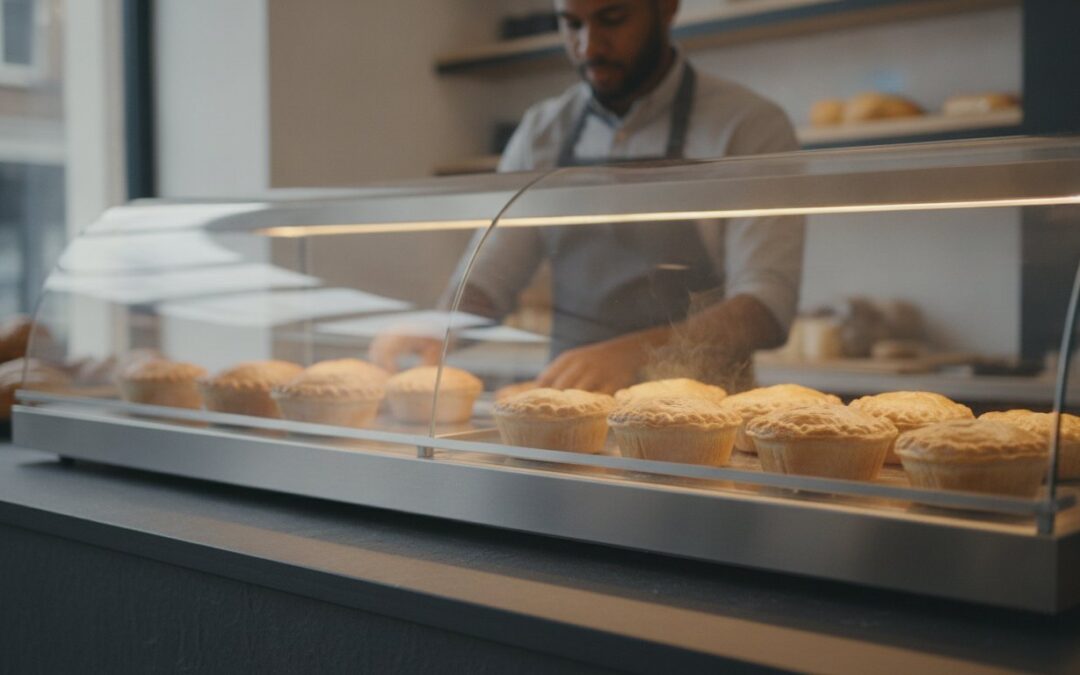
Is your current display cabinet a silent salesman or a pastry graveyard? While many operators focus solely on raw heat, the difference between a golden, flaky crust and a disappointing soggy bottom often comes down to the subtle science of humidity control. It’s a challenge every UK baker and retailer faces, especially when trying to maintain that “just-baked” appeal throughout a busy service without compromising on food safety standards.
We understand that a countertop heated display for pies isn’t just a piece of equipment; it’s a vital investment in your brand’s reputation for quality and artisanal pride. This guide provides a professional roadmap for selecting a unit that ensures your food stays at the legally required 63°C or above while protecting the delicate texture of your pastry. We’ll examine how to balance high-visibility glass aesthetics with modern energy efficiency and UKCA-marked reliability. By the end of this article, you’ll know exactly how to choose a system that maximizes impulse sales and meets the rigorous operational demands of the 2026 commercial landscape.
Key Takeaways
- Learn how to maintain the essential 63°C core temperature required by UK food safety regulations while using a countertop heated display for pies as a high-impact merchandising tool.
- Understand the critical role of humidity trays in protecting your pastry’s structural integrity, preventing the common pitfalls of shrinkage and dryness.
- Discover how specific glass profiles and access configurations, such as pass-through models, can streamline your service speed and enhance visual appeal.
- Identify the technical features, from high-grade insulation to removable crumb trays, that reduce long-term energy costs and simplify daily hygiene routines.
- Explore the advantages of UK-based bespoke manufacturing and how custom CAD design ensures your display integrates perfectly with your existing shop fit-out.
What is a Countertop Heated Display for Pies?
A countertop heated display for pies serves as a precision-engineered thermal merchandiser, specifically designed to showcase pastry-based products without compromising their delicate textures. While a simple food warmer might provide raw heat, a professional-grade display manages the internal atmosphere to prevent the dreaded “soggy bottom” or dried-out fillings. The primary objective is to maintain a consistent core temperature of 63°C or higher, which is the legal requirement for hot holding in the UK. By integrating advanced heating elements with aesthetic design, these units transform a functional necessity into a powerful sales tool. They don’t just keep food hot; they communicate quality and freshness to every customer who walks through your door.
The Role of Heated Displays in UK Hospitality
UK hospitality thrives on the “grab and go” culture, where the humble meat pie or sausage roll remains a staple of the high street. Whether it’s a local bakery, a bustling cafe, or a motorway service station, the ability to serve hot, ready-to-eat snacks quickly is a significant revenue driver. Effective restaurant equipment planning is essential here; the placement of your heated display can dictate the entire workflow of your front-of-house service. A well-positioned unit turns a passing customer into an impulse buyer by placing high-quality, hot food directly in their line of sight. It’s about creating a seamless journey from visual attraction to a satisfied purchase.
Key Components of a Pie Merchandiser
A professional countertop heated display for pies incorporates specific components that distinguish it from domestic-grade appliances. Toughened safety glass is a non-negotiable requirement for any customer-facing environment, providing both durability and a clear view of the product from multiple angles. Inside, adjustable shelving allows you to configure the space for varying heights, ensuring that stacked deep-fill pies and long sausage rolls are displayed with equal prominence. We also place a high priority on internal LED lighting. Using a warm colour temperature doesn’t just illuminate the food; it enhances the golden tones of the pastry, making it look as fresh as the moment it left the oven.
This attention to detail aligns with broader food safety principles, ensuring that while the food looks appetising, it’s also being held in conditions that prevent bacterial growth. The integration of digital temperature displays allows staff to monitor the internal environment at a glance, providing peace of mind during a busy lunch rush. By selecting a unit that combines these technical features with robust build quality, you ensure your business remains compliant, efficient, and profitable.
Technical Specifications: Humidity, Heat, and Hygiene
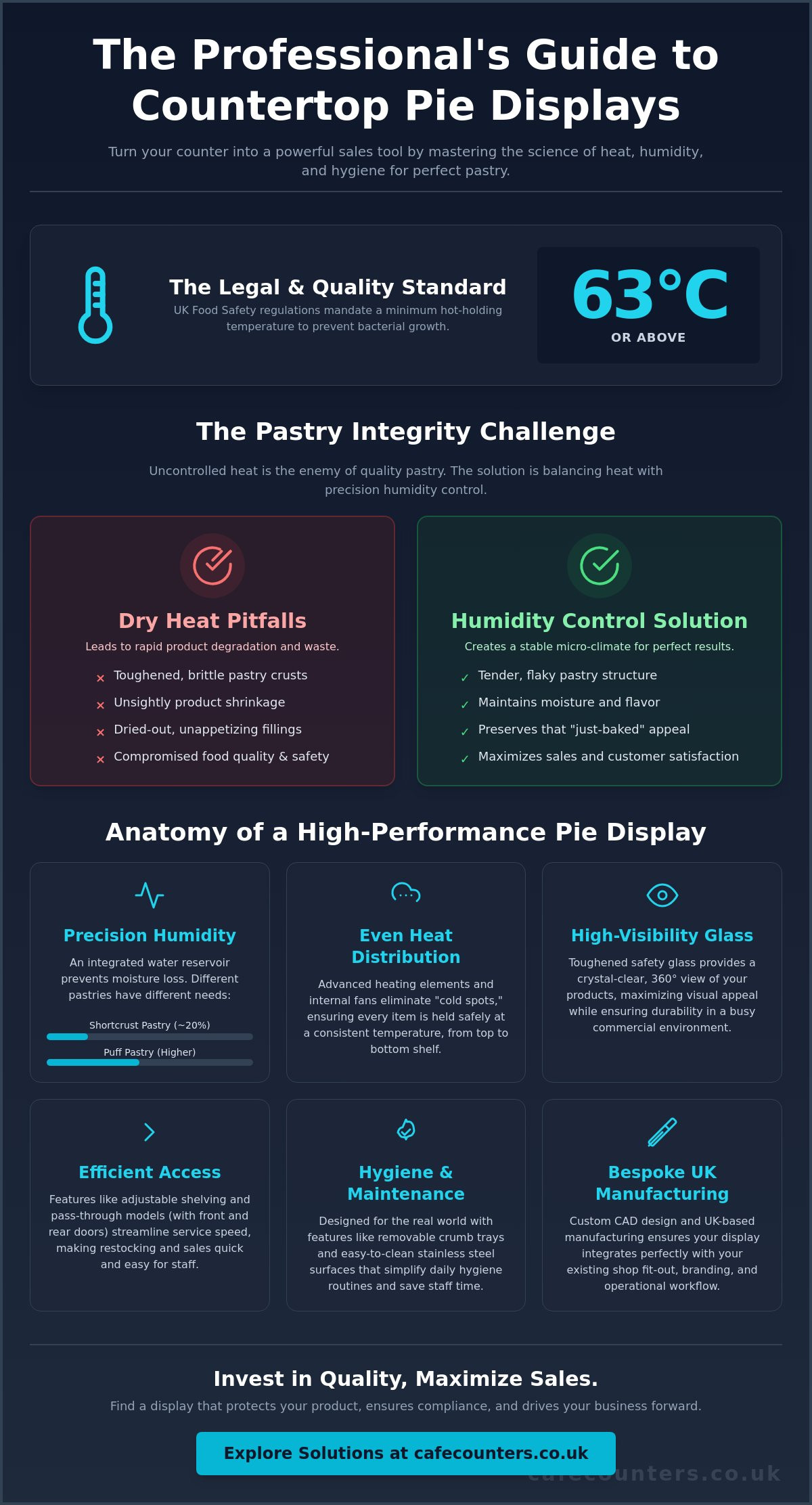
Maintaining the perfect balance within a countertop heated display for pies requires more than just a heating element. Precision is the hallmark of a professional kitchen; without it, even the finest artisanal bake will degrade quickly. Dry, circulating heat is the primary enemy of the perfect pie crust, as it siphons moisture away, leading to toughened pastry and unsightly shrinkage. To counter this, a high-quality unit must provide even heat distribution. This ensures that every shelf maintains a consistent environment without the risk of “cold spots” that could compromise both the quality of your product and your regulatory compliance.
Managing Pastry Integrity with Humidity
A dedicated water reservoir or humidity tray is essential for creating a stable micro-climate within the cabinet. This gentle infusion of moisture prevents fillings from drying out and ensures the pastry remains tender rather than brittle. However, humidity must be managed with care. Poor airflow often leads to the “soggy bottom” phenomenon, where moisture becomes trapped against the base of the pie, ruining the texture. Shortcrust pastry typically maintains its integrity best in a drier environment of approximately 20% humidity, whereas puff pastry requires slightly higher levels to preserve its characteristic lift without shattering. For those looking to refine their setup, exploring our bespoke serving counters can help integrate these technical requirements into a cohesive front-of-house design.
Temperature Control and Food Safety
In the UK, the law is clear: hot food must be held at a core temperature of 63°C or above. Precise thermostatic control, typically ranging from 30°C to 90°C, allows operators to fine-tune the environment based on their specific product range. This precision is vital for keeping products out of the food temperature danger zone, where harmful bacteria can proliferate rapidly. Digital temperature displays provide an immediate, clear reading for staff, simplifying the compliance process during busy periods. For the highest level of thermal precision, our Vision Heated Counters offer advanced management systems that ensure your countertop heated display for pies operates with total reliability, protecting both your customers and your reputation.
Choosing the Right Format: Glass Styles and Merchandising
Selecting a countertop heated display for pies requires a careful balance between your shop’s aesthetic and its operational footprint. One of the most frequent concerns we hear from retailers is whether a new unit will integrate seamlessly with their existing counter space. In a professional environment, a display should never feel like an afterthought. It must look like a built-in component of your service area. Whether you are operating a high-traffic railway kiosk or a quiet village bakery, the physical format of your display dictates how customers perceive the quality of your bakes and how efficiently your staff can serve them. Physical barriers are also a strict requirement under official food safety regulations to protect hot food from external contamination while it remains on view.
Curved vs. Square: The Aesthetic Debate
The geometry of your glass does more than just hold heat; it shapes the customer’s psychological response to your products. Curved glass models offer a softer, contemporary silhouette that effectively reduces overhead glare from shop lighting. This creates a high-end, patisserie-style feel that often justifies a premium price point for your artisanal pies. Conversely, square glass units project a robust, “deli-style” presence. They offer maximum internal volume, allowing you to stack products more efficiently or use larger, decorative trays. While curved glass suggests elegance, square glass communicates abundance and value. Your choice should align with your brand’s regional identity and the specific atmosphere of your retail space.
Access and Ergonomics
Service speed is often determined by how your staff interacts with the equipment. Rear-access models with sliding doors are the standard for staff-served environments. They allow for quick replenishment and serving while maintaining a hygienic barrier between the food and the customer. If your layout features an island placement, 360-degree visibility is essential to capture foot traffic from every angle. In these scenarios, a pass-through model allows for dual-sided access, which is particularly useful during peak lunch rushes. This configuration shares many design principles with a professional deli counter, where ergonomics and visibility are prioritised to drive impulse sales. For self-service “Grab and Go” setups, front-opening doors are the preferred choice, provided they are engineered to retain heat effectively when opened. By choosing the right access format, you ensure that your countertop heated display for pies supports your workflow rather than hindering it.
Operational Efficiency and Maintenance
Investing in a high-performance countertop heated display for pies is an investment in the long-term profitability of your business. While the initial purchase is a significant milestone, the true value of professional equipment reveals itself through low operational costs and ease of maintenance. In a fast-paced UK kitchen or retail environment, you need a unit that retains heat with surgical precision while remaining simple enough for staff to clean during a quick turnaround. High-grade stainless steel construction is the industry standard for a reason. It offers unmatched durability and a non-porous surface that resists bacterial growth, ensuring your display remains as hygienic as it is robust.
Energy Saving Features
Modern energy costs demand equipment that works smarter, not harder. Incorporating double-glazed glass panels is one of the most effective ways to reduce heat loss, keeping the warmth where it belongs while lowering your monthly electricity bills. Efficient heating elements also play a vital role by significantly reducing “warm-up” times, allowing you to reach the required holding temperature faster each morning. Advanced CAD modelling ensures that every internal component is placed with surgical precision to maximise airflow and heat retention. This methodical approach to design means your unit won’t have to struggle to maintain its environment, extending the lifespan of the components and providing a more stable climate for your pastry products.
Cleaning for Food Hygiene Compliance
Daily hygiene routines shouldn’t be a struggle for your team. We design units with rounded internal corners rather than sharp 90-degree joins to eliminate “dirt traps” where crumbs and grease can accumulate. Removable crumb trays are a practical essential, allowing staff to clear debris in seconds without dismantling the entire unit. For deeper cleaning cycles, look for models with easily removable glass panels and shelving. It’s vital to use food-safe cleaning agents that are specifically formulated not to degrade stainless steel or cloud the toughened glass. Maintaining a pristine display is about more than just aesthetics; it’s a core part of your commitment to food safety and customer trust.
To ensure your equipment continues to perform at its peak, we recommend following a structured maintenance schedule:
- Daily: Empty and sanitise the crumb trays; wipe down all glass surfaces with a non-abrasive cloth; check and refill water reservoirs to maintain humidity levels.
- Weekly: Remove and deep-clean all internal shelving; inspect door seals for any signs of wear or heat leakage.
- Monthly: Verify the accuracy of the digital thermostat against an independent probe; inspect the heating elements for any buildup or signs of fatigue.
If you are looking to upgrade your current setup to a more efficient model, you can view our full range of heated displays to find a solution that fits your specific operational needs.
The TFSE Advantage: Bespoke UK Manufacturing
Choosing a countertop heated display for pies is often the final piece of the puzzle in a commercial fit-out. While mass-produced units are readily available, they frequently lack the durability required for the rigours of a busy UK high street. We believe that true quality stems from local expertise and internal production facilities. By manufacturing our counters in West Molesey, Surrey, we maintain absolute control over the materials and assembly processes. This ensures that every weld, glass panel, and heating element meets our exacting standards for long-term operational efficiency. Beyond the build quality, working with a domestic manufacturer provides a level of after-sales support that overseas suppliers simply cannot match. If you need a technical adjustment or a replacement component, our team is ready to provide the steady, reliable hand your business depends on.
Why Bespoke Beats Off-the-Shelf
Off-the-shelf units often force you to compromise on your vision. You might find a unit that fits your budget but clashes with your existing cafe counter materials or leaves awkward gaps in your retail space. A bespoke approach eliminates these frustrations. We work with you to ensure your countertop heated display for pies matches your interior design perfectly, whether that involves specific stainless steel finishes or integrated stone surfaces. Custom dimensions allow us to maximise every available inch of your counter, turning dead space into a profitable display area. We also specialise in creating seamless runs where heated units sit flush alongside refrigerated patisserie displays, providing a unified look that enhances the professional feel of your shop.
Our End-to-End Project Management
Our process is built on transparency and precision. We don’t just sell equipment; we manage the entire journey from the initial idea to the final physical space. For our national UK clients, this starts with a comprehensive site survey and planning phase. Our designers use CAD modelling to bring your vision to life, allowing you to see exactly how the unit will function within your specific environment. This allows us to account for awkward shop layouts or unique service requirements before the first piece of steel is cut.
Once manufacturing is complete, our commissioning process ensures the unit performs perfectly from day one. We test every thermal setting and humidity control to guarantee your pies remain golden and crispy. This methodical approach alleviates the stress of commercial projects, positioning us as your expert partner in retail excellence. If you are ready to elevate your food presentation with a unit designed specifically for your space, enquire about a custom heated display solution today.
Future-Proofing Your Hot Food Merchandising
Selecting the right countertop heated display for pies is a strategic decision that directly impacts food quality, energy costs, and regulatory compliance. We’ve explored how precision humidity control prevents the dreaded soggy bottom and why double-glazed glass is essential for modern thermal efficiency. These technical details, combined with ergonomic design and high-visibility glass, ensure your hot bakes remain the star of your retail environment.
With over 30 years of hospitality equipment experience, we understand the unique pressures of the UK market. Our UK-based manufacturing facility and expert CAD design services allow us to transform your vision into a high-performance reality through meticulous site surveys and project management. We invite you to view our range of professional heated display solutions and discover how a bespoke approach can elevate your brand’s reputation for quality. We look forward to helping you create a space that’s as functional as it’s visually striking.
Frequently Asked Questions
What is the ideal temperature for a heated pie display?
Hot food must be held at a core temperature of 63°C or above to comply with UK safety standards. Most operators set their countertop heated display for pies to between 65°C and 72°C to provide a safe buffer during busy periods when doors are frequently opened. This range ensures the filling remains piping hot while protecting the pastry from overheating and becoming brittle.
How do I stop my pastry from going soggy in a heated cabinet?
Preventing soggy pastry requires a precise balance between humidity and airflow. Units equipped with internal fans ensure even heat distribution, while a managed water reservoir prevents the air from becoming too dry. If moisture is trapped at the base of the product, it’s often a sign of poor shelf circulation; using perforated trays can help air move freely around the pie base.
Do I need a plumbed water connection for a humidity-controlled unit?
Most countertop units don’t require a plumbed water connection and instead utilise a manual-fill humidity tray. This design provides greater flexibility for placement on existing counters without the need for expensive plumbing modifications. For high-volume environments, we can discuss bespoke options, but a standard countertop heated display for pies is typically a “plug and play” solution.
Can I display other hot foods like sausage rolls or pasties in a pie cabinet?
Yes, these cabinets are highly versatile and perfectly suited for displaying sausage rolls, pasties, and other hot savoury snacks. Since these products share similar thermal and humidity requirements with pies, they can be merchandised together effectively. Adjustable shelving allows you to accommodate different product heights to create an abundant and attractive display.
How much energy does a countertop heated display use daily?
Daily energy consumption varies based on the unit’s size and its insulation quality. Models featuring double-glazed glass and high-grade stainless steel retain heat far more effectively, which reduces the frequency of the heating element cycling on. Choosing a unit designed through CAD modelling ensures that heat is directed exactly where it’s needed, minimising waste and keeping your utility bills manageable.
Is it better to have a curved glass or square glass display?
The choice depends on your specific branding and service style. Curved glass offers a softer, modern aesthetic that minimises glare from overhead lighting, making it ideal for high-end cafes. Square glass provides a more traditional deli-style appearance and maximises the internal volume, which is often preferred for high-traffic bakeries where stock density is a priority.
How often should I clean my heated food display unit?
You should perform a basic clean of your display unit every day. This includes emptying the crumb trays, wiping down the glass, and sanitising all food-contact surfaces. A deeper weekly clean should involve removing the shelving and glass panels to access the internal corners, ensuring your equipment remains fully compliant with local hygiene inspections.
Are there specific UK regulations for hot food display temperatures?
UK regulations, specifically the Food Safety and Hygiene (England) Regulations 2013, mandate that hot food must be kept at 63°C or higher. There is a single exception allowing food to be displayed below this temperature for up to two hours, but this can only happen once. Additionally, all new equipment sold in Great Britain must carry the UKCA mark to prove it meets safety and environmental standards.