
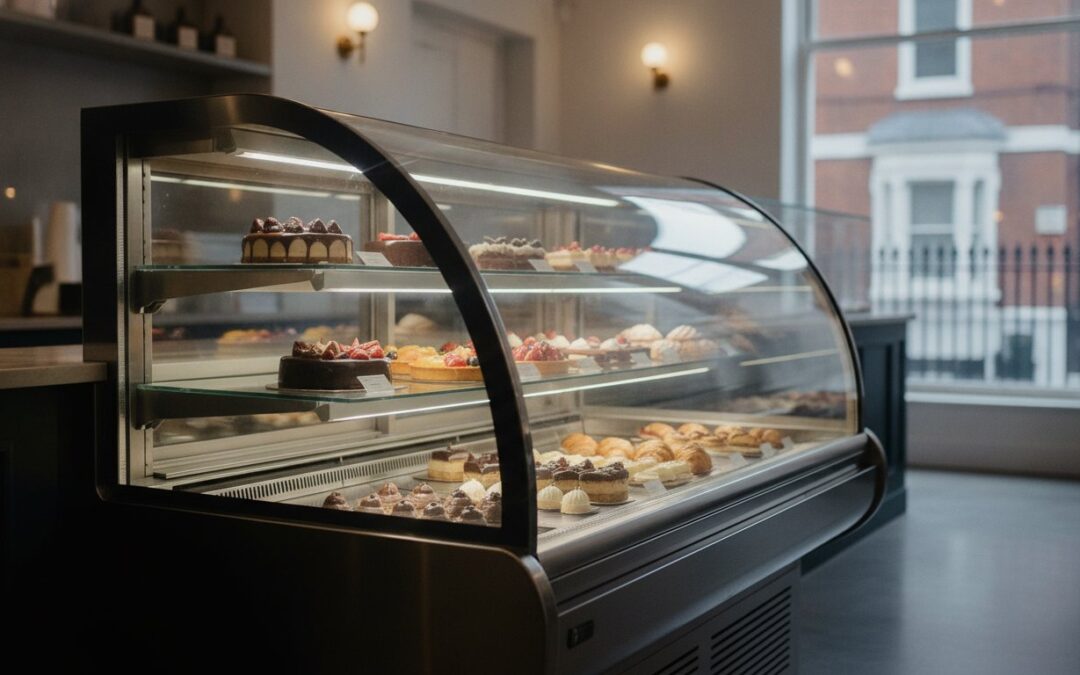
A curved glass display fridge is far more than a cooling unit; it is a strategic piece of visual theatre that can transform a standard retail layout into an immersive culinary experience. You understand that the first bite is taken with the eyes, but you’ve likely also dealt with the headache of condensation obscuring your products or units that simply don’t align with your shop’s unique footprint. It’s a common struggle to find equipment that looks high-end while standing up to the relentless pace of a professional food business.
This guide provides the technical clarity you need to choose, specify, and maintain a display that drives sales without sacrificing operational efficiency. You’ll discover how to manage the 2026 UK landscape of F-Gas regulations and energy labelling while ensuring your equipment remains a durable, compliant asset. We will walk through the journey from initial CAD modelling to long-term maintenance, ensuring your investment delivers both a stunning visual impact and total peace of mind.
Key Takeaways
- Learn how the “lens effect” inherent in curved glass enhances the perceived volume and freshness of your products to drive impulse sales.
- Identify the critical technical features, such as double-glazed panels and thermodynamic air curtains, that maintain consistent cooling and operational efficiency.
- Distinguish between tiered patisserie displays and deep-deck deli counters to ensure your chosen unit meets specific humidity and storage requirements.
- Use professional CAD modelling to specify a curved glass display fridge that integrates seamlessly into your shop layout and optimizes customer flow.
- Understand the long-term benefits of British manufacturing, including precision engineering and dedicated UK-based support for your commercial project.
What is a Curved Glass Display Fridge and Why Choose One?
A curved glass display fridge is a professional refrigerated unit engineered with a contoured front panel to eliminate the harsh visual barriers typical of standard cabinetry. While traditional units serve a purely functional purpose, these curved models act as a seamless interface between your product and your customer. By removing the bulky frames and corners found in flat-glass units, the curved profile offers a panoramic view that is particularly effective for high-end patisserie displays and deli counters where presentation is everything.
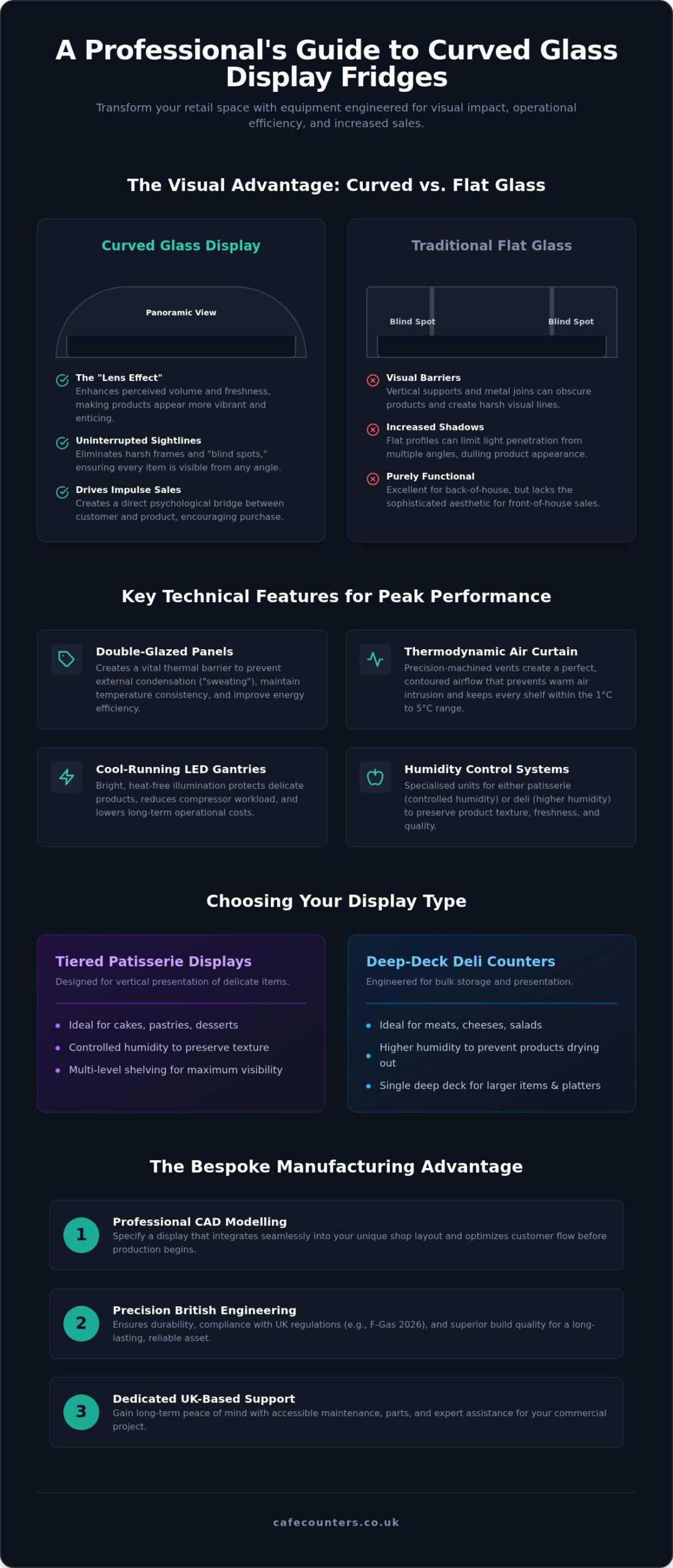
The decision to choose a curved unit over a traditional flat-glass model often comes down to the “lens effect.” This physical property of curved glass doesn’t just show the food; it actively enhances the perceived volume and vibrancy of every item on the shelf. The curve allows light to penetrate from more angles, reducing shadows and making products appear closer and fresher. It’s a subtle but powerful psychological tool that transforms a simple refrigerated storage area into a high-impact retail stage.
The Aesthetic Advantage in Modern Retail
In the competitive world of artisanal cafes and boutique bakeries, your equipment is a reflection of your brand’s standards. A curved glass display fridge helps soften the industrial atmosphere of a commercial kitchen, creating a more fluid and welcoming customer environment. These units act as a sophisticated focal point, allowing you to match your display style to a specific brand identity, whether that’s a rustic, traditional feel or a sleek, minimalist look. It signals to your clients that you value precision and quality in every detail of your business.
Visibility and Impulse Purchase Psychology
Flat-glass units often suffer from “blind spots” created by vertical supports and metal joins, which can hide your most profitable items from certain viewing angles. Curved glass technology enables wider, self-supporting spans of glass that maximise visibility and light penetration. This ensures that your products remain the hero of the display, regardless of where the customer is standing. An uninterrupted sightline serves as a direct psychological bridge between the consumer and the product, eliminating the visual barriers that often stall the decision to purchase. By making the food appear more accessible and enticing, you naturally drive a higher volume of impulse sales.
When you compare these to traditional units, the benefits for front-of-house service are clear. While flat-glass fridges are excellent for back-of-house efficiency, the curved alternative is the gold standard for customer-facing environments where the visual appeal of fresh food is the primary driver of revenue. It bridges the gap between high-end design and practical refrigeration, ensuring your inventory looks as good as it tastes.
Key Technical Features of Professional Curved Displays
Engineering a curved glass display fridge involves managing complex physics that traditional flat units simply don’t face. It isn’t just about aesthetics; it’s about ensuring that the contour of the glass doesn’t compromise the internal climate. High-end displays now utilise advanced double-glazed curved panels. While single glazing is common in entry-level models, it often leads to external “sweating” and higher energy bills. Double glazing creates a vital thermal barrier that keeps the cold in and the heat out, which is essential for meeting the 2026 energy efficiency standards in the UK.
Lighting is another critical component where technical precision makes a difference. Professional units employ LED gantries specifically designed to sit within the refrigerated zone without emitting heat. Traditional bulbs can raise internal temperatures by several degrees, forcing the compressor to work harder. By using cool-running LEDs, you protect the integrity of your products while reducing operational costs. This level of detail ensures that your curved glass display fridge remains a reliable asset for years, rather than a source of constant maintenance stress.
The most significant engineering challenge in a curved unit is the management of the “air curtain.” This is the invisible layer of cold air that circulates across the front of the display. In a flat unit, this air travels in a straight line. In a curved display, the air must follow the contour of the glass perfectly. If the airflow breaks, warm air enters the cabinet, causing temperature spikes and potential food safety risks. Precision-machined vents are required to maintain this curtain, ensuring that every shelf stays within the required 1°C to 5°C range.
Advanced Cooling and Airflow Management
You must choose between ventilated and static cooling based on your specific inventory. Ventilated cooling uses fans to move air quickly, which is perfect for deli counters where consistent temperatures are vital. However, for delicate items like cream cakes, static cooling might be better to prevent the product from drying out. When you’re Planning Your Layout and safety protocols, digital controllers provide the granular oversight needed to stay compliant with UK HACCP standards.
Durability and Maintenance Considerations
A professional display must be easy to sanitise. We recommend units featuring hinged glass panels that swing upward or forward, allowing staff to reach every corner of the cabinet. Using high-grade food grade stainless steel for all internal decks and back-bar components prevents corrosion and simplifies the cleaning process. Anti-condensation technology is also a must-have, as it ensures your products remain visible even in humid cafe environments. If you need a unit that fits a specific footprint, our team can help you specify bespoke patisserie displays that balance these technical requirements with your unique space.
Comparing Curved Glass Fridge Types: Patisserie vs Deli Counters
Selecting the right curved glass display fridge requires an understanding of how different food groups interact with refrigerated environments. While a patisserie unit and a deli counter might look similar from a distance, their internal engineering serves vastly different purposes. One focuses on the delicate preservation of moisture, while the other prioritises volume and accessibility for high-speed service. Choosing the wrong type can lead to premature food spoilage or a layout that hinders your staff’s workflow.
Modern food businesses often require more than a “one size fits all” approach. You might need a hybrid solution that integrates a refrigerated deli section with a heated gantry or a dry ambient display for breads. We specialise in creating bespoke serving counters that combine these different elements into a single, cohesive run. This approach ensures your shop floor maintains a premium, unified aesthetic while providing the specific technical conditions each product category demands. Whether you prefer a traditional serve-over model or a self-service grab-and-go section, the goal is to align the equipment with your specific customer journey.
The Specialist Patisserie Display
Cakes, pastries, and cream-filled desserts are highly susceptible to drying out in standard refrigerated air. A professional patisserie display counter is engineered to maintain higher humidity levels, ensuring that sponge stays moist and chocolate remains glossy. These units typically feature tiered glass shelving to maximise vertical visibility, allowing you to present a diverse range of products without crowding the deck. By adjusting shelf heights, you can create a tiered visual narrative that guides the customer’s eye from your signature bakes down to smaller impulse treats.
Deli and Fresh Produce Serve-Overs
Deli counters are built for heavy-duty interaction and bulkier items like cured meats, cheeses, and prepared salads. They feature deep stainless steel decks that provide ample space for large platters or gastronorm containers. A high-quality deli counter balances service speed with product protection by providing a robust physical barrier while keeping items within easy reach of the operator. Staff efficiency is further enhanced by rear storage compartments, allowing for quick replenishment during busy lunch rushes without leaving the service area.
Precision is key when planning these installations. Because the cooling requirements for a raw meat display differ significantly from those of a fresh cream cake, the internal airflow must be calibrated accordingly. Our CAD design process allows us to map these requirements before a single piece of steel is cut, ensuring your hybrid counter performs as beautifully as it looks.
Planning Your Layout: Size, Placement, and Lighting
Integrating a curved glass display fridge into your premises involves more than simply finding an available gap on the shop floor. Successful placement is an exercise in orchestrating customer movement and maximizing visual impact. A well-executed cafe layout design ensures the display acts as a primary visual anchor, drawing patrons from the entrance directly toward the point of sale. Ergonomics play a vital role here; the counter height must be low enough for a clear customer view while remaining at a comfortable working level for your service team.
Lighting serves as your silent salesman within the cabinet. We recommend a strategic approach to colour temperature to highlight specific food textures. Warm LEDs, typically around 3000K, are ideal for enhancing the golden tones of artisanal breads and pastries. In contrast, cool LEDs at 4000K or higher make salads and fresh deli meats appear crisp, vibrant, and hygienic. High Colour Rendering Index (CRI) lighting ensures that the deep reds of a strawberry tart or the rich greens of a pesto pasta are represented accurately under the glass, driving the impulse to buy.
Integrating Displays into Bespoke Counters
Choosing bespoke cafe counter integration provides a seamless, high-end finish that standalone units cannot replicate. This structured approach requires meticulous planning for compressor ventilation. Because refrigeration systems generate significant heat, built-in designs must include clear paths for air to escape to prevent premature component failure. During our CAD modelling phase, we precisely map out power requirements and drainage lines, ensuring the final installation is as functional as it is beautiful. If you’re ready to transform your space, our team can design a bespoke serving counter tailored to your exact operational needs.
Maximising the “Grab & Go” Potential
Modern food retail often benefits from a hybrid service model. By combining traditional curved serve-overs with refrigerated grab and go display units, you cater to both the leisurely browser and the time-pressed professional. Strategic placement is key; positioning self-service units near the entrance captures quick-turnover trade, while your curved glass display fridge should sit closer to the till to encourage high-value impulse additions. Effective cross-merchandising, such as placing premium bottled drinks alongside your deli selection, naturally increases the average transaction value without requiring additional staff intervention.
Why Bespoke British Manufacturing Outperforms Standard Units
Investing in a curved glass display fridge from a domestic manufacturer is a decision that prioritises long-term operational stability over the false economy of mass-produced imports. Standard units often struggle to adapt to the unique architectural constraints of UK commercial spaces, leading to compromised layouts or inefficient workflows. By choosing British-made equipment, you gain the advantage of a unit engineered specifically for your environment. Our UK-based manufacturing facility allows for meticulous quality control, ensuring every component meets rigorous performance standards before the installation phase begins.
Sustainability is becoming a non-negotiable factor for food businesses in 2026. Local sourcing significantly reduces the carbon footprint associated with transporting heavy refrigeration equipment across continents. Beyond the environmental benefits, a local supply chain provides a practical safety net for your business. Should you ever require maintenance or spare parts, you aren’t waiting weeks for international shipping. You have a partner nearby who understands your equipment’s history and can provide professional commissioning services to keep your display running at peak efficiency.
For hospitality businesses that also manage a delivery fleet, maintaining the integrity of all glass surfaces is vital; QwikFit Windscreens Ltd offers mobile repair services that ensure your commercial vehicles stay safely on the road.
The CAD Modelling and Design Process
Precision engineering starts long before the first piece of stainless steel is cut. Our advanced CAD modelling services allow you to visualise your curved glass display fridge within the exact dimensions of your shop floor. This digital rehearsal is essential for customising finishes and materials that align with your brand identity. Professional design planning eliminates the risk of costly site delays, as every power point, drainage line, and ventilation gap is accounted for during the design phase. It ensures that the final physical product fits perfectly into your bespoke counter run without the need for on-site adjustments.
Professional Installation and Commissioning
Specialist installation is the final, critical step in protecting the longevity of your refrigeration system. A display that isn’t correctly levelled or calibrated can suffer from uneven cooling and increased mechanical wear. The TFSE Products Ltd approach focuses on end-to-end project management, where our expert team handles everything from the initial vision to the final commissioning. We ensure your equipment is calibrated for the specific ambient conditions of your premises, guaranteeing that your air curtains and temperature controllers are set for peak performance from day one. This methodical process provides the reassurance that your investment is fully protected and compliant with all UK food safety regulations.
Future-Proofing Your Food Display Strategy
Selecting a curved glass display fridge is a commitment to both aesthetic excellence and technical reliability. We have explored how the right glass technology and airflow management protect your inventory, while strategic layout planning turns your shop floor into a high-performance sales environment. Whether you are showcasing delicate pastries or robust deli selections, the equipment you choose must balance visual allure with strict food safety compliance. A well-designed counter doesn’t just store food; it actively works to increase your average transaction value through superior visibility.
By partnering with a British manufacturer, you ensure your project benefits from over three decades of engineering expertise and local support. Our UK-based facility has been producing high-end displays since 1991, offering the precision of advanced CAD modelling and the peace of mind that comes with full end-to-end project management. We invite you to request a bespoke counter consultation and CAD design today to see how our energy-efficient solutions can transform your commercial space. Let’s work together to bring your vision to life with a display that is as durable as it is stunning.
Frequently Asked Questions
Are curved glass fridges harder to clean than flat glass ones?
Do curved glass display fridges use more energy?
Modern engineering ensures that a curved glass display fridge is just as efficient as its flat-glass counterparts. By utilising advanced double-glazed panels, these units create a robust thermal barrier that significantly reduces heat transfer. While older, single-glazed models were less efficient, the 2026 energy standards have driven the development of high-performance compressors and LED lighting. These features work together to maintain consistent temperatures while keeping your operational electricity costs manageable.
Can I get a curved glass display fridge made to a specific size?
Bespoke manufacturing is the ideal solution for businesses with unique shop floor layouts or specific space constraints. We use advanced CAD modelling to design units that fit your exact dimensions, ensuring a seamless integration with your existing counters. This custom approach allows you to maximise your retail footprint without the need for unsightly fillers. Whether you require a compact countertop model or a sprawling multi-meter run, we engineer the display to your requirements.
What is the best temperature for a patisserie display?
The industry standard for a patisserie display is between 1°C and 5°C to ensure both safety and product quality. While UK regulations require chilled food to be kept at 8°C or below, the lower range is essential for preserving the texture of fresh cream and the gloss of chocolate ganache. Maintaining this specific thermal window prevents bacterial growth and extends the shelf life of your most delicate artisanal bakes.
How do I prevent condensation on my curved glass display?
Condensation is prevented through the use of high-efficiency double glazing and integrated anti-condensation technology. These systems maintain the external glass surface at a temperature that prevents moisture from the ambient air from settling on the panel. Ensuring your unit has adequate ventilation around the base is also critical, as it allows the refrigeration system to manage humidity levels effectively without obscuring the customer’s view of your products.
What is the difference between ventilated and static cooling in curved fridges?
Ventilated cooling uses internal fans to circulate cold air evenly, making it the superior choice for deli counters where consistent temperatures are vital for food safety. Static cooling relies on natural convection, which results in higher humidity levels within the cabinet. This is often preferred for delicate patisserie items that might dry out under the constant airflow of a ventilated system, ensuring your cakes stay moist for longer.
Does TFSE Products Ltd provide installation across the whole of the UK?
TFSE Products Ltd offers a comprehensive national installation service that covers the entirety of the UK. Our internal team manages the entire process, from the initial delivery to the final commissioning and calibration of your equipment. This end-to-end project management approach ensures that your installation is handled by specialists who understand the technical nuances of bespoke refrigeration, providing a steady and reliable hand for your commercial fit-out.
How long does a bespoke curved glass display counter take to manufacture?
The manufacturing timeline for a bespoke counter typically spans several weeks following the final approval of the CAD designs. This duration allows our UK-based facility to source premium materials and conduct rigorous quality testing before the unit leaves our workshop. We prioritise precision over speed, ensuring that every join and component meets our artisanal standards. We provide a structured schedule at the project’s outset to maintain transparency and trust.