
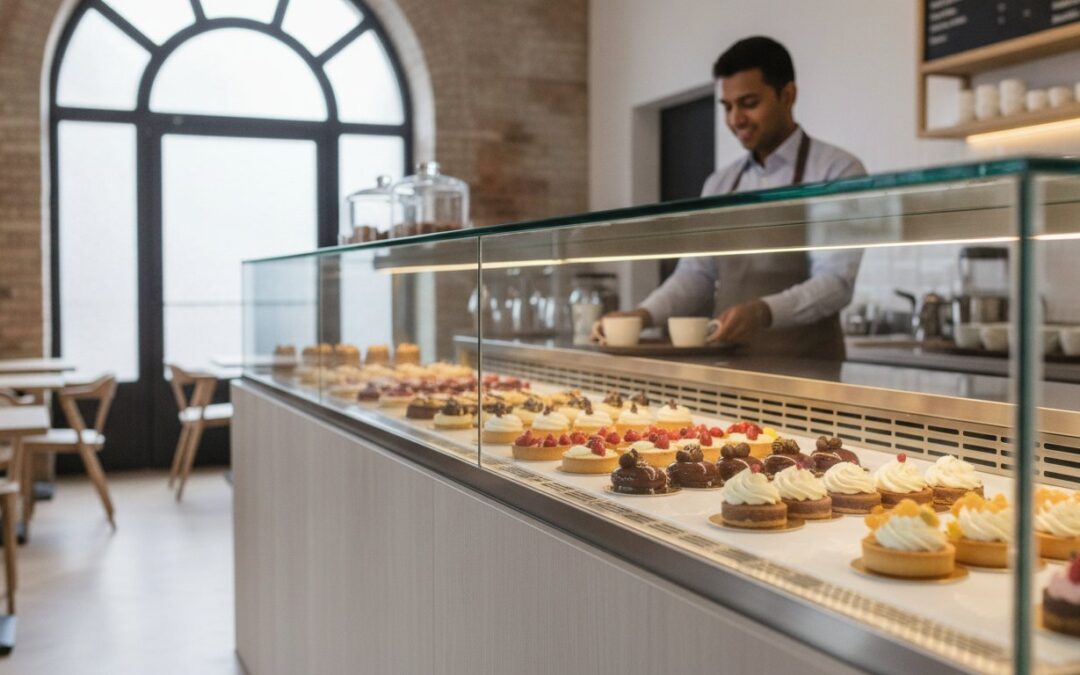
Your customer decides the value of your patisserie before they ever taste a single crumb. In a UK market where the National Living Wage has reached £12.71 and the Food Standards Agency has shifted toward stricter digital enforcement, every square inch of your front-of-house must work harder. You likely know the frustration of sourcing the finest local ingredients only to have guests perceive your brand as “cheap” due to uninspired shelving. It’s a common hurdle that directly affects your bottom line and limits your growth.
This article explores how the impact of display on customer perception serves as a powerful psychological lever to drive impulse purchases and elevate your brand authority. We’ll examine the technical precision behind patisserie displays and bespoke counters that do more than just hold food; they act as silent ambassadors for your quality. By the end of this guide, you’ll understand how to integrate strategic design that improves customer flow, ensures hygiene compliance, and ultimately increases your average transaction value through expert UK manufacturing and meticulous project management.
Key Takeaways
- Understand why customers make critical value judgements in under seven seconds and how your counter acts as a silent salesman for your brand quality.
- Learn how specific materials like stainless steel and mist-free glass create a ‘Hygiene Halo’ that reinforces food safety and freshness cues.
- Discover how the impact of display on customer perception can be engineered using strategic lighting and CAD-modeled bespoke layouts to increase average transaction values.
- Identify the ‘Strike Zone’ and flow dynamics within your serving area to position high-margin items for maximum eye contact and impulse sales.
- Shift from being an equipment buyer to a brand architect by leveraging end-to-end project management to ensure a cohesive and professional hospitality environment.
The Psychology of Visual Merchandising in Foodservice
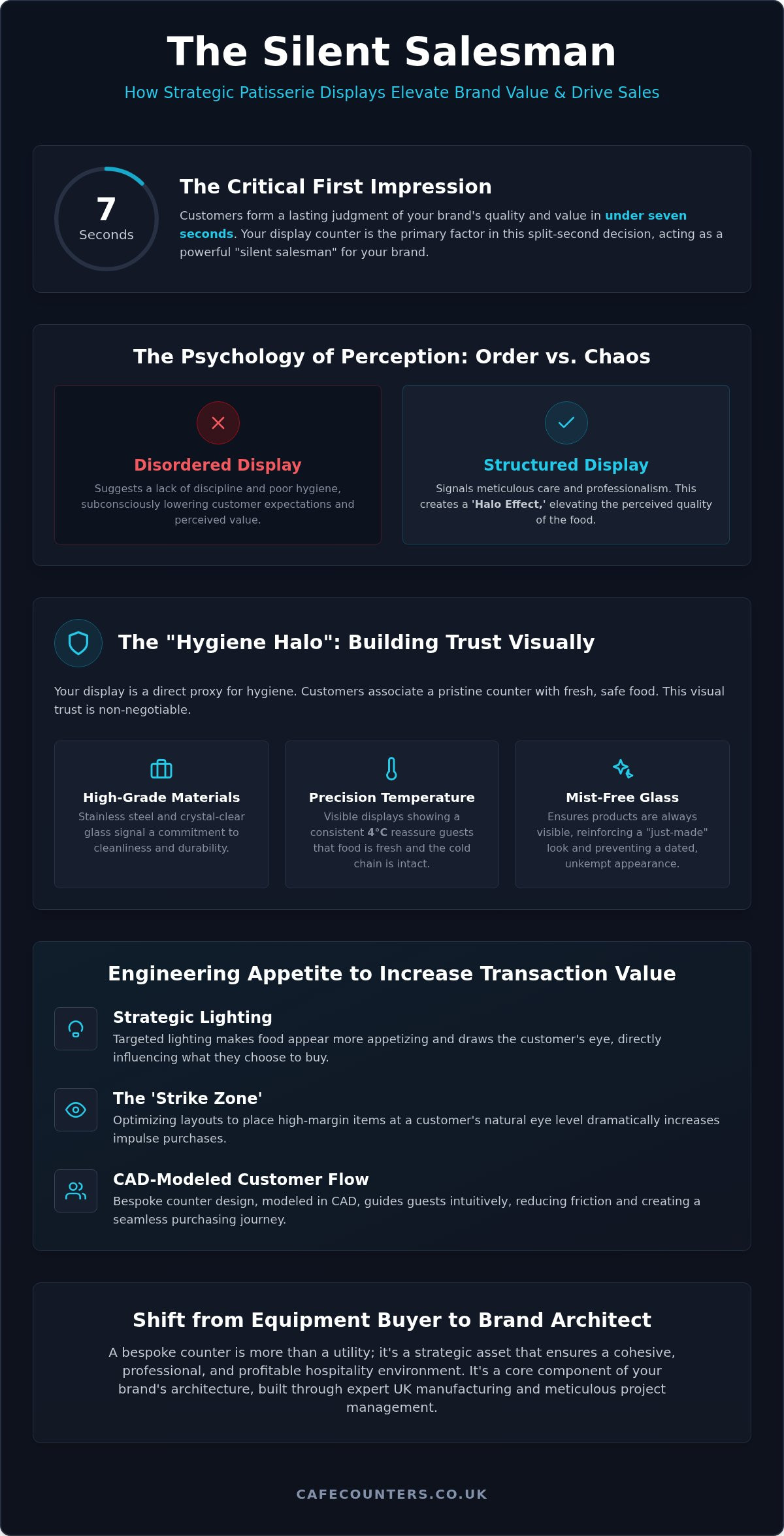
In the high-stakes UK hospitality market, your front-of-house equipment does more than store products; it communicates value. Your display is the “Silent Salesman” that speaks when your staff are busy. Research suggests customers form a lasting impression of your brand in under seven seconds. This first impression window is where the visual merchandising of your Patisserie Displays or Deli Counters becomes a critical asset. If a counter looks cluttered or poorly lit, guests subconsciously lower their expectations of the food quality, regardless of the ingredients used.
While some retail sectors might benefit from creative disorder to imply innovation, high-end foodservice relies on precision. Symmetry and alignment in a display signal meticulous care and hygiene. A disordered display often suggests a lack of discipline in the kitchen. Conversely, a structured, symmetrical layout reinforces artisanal quality. This leads to the “Halo Effect,” where a premium bespoke serving counter elevates the perceived taste of the food within it. When items are presented behind high-specification glass, the customer associates the investment in the display with the craftsmanship of the product.
Spatial Metaphor and Brand Authority
Clean lines and structured displays are more than aesthetic choices; they are spatial metaphors for professional competence. By utilizing advanced CAD modelling, we can visualize exactly how a bespoke serving counter will influence the psychology of your guests before manufacturing begins. The height of your counter also plays a role in customer intimacy. A lower profile counter encourages a consultative, face-to-face interaction, while a higher, more traditional Deli Counter can establish a sense of authoritative expertise. These design choices help you control the brand narrative from the moment a guest enters the space.
The Impact of Visual Cues on Purchase Intention
The impact of display on customer perception is most evident in how guests justify spending more for a product that looks curated rather than simply stocked. Professional displays reduce cognitive load by using intuitive layouts that guide the eye toward high-margin items. In 2026, visual merchandising in hospitality is the strategic orchestration of physical space, lighting, and equipment design to reduce customer friction and validate brand authority through sensory cues. When a display looks professional and hygienic, it removes the psychological barriers to purchase, allowing the quality of your food to justify a premium price point. We ensure every technical feature, from glass clarity to shelf positioning, serves this functional benefit.
Display as a Proxy for Hygiene and Freshness
A customer’s primary concern when approaching a food counter is safety. They silently ask themselves if the food is fresh and if it’s safe to eat. Your equipment provides the answer before they ever see the menu. We call this the “Hygiene Halo.” When a display uses high-grade stainless steel and crystal-clear glass, it signals a commitment to cleanliness that builds immediate trust. Following Food safety and hygiene regulations isn’t just a legal necessity; it’s a visual marketing strategy. If your equipment looks pristine, your food is perceived as safer and higher in quality. The impact of display on customer perception is never more critical than when addressing these fundamental safety cues.
Temperature functions as a vital visual cue in the hospitality sector. Mist-free glass and visible digital displays showing a consistent 4°C reassure the guest that the cold chain is intact. If glass is fogged or the counter looks dated, the customer subconsciously assumes the food is deteriorating. High-specification refrigeration technology ensures that products look as fresh at 4 pm as they did at 8 am. This “just-made” look is achieved through a combination of precision temperature control and strategic positioning that avoids drying out delicate items.
Transparency and Trust in Foodservice
Open-view preparation areas are rising in popularity across UK high streets. Modern deli display counters bridge the gap between the kitchen and the customer, showing the journey of the food. This transparency removes the “back-of-house” mystery that can sometimes breed suspicion. By using high-grade glass and targeted lighting, you showcase the freshness of your ingredients while reinforcing your brand’s authority as a professional, hygienic operator.
Materiality and Perceived Cleanliness
Food-grade stainless steel remains the gold standard for trust because it’s durable and easy to sanitise. We focus on seamless joints in our manufacturing to prevent “grime traps” where bacteria could hide. These technical details influence how clean a space feels to the guest. Bespoke finishes allow you to maintain this high standard while matching your specific brand aesthetic. Investing in bespoke display solutions ensures your equipment works as hard as your staff to maintain these standards and build lasting customer confidence.
Engineering Appetite: Materials, Lighting, and Design
The physical composition of your serving area acts as a sensory blueprint for the guest experience. While the previous sections established the “Hygiene Halo,” the engineering of appetite relies on the nuanced selection of materials and light. The impact of display on customer perception is heavily influenced by how these elements interact to create an atmosphere of quality. For example, the tactile contrast of natural stone against high-grade stainless steel can signal a blend of artisanal heritage and modern precision. Wood finishes introduce a warmth that resonates with traditional bakeries, whereas sleek steel and glass suit high-volume retail environments.
Ergonomics also play a vital role in how value is perceived. A counter that feels effortless to interact with reduces customer anxiety and speeds up the transaction process. In 2026, energy efficiency has moved from a back-of-house concern to a front-of-house brand value. Guests increasingly notice the presence of energy-efficient LED systems and sustainable manufacturing practices, which can be highlighted as part of your brand’s commitment to responsible operation. This transparency builds a deeper level of trust and aligns your establishment with modern consumer expectations.
The Impact of Lighting on Appetite Appeal
Lighting is the most powerful tool for enhancing the natural vibrancy of food without introducing damaging heat. We use specific colour temperatures to match different food categories; warm ambers highlight the golden crust of a sourdough, while cooler whites make fresh salads appear crisp and hydrated. A high Colour Rendering Index (CRI) is essential in food displays because it ensures that colours appear accurate and appetising rather than dull or distorted. For hot food sections, heated gantries provide the dual benefit of maintaining strict temperature standards while bathing the product in light that preserves its visual appeal throughout the service period.
Bespoke vs. Off-the-Shelf: Psychological Differentiation
Choosing a bespoke solution over a standard unit allows you to disrupt the typical retail experience and create a memorable brand destination. Unique counter shapes, designed through advanced CAD modelling, can dictate the pace of the customer journey and highlight specific product ranges. Our internal UK manufacturing facility ensures that every joint and finish meets the highest standards of precision, which is a hallmark of quality that off-the-shelf units often lack. While digital menu boards offer flexibility, the physical product must remain the primary focus. The impact of display on customer perception is strongest when the technology supports the food rather than distracting from it.
Optimising the Customer Journey and Impulse Sales
Designing a space that converts requires more than high-quality equipment; it demands an understanding of human movement. The impact of display on customer perception is directly linked to the ease of the journey from the entrance to the point of sale. When guests feel guided by a logical flow, their dwell time increases, allowing them to engage with your products without the stress of a crowded queue. We use counter placement as a tool to dictate this movement, ensuring that every high-margin item gets the attention it deserves while maintaining a professional, uncluttered environment.
The Strike Zone and Vertical Merchandising
Mastering the “Strike Zone” is the most effective way to drive impulse purchases. This critical area, typically between 3.5 and 4.5 feet from the floor, is where the human eye naturally rests. For refrigerated grab and go display units, this is where your most profitable items should sit. Tiered shelving creates a sense of abundance and variety, which is more appealing than a flat, sparse display. Interestingly, the psychology of “the last item” can also be leveraged; a slightly depleted shelf can signal popularity and freshness, whereas a perfectly full one might look untouched and static.
Reducing Transaction Friction
The final stage of the customer journey is the transaction, and any friction here can damage the overall brand authority. Counters must be designed to facilitate easy payment and collection without creating a bottleneck. Integrating drop-in units into your layout creates a seamless, flush service line that looks professional and feels intuitive to use. This layout reduces the “cognitive load” on the customer, making the entire experience feel stress-free. If you are looking to refine your service area, our team can help you design bespoke serving counters that align with your specific flow dynamics and operational goals.
The Expert Partner: Elevating Brand Value through Bespoke Solutions
Moving from a mere equipment buyer to a brand architect requires a shift in focus from short-term cost to long-term value. In the competitive UK hospitality sector, your display strategy shouldn’t be an afterthought. It’s the physical manifestation of your brand’s standards. The impact of display on customer perception is the cumulative result of every decision made during the design and manufacturing process. When you partner with a specialist like TFSE Products Ltd, who understands the unique pressures of foodservice, you ensure that your vision is translated into a durable, high-performing reality that maintains its integrity over years of heavy use.
Future-proofing your space for 2026 and beyond involves more than just following current aesthetics. It requires an adaptable approach to equipment design that can accommodate changing menu trends or new regulatory requirements, such as the evolving Food Law Codes of Practice. By integrating energy-efficient technologies and modular components, you protect your investment against rising operational costs. This methodical approach to project management alleviates the stress of commercial fit-outs, providing a steady hand through every technical detail from the initial idea to the final installation.
From Concept to Installation: A Methodical Approach
The journey to a successful front-of-house begins with precise site surveys and advanced CAD modelling. These steps are vital for avoiding “perception errors” where equipment looks out of proportion or disrupts the natural flow of the room. Professional installation ensures that the Expert Partner promise is met, with every unit levelled and integrated perfectly into its surroundings. High-specification commercial food display counters require specialist commissioning to ensure that refrigeration systems and heated elements are calibrated for optimal performance. This precision ensures that the impact of display on customer perception remains positive from the very first day of service.
The UK Manufacturing Advantage
There is a distinct artisanal pride in British fabrication that translates directly into the quality of the finished product. Since our founding in 1991, we’ve maintained internal UK production facilities to ensure total quality control over every Bespoke Serving Counter and Patisserie Display we create. This geographic proximity allows for shorter lead times and a more reliable after-sales service compared to imported alternatives. Positioning your business as a supporter of local manufacturing also resonates with modern UK consumers who value transparency and regional authenticity. Choosing UK-made equipment isn’t just a matter of reliability; it’s a strategic choice that offers superior long-term ROI and ensures your brand consistency remains uncompromised.
This commitment to quality is what allows a brand to become a local landmark, much like Valentino’s Italian Restaurant, which has built its heritage on authenticity and consistent standards since 1995.
Mastering Your Brand’s Visual Narrative
The UK hospitality landscape in 2026 demands more than just a functional serving area. It requires a space where hygiene, aesthetics, and efficiency converge to tell a story of quality. We’ve explored how the impact of display on customer perception can transform a simple transaction into a premium brand experience. By focusing on high-CRI lighting, ergonomic flow, and the “Hygiene Halo” of stainless steel, you provide the subconscious cues that justify premium pricing and encourage repeat visits. These details are what separate a standard retail environment from a destination brand.
Achieving this level of precision requires a partner who understands the complexities of UK manufacturing and end-to-end project management. Since 1991, we’ve helped businesses move from being equipment buyers to brand architects through advanced CAD modelling and regional artisanal craftsmanship. Whether you’re refining a patisserie display or launching a new grab and go concept, the right design ensures your vision is realized with durability and style. Book a bespoke counter consultation with our expert design team to begin your transformation. Your space is ready for its next chapter.
Frequently Asked Questions
How does lighting affect customer perception of food freshness?
Lighting directly influences appetite appeal by highlighting the natural pigments of ingredients without introducing damaging heat. High-CRI LEDs ensure that reds look deep and greens look crisp, removing the visual dullness found in lower-quality units. By selecting specific colour temperatures, you evoke a sense of freshness that validates the impact of display on customer perception and justifies a premium price point for your artisanal products.
What is the best height for a commercial food display counter?
The optimal height depends on the intended interaction, but the “Strike Zone” between 1050mm and 1350mm remains the most effective for visibility. Lower counters promote an open, consultative atmosphere suitable for specialty coffee shops. Taller Deli Counters provide a professional barrier that signals expertise and hygiene. We use CAD modelling to ensure the chosen height matches your staff’s ergonomic needs and your guests’ natural eye-line.
Can a bespoke counter design really increase my cafe’s revenue?
Strategic design increases revenue by reducing transaction friction and maximizing the visibility of high-margin items. When a counter is designed specifically for your space, it eliminates the clutter that often discourages premium purchases. By guiding the customer journey through tiered shelving and logical payment points, you naturally increase the average transaction value. A professional layout transforms your equipment from a storage unit into a high-performing sales tool.
Why is stainless steel preferred for customer-facing food displays?
Food-grade stainless steel is the gold standard because it communicates safety and durability through its non-porous surface. Its reflective quality also enhances the brightness of the display area, contributing to the “Hygiene Halo” effect. Guests associate the clean, seamless joints of UK-manufactured steel with professional kitchen discipline. This material choice is a practical solution that reinforces the impact of display on customer perception by addressing fundamental safety concerns.
How does customer flow impact impulse purchases in a deli or cafe?
Customer flow dictates how much of your product range a guest actually sees before reaching the till. An intuitive path reduces the stress of queuing, allowing customers to focus on tiered displays and Grab & Go units. If the layout is confusing, guests often rush to the payment point, missing impulse opportunities. We design bespoke serving counters to orchestrate this movement, ensuring high-margin items are positioned at natural dwell points.
What are the benefits of using CAD modelling before buying a counter?
CAD modelling provides a technical blueprint that ensures your bespoke display fits perfectly within your specific architectural constraints. It allows you to experiment with different shapes and heights to see how they affect customer sightlines before production begins. This methodical approach eliminates costly installation errors and ensures the final physical space matches your brand vision. It’s a vital step in our project management service to guarantee design integrity.
Is an open-front grab-and-go unit better than a closed display for sales?
Open-front units are superior for high-volume environments where speed is the customer’s priority. They remove the psychological barrier of a glass door, making it easier for guests to grab items quickly. For delicate products like patisserie, closed displays with mist-free glass offer better temperature stability and a more artisanal, protected feel. The choice depends on whether your brand prioritizes rapid service or the perception of exclusive, handcrafted quality.
How does energy efficiency in a display unit affect customer brand perception?
Visible energy efficiency signals that your business is modern, responsible, and detail-oriented. In 2026, UK consumers are increasingly aware of the environmental footprint of the hospitality sector. Using displays that feature energy-efficient LED lighting and advanced refrigeration technology demonstrates a commitment to sustainability. This transparency builds trust and aligns your brand with the values of a more conscious customer base while simultaneously reducing your long-term operational costs.