
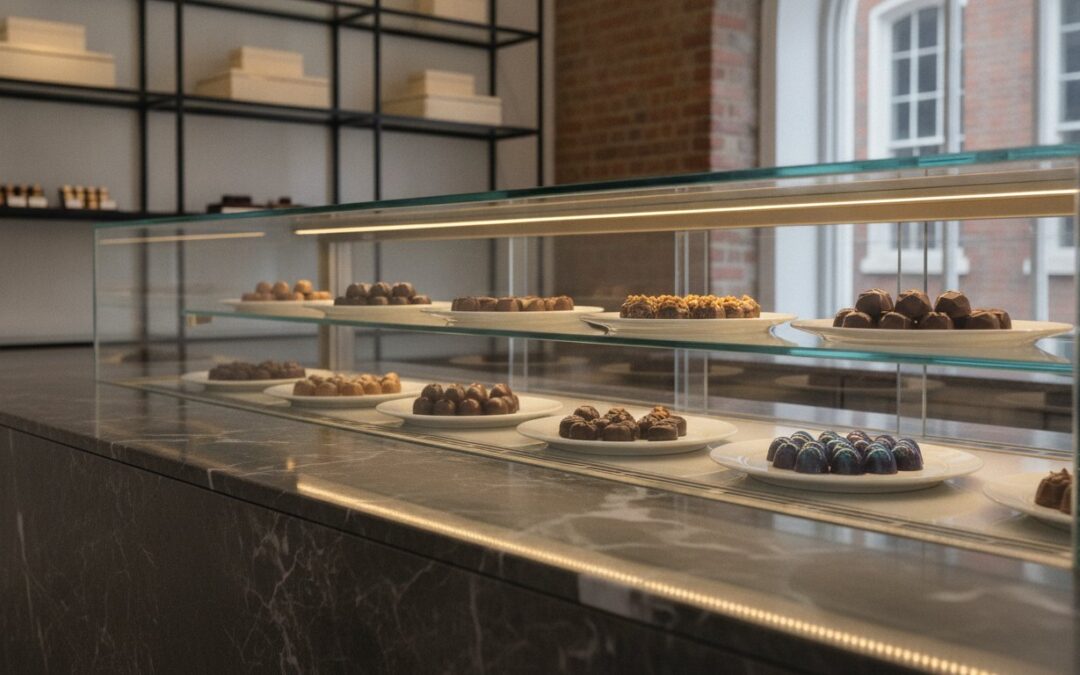
Why does a standard commercial fridge, designed to keep dairy fresh, often end up ruining your most delicate artisanal chocolates? While a typical chiller prioritises cold temperatures, a professional refrigerated chocolate display case is a precision instrument built for a much more nuanced task. You’ve likely experienced the frustration of fat bloom or condensation dulling the perfect snap of a truffle because the environment wasn’t quite right.
We understand that your products are the result of meticulous craftsmanship; they deserve a stage that maintains their integrity. In this guide, you’ll learn how to select a unit that balances precise climate control with high-impact merchandising to protect your gloss and boost your revenue. We will walk through the essential technical specifications, from humidity management to energy efficiency, ensuring your investment delivers long-term reliability and exceptional visual appeal for your retail space. By the end, you’ll have the technical knowledge to choose a solution that protects your inventory and reflects the premium quality of your brand.
Key Takeaways
- Understand why standard refrigeration fails and how maintaining the “Chocolate Zone” prevents fat bloom to preserve your product’s perfect snap and gloss.
- Learn how a professional refrigerated chocolate display case uses precision thermostats to maintain a strict +/- 1°C variance for delicate tempering.
- Evaluate the configuration benefits of integrated drop-in units versus countertop displays to maximise your floor space and create a seamless service line.
- Discover why advanced CAD modelling and ventilation planning are critical to prevent equipment failure and ensure long-term energy efficiency.
- Recognise the quality advantage of British manufacturing, allowing for bespoke finishes and dimensions that align with your brand’s artisanal identity.
Why Chocolate Requires Specialised Refrigerated Display Cases
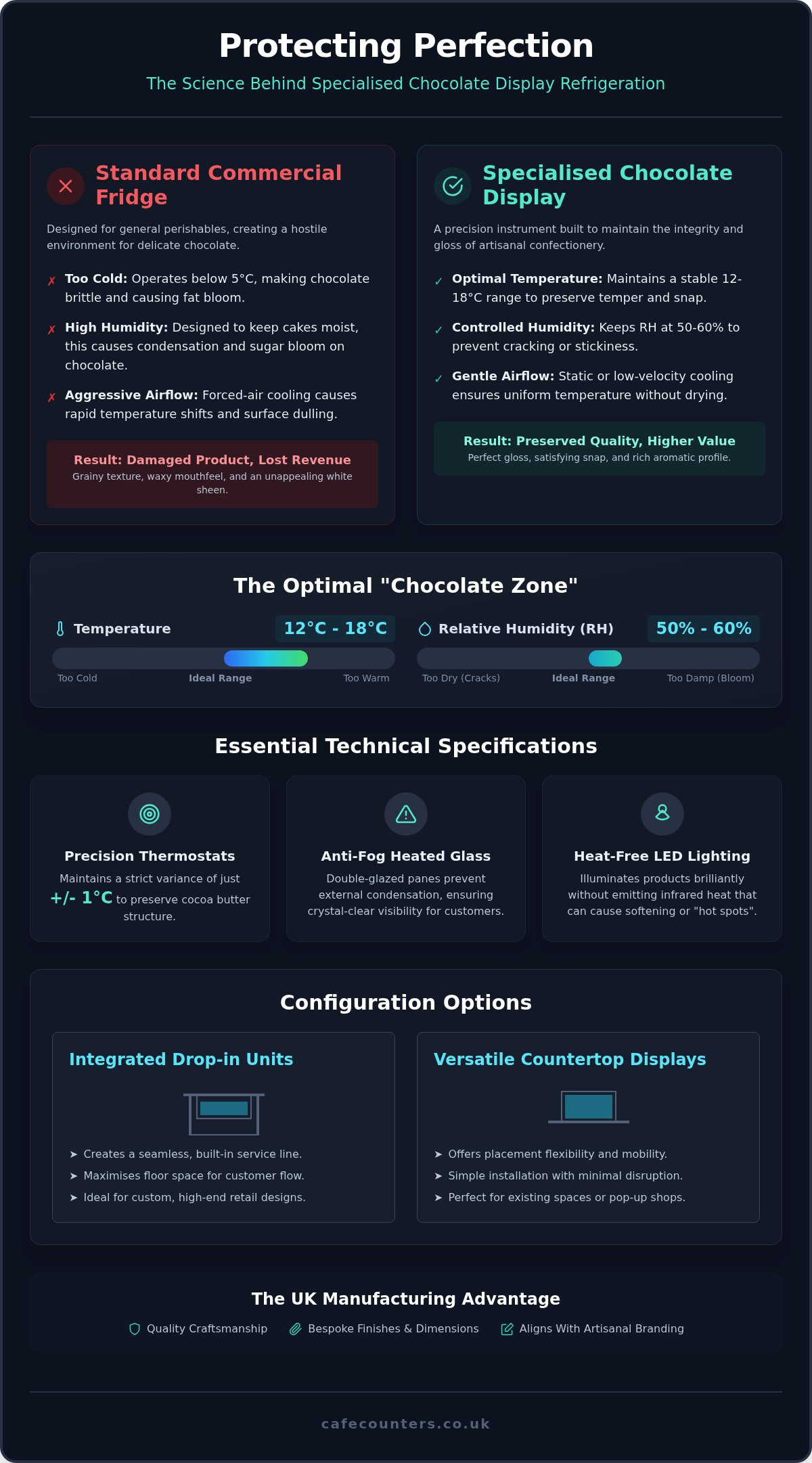
Standard refrigeration is designed to keep perishable goods below 5°C to inhibit bacterial growth. While this is essential for fresh cream or meat, it’s often detrimental to high-end confectionery. Chocolate exists in a specific “Chocolate Zone” where the texture remains firm and the surface retains its characteristic sheen. A dedicated refrigerated chocolate display case operates at a higher, more stable temperature range, typically between 12°C and 18°C. This prevents the product from becoming too brittle or losing its complex aromatic profile.
If the temperature fluctuates or drops too low, you risk the dreaded white streaks known as what is chocolate bloom. This occurs when cocoa butter or sugar crystals migrate to the surface. It doesn’t just affect the look; it alters the mouthfeel, making the chocolate feel grainy or waxy. In the context of preventing chocolate condensation, Relative Humidity (RH) is the measure of moisture in the air compared to the maximum it can hold at a given temperature, which must be strictly controlled to stop sugar crystals from dissolving. Keeping this balanced is vital because excess moisture triggers sugar bloom, ruining your hard work and making your stock unsellable.
Perfectly tempered chocolate with a high-gloss finish signals quality and freshness to your customers. This visual appeal directly correlates with perceived value. You can often command a higher price point for a truffle that shines under professional lighting than for one that appears dull or greyed by poor storage. It’s about protecting your margin as much as your ingredients.
Temperature Control vs. Humidity Management
Precision is the hallmark of a high-end display. While standard units might swing several degrees, a professional refrigerated chocolate display case maintains a strict environment. We recommend a range of 14°C to 16°C to preserve the cocoa butter’s stability. Humidity is equally critical; you should aim for levels between 50% and 60% RH. If the air is too dry, the chocolate can crack; if it’s too damp, it becomes sticky. To ensure your customers always have a clear view, we utilise double-glazed, heated glass. This technology prevents external fogging, even on humid days in a busy shop, by keeping the outer pane slightly above the dew point.
The Problem with Standard Patisserie Fridges
Many retailers mistakenly use standard Patisserie Displays for their chocolates. However, cake fridges are designed to keep sponge moist, often operating at high humidity levels that are catastrophic for truffles. Airflow also differs. Aggressive “forced air” cooling can cause rapid temperature shifts across the shelves. We often prefer “static” cooling or gentle, low-velocity fans to maintain a uniform temperature without stripping moisture from the product. This methodical approach ensures that every item on the counter remains in peak condition from the first hour of service to the last.
Technical Specifications: Preserving Quality and Snap
The structural integrity of a professional refrigerated chocolate display case is the foundation of its performance. We utilise high-grade stainless steel not just for its aesthetic appeal, but for its superior thermal mass. This material helps the unit retain cold air more effectively, which is essential for maintaining the precision environment your confectionery requires. Our units are equipped with advanced digital thermostats designed to hold a strict variance of just +/- 1°C. This level of accuracy is vital for proper storage to preserve its flavor and prevent the cocoa butter from losing its tempered structure.
Operational efficiency is a priority as we move through 2026. The transition to eco-friendly R290 refrigerants is now standard across our range. This natural hydrocarbon coolant has a significantly lower Global Warming Potential (GWP) than older synthetic gases. It also offers excellent thermodynamic properties, meaning the compressor runs more efficiently. This results in lower energy bills and a smaller carbon footprint for your business without compromising the delicate cooling cycle required for your products.
Lighting and Visibility Without the Heat
Lighting is a critical component that many retailers overlook. Traditional bulbs emit infrared heat, creating “hot spots” that can cause truffles to soften or bloom even if the ambient air temperature is correct. We exclusively fit heat-free LED systems with specific Kelvin ratings to maximise the visual appeal of your stock. A warm 3000K light can enhance the deep, earthy tones of dark chocolate, whereas a neutral 4000K setting makes milk and white chocolate appear fresh and inviting. Our frameless glass designs ensure these visual details aren’t lost behind bulky frames, providing customers with an unobstructed view of your craftsmanship.
Durability and Material Standards
Hygiene and longevity are built into every unit we manufacture. We use food-grade 304-grade stainless steel to ensure your refrigerated chocolate display case stands up to the demands of a high-traffic retail environment. This material is resistant to the acidic components found in some ingredients and won’t pit or corrode over time. We also incorporate practical features like radiused internal corners and removable decks to make deep cleaning a simple task. If you’d like to see how these material standards apply to other food sectors, our Deli Counter Guide offers a deeper look at high-performance fabrication.
Investing in the right technical setup is the best way to protect your margins. Our team at TFSE Products Ltd specialises in developing bespoke display solutions that integrate these advanced specifications into a design that fits your brand perfectly. By choosing professional-grade equipment, you ensure your inventory stays at its peak from the moment it’s displayed until it reaches the customer.
Configuration Options: Drop-in vs. Countertop Displays
Choosing the right configuration for your refrigerated chocolate display case depends heavily on your shop’s footprint and service style. Countertop units offer a versatile solution for smaller boutiques or cafes where counter space is at a premium. These self-contained units are easy to install and can be repositioned if you decide to alter your layout. However, you must carefully balance the display volume with the unit’s refrigeration recovery time. Every time a door opens, the climate is compromised; smaller units often need more time to return to the stable temperature range discussed earlier.
For high-traffic environments, capacity planning is vital. If you expect a high turnover of truffles and pralines, you might look at larger footprints that can hold more thermal mass. This stability ensures that even during busy periods, your products remain at a steady temperature. We often guide clients through this selection process by looking at their peak hour transaction data to ensure the cooling system won’t be overwhelmed by frequent access.
The Aesthetic of Integrated Drop-in Units
If you want to achieve a sophisticated “jewellery box” effect, we recommend integrated units that sit flush with your counter. These systems create a streamlined service line that focuses the customer’s eye entirely on the confectionery. Because the mechanical components are hidden within the cabinetry, you have the freedom to select bespoke counter finishes such as marble, granite, or high-end timber. This integration is ideal for luxury retail where the display must feel like a permanent part of the architecture. For businesses that also manage high-volume self-service alongside their artisanal range, our guide to Refrigerated Grab and Go Display Units provides strategies for balancing different service speeds.
Service Efficiency and Accessibility
Ergonomics play a major role in the long-term success of your display. Rear-access hinged doors are standard for many, but slide-out drawers offer a distinct advantage for the busy chocolatier. Drawers allow you to access products at the back without reaching over delicate items at the front, significantly reducing the risk of accidental damage. We also suggest utilising adjustable shelving systems. These allow you to vary product heights, accommodating everything from tall, decorative chocolate sculptures to flat trays of ganache. A well-planned configuration ensures that restocking is quick and product handling is kept to a minimum, preserving the perfect finish of your stock.
Operational Integration: Ventilation and CAD Planning
Integrating a professional refrigerated chocolate display case into your retail environment is a task that demands technical precision. It’s a common mistake to treat these units as standalone boxes; in reality, they are part of a wider mechanical ecosystem. The #1 cause of equipment failure we see in the UK is inadequate ventilation within bespoke counters. When air cannot circulate freely, the compressor overheats. This forces the system to run constantly, leading to the precise temperature spikes that cause fat bloom and ruin your inventory.
Planning for airflow starts with choosing the right refrigeration style. Front-breathing units pull air in and exhaust it through the front plinth, making them the superior choice for counters positioned against walls. Rear-vented models require a clear, unobstructed path at the back to function. Once installed, professional commissioning is vital. Our engineers verify humidity levels on-site to ensure the unit performs exactly as it did in our factory, accounting for the specific ambient conditions of your shop.
The Role of CAD in Counter Design
Precision fitment isn’t just about aesthetics; it’s about operational reliability. We utilise advanced CAD modelling to ensure every integrated unit fits with millimetre-perfect accuracy. These digital blueprints allow us to identify and resolve potential clashes with electrical conduits or plumbing services before production begins. By visualising the unit within the wider shop layout, you can ensure the display acts as a natural focal point for customers. For a deeper look at how we manage these complex fits, explore our Bespoke Cafe Counters Guide.
Managing Ambient Heat Sources
Strategic placement is essential for maintaining the “Chocolate Zone.” You shouldn’t site your display directly next to a high-heat coffee machine or a convection oven, as these ambient sources significantly increase the thermal load on the cooling system. We calculate the specific heat load of your environment to ensure the unit has the power to remain stable during peak summer months. We also consider staff ergonomics and customer flow. A well-placed unit should be easy to restock without blocking the path of your patrons, ensuring a smooth and professional service experience.
Successful installation requires more than just a delivery driver. It needs an expert partner who understands the nuances of British manufacturing and hospitality. Contact our technical team today to discuss how our CAD planning services can secure the long-term performance of your display.
The UK Manufacturing Advantage for Confectionery Display
Sourcing a refrigerated chocolate display case from a UK-based manufacturer provides a level of quality control that mass-produced imports can’t match. We’ve been specialists in this field since 1991, and we understand that your display is the heart of your retail operation. By keeping production within our own facility, we ensure every weld, seal, and finish meets our rigorous standards. This proximity allows for a transparent, collaborative process where you can see your vision move from a CAD drawing to a physical reality.
Choosing local manufacturing offers several practical benefits for your business:
- Direct Technical Access: You can speak directly to the engineers who designed your unit, ensuring any bespoke requirements are understood perfectly.
- Reduced Lead Times: Local production eliminates the unpredictability of international shipping, ensuring your project stays on schedule.
- Sustainability: Local shipping significantly lowers the carbon footprint of your project compared to importing heavy equipment from overseas.
- Available Spare Parts: We maintain a comprehensive stock of components in the UK, meaning maintenance and repairs won’t be delayed by customs or global logistics.
Bespoke Finishes for Brand Consistency
A high-end display should be an extension of your brand’s visual identity, not a generic silver box. Because we manufacture our own units, we offer a level of customisation that goes far beyond standard catalogues. We can match your display case to your unique interior design using custom powder coating or high-end metal finishes like brushed brass or antique copper. This flexibility allows you to create a signature look that differentiates your brand in a crowded market. Whether you need a specific dimension to fit an awkward corner or a unique lighting setup to highlight a new product line, our team works to ensure the final product is a perfect fit for your space.
Reliable After-Sales and Commissioning
The relationship doesn’t end when the unit leaves our factory. We believe that professional installation by the manufacturer is the only way to guarantee the long-term reliability of mission-critical equipment. Our national installation teams handle the commissioning process, ensuring that the precise temperature and humidity settings are calibrated for your specific environment. This steady, methodical approach provides you with total peace of mind, knowing your inventory is protected by a system that has been tested under real-world conditions. If you’re ready to elevate your presentation, Contact TFSE Products Ltd for a bespoke counter consultation and let us help you bring your project to life.
Elevating Your Confectionery Presentation
Securing the future of your confectionery business requires a shift from simple storage to precision climate management. We’ve explored how a dedicated refrigerated chocolate display case maintains the critical balance between temperature and humidity to prevent bloom and preserve that essential snap. By prioritising technical specifications like R290 refrigerants and heat-free LED lighting, you protect your inventory while significantly enhancing its visual appeal.
Success also depends on seamless operational integration. Meticulous CAD planning ensures your equipment functions reliably within your shop’s unique airflow and layout constraints. As a UK manufacturer since 1991, we provide the technical expertise needed to bring these complex projects to life, offering comprehensive CAD design services and national installation support. We invite you to explore our bespoke patisserie and chocolate display solutions to see how professional craftsmanship can transform your retail space. Our team is ready to act as your expert partner, ensuring your artisanal creations are presented with the authority and quality they deserve.
Frequently Asked Questions
What is the ideal temperature for a refrigerated chocolate display case?
The ideal temperature range for a refrigerated chocolate display case is between 14°C and 16°C. While standard food safety laws for chilled goods often mandate lower temperatures, chocolate requires this warmer window to maintain its structural integrity and complex flavour profile. If the environment drops below 10°C, you risk immediate condensation when the product is handed to a customer, which ruins the texture and appearance of artisanal truffles.
How does humidity affect chocolate in a display fridge?
Humidity plays a decisive role in the stability of your confectionery. You should maintain a relative humidity level between 50% and 55% to prevent the sugar from dissolving and recrystallising on the surface. If levels exceed 60%, moisture settles on the chocolate, leading to a sticky finish and sugar bloom. Conversely, excessively dry air can cause delicate ganache centres to contract and crack the outer shell.
Can I use a standard cake display for chocolates?
Using a standard cake fridge is generally discouraged for high-end chocolate. Patisserie units typically operate at 0°C to 5°C with high humidity to keep sponges moist; these conditions are far too aggressive for tempered cocoa butter. A specialised refrigerated chocolate display case provides the precise, dry cooling required to prevent the product from becoming brittle or losing its characteristic shine, ensuring a much longer shelf life for your stock.
What is chocolate blooming and how do I prevent it?
Blooming is the appearance of white or grey streaks caused by the migration of fats or sugars to the surface. Fat bloom occurs when temperature fluctuations cause cocoa butter to melt and re-solidify, while sugar bloom is triggered by moisture. You can prevent this by ensuring your display maintains a stable environment with a variance of no more than +/- 1°C, combined with professional-grade humidity management.
Do chocolate display cases require special ventilation when built into a counter?
Professional ventilation is essential when integrating a unit into a bespoke counter. Without a clear path for air intake and exhaust, the compressor will struggle to shed heat, leading to premature component failure and unstable internal temperatures. We recommend using front-breathing refrigeration or ensuring your joinery includes precision-cut vents that align with the unit’s airflow requirements, a process we typically manage during the CAD design phase.
What lighting is best for showing off fine chocolates?
Heat-free LED lighting is the only viable option for showing off fine chocolates without risking damage. Traditional halogen or incandescent bulbs emit infrared heat that creates local hot spots, causing truffles to soften or bloom even in a chilled environment. We suggest using LEDs with a high Colour Rendering Index (CRI) and a neutral colour temperature between 3000K and 4000K to highlight the rich, natural tones of your products.
Are drop-in chocolate displays better than freestanding units?
Neither is objectively better, as the choice depends on your specific retail environment and service goals. Drop-in units offer a sophisticated, integrated look that suits luxury boutiques where the counter is a permanent architectural feature. Freestanding units provide more flexibility for cafes that may need to reconfigure their layout. We often recommend drop-in models for high-end projects because they allow for bespoke finishes like granite or marble surrounds.
How often should I service my chocolate display case?
You should schedule a professional service at least twice a year to ensure your equipment remains F-gas compliant and energy-efficient. On a monthly basis, your staff should clean the condenser filters to prevent dust buildup, which can force the motor to work harder and increase energy costs. Regular maintenance checks on door seals and thermostat accuracy are vital for protecting your inventory and ensuring the long-term reliability of your investment.