
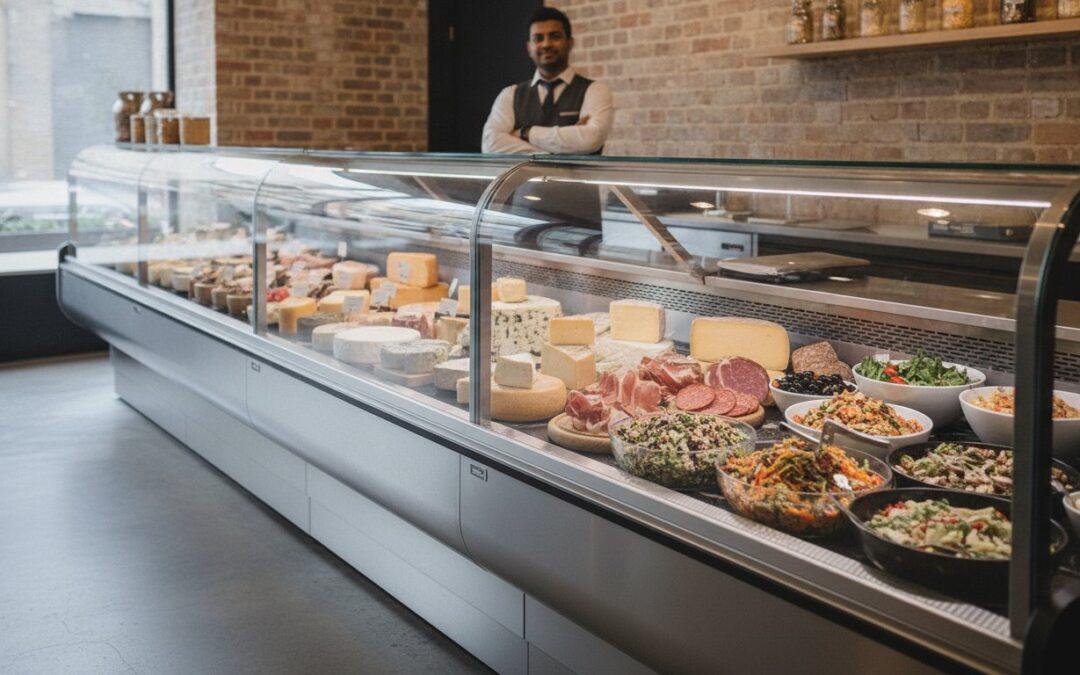
Could a “standard” imported refrigeration unit be the single biggest drain on your deli’s profitability by the end of 2026? Many UK retailers find that off-the-shelf models often fail to navigate the unique, narrow footprints of British high-street shops, resulting in inconsistent temperature zones and skyrocketing energy bills. You already know that a display is your most hardworking salesperson, yet balancing the technical requirement of maintaining temperatures between 0°C and 5°C with the need for artisanal presentation is a complex professional challenge.
This guide promises to simplify that process. You will learn how to select, design, and install a high-performance chilled deli counter UK customers will be drawn to, ensuring your unit meets every 2026 hygiene standard while maximising product visibility. We provide a professional look at the journey from initial CAD modelling to final commissioning. We will examine how bespoke British manufacturing solves the headache of non-standard layouts and how the latest F-Gas regulations impact your long-term operational costs. By the end of this guide, you will have a clear roadmap to a reliable, energy-efficient installation that protects your margins and grows your “grab and go” revenue.
Key Takeaways
- Learn how a professional display functions as a dual-purpose tool for both rigorous food preservation and high-impact visual merchandising.
- Identify the essential technical features of a chilled deli counter UK operators require to maintain precise temperature zones and optimal humidity levels.
- Determine whether a bespoke fabrication or a standard unit offers the best return on investment for your specific shop footprint and operational needs.
- Apply strategic layout principles like the “Golden Triangle” to improve customer flow and maximise “grab and go” sales during peak trading hours.
- Understand the benefits of end-to-end project management, from initial CAD modelling to professional national installation and commissioning.
The Strategic Role of a Chilled Deli Counter in UK Food Retail
A professional chilled deli counter UK operators rely on is far more than a storage vessel. It serves as the primary bridge between your culinary expertise and your customer’s impulse to buy. In high-traffic environments, this equipment acts as an operational focal point, dictating how staff move and how customers perceive the freshness of your offerings. By creating a “theatre of food,” you transform basic inventory into an artisanal display that justifies premium pricing and increases transaction values.
The durability of British-made equipment is essential for the relentless pace of a busy commercial environment. Professional counters use heavy-duty materials that maintain structural integrity over years of constant use, providing a level of reliability that lightweight imports simply cannot match. This steady performance allows business owners to focus on service rather than equipment failure, ensuring the retail space remains both functional and inviting.
Ambient vs. Refrigerated: The Two Pillars of Display
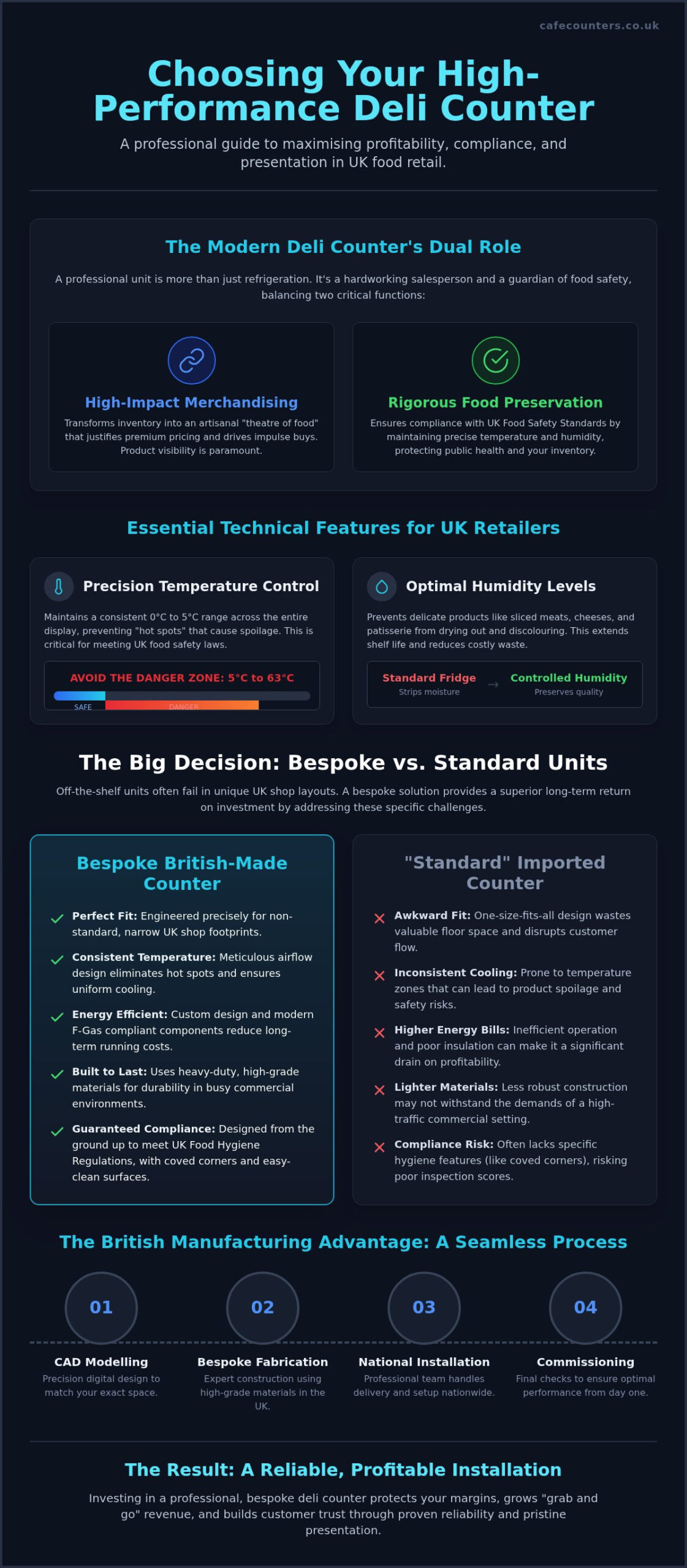
Successful merchandising requires a nuanced approach to environment control. Artisan breads and certain pastries require ambient zones to maintain their crust texture; placing them in a refrigerated unit would cause them to stale prematurely. Conversely, deli meats, cheeses, and complex patisserie demand precision cooling to remain safe and appealing. Modern refrigeration technology allows for these distinct zones to co-exist, ensuring every product is held at its peak quality. It is a fundamental rule of food safety that the “danger zone” for bacterial growth exists between 5°C and 63°C, making consistent temperature control a non-negotiable aspect of your display strategy.
Meeting UK Food Hygiene and Safety Standards
Compliance is the backbone of any professional food business. In the UK, the Food Safety Act 1990 and the Food Hygiene Regulations 2006 mandate that perishable goods are stored at safe temperatures to protect public health. A professional deli counter is engineered with these regulations in mind, featuring non-porous, easy-clean surfaces that facilitate rapid sanitisation between shifts.
Domestic-style units often lack the precision and drainage capabilities required to satisfy rigorous environmental health inspections. Professional fabrication ensures that internal corners are coved and surfaces are made from high-grade stainless steel, effectively removing the “dirt traps” that compromise hygiene scores. Choosing equipment designed specifically for the UK market ensures you meet local standards while projecting an image of total competence and reliability to your clientele.
Essential Technical Features for Superior Food Preservation
Technical precision is the hallmark of a high-performance chilled deli counter UK retailers use to protect their inventory. Temperature consistency isn’t just a legal requirement; it’s a financial necessity. Hot spots within a display can lead to localized spoilage, even if the digital controller shows a safe average. To prevent this, professional units utilise precision-engineered airflow patterns that wrap products in a “curtain” of cold air. This meticulous approach aligns with chilled food industry best practices, ensuring that every shelf maintains the required 0°C to 5°C range.
Humidity control is equally vital for maintaining product integrity. Standard refrigeration often strips moisture from the air, causing delicate patisserie or sliced meats to dry and discolour within hours. By integrating humidity-controlled systems, manufacturers can extend the shelf life and “fresh-cut” appearance of artisanal products. This preservation of quality directly reduces waste and maintains the visual standards your customers expect. If you’re looking to refine your shop’s efficiency, you can explore our professional deli counter options designed for the UK market.
Advanced Refrigeration and Airflow Systems
Choosing between forced air and static cooling depends entirely on your product mix. Forced air systems are ideal for high-volume environments where the counter is frequently opened, as they recover temperatures rapidly. Static cooling is often preferred for delicate items that are prone to drying. Modern UK manufacturing now incorporates high-efficiency compressors and digital controllers that allow for real-time monitoring. These systems help businesses meet the 2026 energy requirements, which include a 40% reduction in the HFC supply quota under current F-Gas regulations. Effective refrigeration is a long-term investment in your business’s sustainability and operational reliability.
Lighting Design for Maximum Product Impact
Visual merchandising relies heavily on the science of light. Standard overhead shop lighting often casts harsh shadows or distorts the natural colours of fresh food. We utilise CRI-optimised LEDs to ensure that the vibrant reds of deli meats and the golden hues of pastries are accurately represented. Warm-toned LEDs enhance the appeal of baked goods, while cool-toned lighting makes salads and seafood look crisp and fresh. Strategic placement of these light strips eliminates dark corners, ensuring every inch of your deli counter serves as an effective sales tool.
Bespoke vs. Standard Chilled Deli Counters: Maximising Your Investment
Deciding between a standard unit and a bespoke solution is a critical juncture in any retail fit-out. For a startup operating in a modern, rectangular space, a standard chilled deli counter UK suppliers provide may be sufficient to launch. These units offer a predictable entry point. However, the reality of the British high street often involves historic buildings with alcoves, uneven floors, and narrow footprints. In these environments, “one-size-fits-all” counters often lead to wasted space and inefficient service flows.
Custom fabrication allows you to maximise every square inch of your floor plan. While the initial outlay for a bespoke counter is higher, the long-term ROI is found in increased operational speed and superior durability. A custom-built unit isn’t just refrigeration; it’s a piece of precision-engineered furniture designed to align with your brand’s specific aesthetic and workflow. When you align your equipment with Food Standards Agency chilling requirements, you ensure that safety is built into the very design of your workspace.
The Benefits of Bespoke Serving Counters
Bespoke design enables a level of ergonomic detail that standard units cannot match. We can tailor counter heights to suit your staff’s physical needs and ensure customer accessibility is maintained. This approach also allows for the seamless integration of adjacent equipment. For instance, many modern delis require a hybrid setup that combines cold displays with Vision Heated Counters for a comprehensive hot-and-cold offering. By using premium materials like Corian or granite for work surfaces, you create a unique brand identity that resonates with customers looking for an artisanal experience.
Quality Materials: The Stainless Steel Standard
The longevity of a counter depends heavily on its material composition. We utilise 304-grade stainless steel as our industry benchmark. This material is essential because it resists the corrosive effects of food acids and cleaning chemicals better than cheaper 430-grade alternatives. It’s clear why stainless steel is the standard for food hygiene; its non-porous surface prevents bacterial growth and is incredibly easy to sanitise. We also favour toughened safety glass over acrylic. While acrylic is lighter, glass provides superior clarity, better scratch resistance, and a more professional finish that doesn’t cloud over time with heavy use.
Optimising Your Deli Layout for Sales and Operational Flow
A profitable floor plan is never accidental; it’s the result of precise spatial planning. We utilise the “Golden Triangle” principle to harmonise the three core pillars of your business: display, service, and preparation. When these elements are positioned correctly, your staff can transition between tasks without crossing paths, and your customers enjoy a logical journey through your offerings. Layout is strategy. It’s the difference between a cluttered shop and a high-performance retail space.
Integrating a professional chilled deli counter UK retailers can trust requires a deep understanding of customer psychology. Counter placement acts as a silent usher, guiding the queue and preventing bottlenecks in narrow high-street footprints. We recommend placing refrigerated grab and go display units near the point of sale. This captures last-minute impulse purchases like cold drinks or pre-packed salads, significantly boosting the average transaction value. Efficiency on the service side is just as vital. Ergonomic design ensures that everything from wrapping materials to weighing scales is within arm’s reach, reducing service times during peak hours.
Maximising Impulse Sales with Strategic Display
Visual merchandising within the counter should follow the “eye-level is buy-level” rule. High-margin artisanal cheeses or signature deli meats belong in the primary line of sight. We use tiered risers to create a sense of abundance and depth, ensuring that even the back rows of the display are visible to the shopper. Cross-merchandising is another powerful tool; try placing ambient baskets of crackers or chutneys on the counter top near complementary refrigerated items. This creates a complete meal solution in the customer’s mind and encourages multiple purchases.
Integrating Back-Bar Units and Storage
The space behind your counter is your operational engine room. Our stainless steel back-bar units provide a clean, professional aesthetic while offering essential storage functionality. By balancing front-of-house visuals with accessible back-of-house storage, you maintain a tidy environment even during the busiest shifts. This seamless flow from the entrance to the till ensures that the customer’s focus remains on your products, not on behind-the-scenes clutter. If you’re ready to transform your space, contact our design team to discuss a bespoke layout strategy tailored to your shop’s unique footprint.
The British Manufacturing Advantage: From CAD Design to National Installation
Investing in commercial refrigeration is a high-stakes decision for any hospitality business. When you choose a chilled deli counter UK manufactured, you gain a level of accountability that imported alternatives simply can’t provide. Having a single point of contact from the initial sketch to the final commissioning eliminates the common friction between manufacturers and independent installers. It provides total peace of mind. By choosing locally manufactured catering equipment, you support the UK economy while benefiting from a supply chain that understands the unique pressures of the British high street. This professional partnership ensures your project moves from a concept to a functional reality without the stress of managing multiple vendors.
From Concept to CAD: The Design Journey
Precision is the foundation of every successful fit-out. A comprehensive site survey is the first step we take to ensure 100% accuracy in bespoke counter fabrication. We don’t rely on guesswork or generic templates. Instead, we use advanced CAD modelling to de-risk the entire process. These detailed visuals allow business owners to see exactly how the counter sits within their floor plan, helping them make informed decisions about material finishes or service flows before production begins. Crucially, CAD modelling at TFSE allows for precise technical integration of refrigerated components, ensuring that airflow, drainage, and electrical points are perfectly aligned with the unit’s internal architecture.
National Installation and Commissioning Services
The journey doesn’t end when the counter leaves our in-house UK manufacturing facility. A professional equipment installation process involves meticulous coordination with on-site services to ensure a seamless fit. Once the unit is physically in place, the commissioning phase begins. This is a vital technical check where our engineers verify that the counter meets all manufacturer specifications under real-world operating conditions. We monitor temperature pull-down times and sensor accuracy to ensure your unit works perfectly from the moment you first load it with stock.
Since our founding in 1991, we’ve understood that the long-term success of a deli depends on more than just the initial purchase. That’s why our national installation service includes ongoing support and after-sales care. We act as your expert partner, providing the technical expertise required to maintain your equipment’s performance for years to come. This methodical, end-to-end approach ensures your investment is protected, allowing you to focus on delivering an exceptional artisanal experience to your customers.
Securing Your Competitive Edge in 2026 Food Retail
Selecting a chilled deli counter UK operators can rely on for the long term is a strategic investment in both food safety and retail performance. We’ve explored how the balance of precision airflow, humidity control, and strategic layout design creates an environment where products thrive and impulse sales grow. Whether you require a bespoke fabrication to navigate a complex high-street footprint or a high-performance standard unit, the priority remains total operational reliability and compliance with current hygiene standards.
TFSE Products has been a leader in UK-based manufacturing since 1991, offering a comprehensive service that de-risks your commercial project. Our process includes detailed site surveys and advanced CAD modelling to ensure your vision is technically sound before production begins. With professional national installation and commissioning, we ensure your equipment performs to exact specifications from the moment it’s switched on. This methodical approach provides a steady hand in a complex field, allowing you to focus on your artisanal craft.
Ready to transform your retail space with a partner who values durability as much as design? Request a Bespoke Deli Counter Consultation with TFSE Products to discuss your project requirements. We look forward to bringing your vision to life with precision and professional pride.
Frequently Asked Questions
What is the ideal temperature for a chilled deli counter?
Chilled food display units must maintain a temperature between 0°C and 5°C to comply with UK food safety legislation. We recommend a target temperature of below 4°C to provide a safety margin and enhance product longevity. Maintaining this precise range is essential for preventing bacterial growth and ensuring your chilled deli counter UK installation passes environmental health inspections. Consistent monitoring with a digital thermometer is a mandatory part of your HACCP system.
Do I need a refrigerated or ambient counter for artisan bread?
Artisan bread should always be displayed in an ambient environment to preserve its crust texture and crumb moisture. Placing fresh bread in a refrigerated unit accelerates the staling process, making the product tough and unpalatable within hours. A professional counter layout often integrates an ambient section alongside chilled zones. This allows you to showcase bakery items at room temperature while keeping high-risk deli meats and cheeses safely chilled in the adjacent refrigerated section.
Can I get a deli counter custom-built to fit a small shop footprint?
Yes, bespoke fabrication is the ideal solution for the narrow or irregular footprints commonly found in UK high-street shops. We use advanced CAD modelling to design counters that maximise every available millimetre of your retail space. This approach allows us to navigate alcoves or non-standard floor plans that off-the-shelf units simply cannot accommodate. Custom building ensures your workflow remains efficient and your customer service area stays clear of bottlenecks in confined environments.
What is the difference between a patisserie display and a standard deli counter?
A patisserie display is specifically engineered for delicate cakes and pastries, featuring higher humidity levels to prevent delicate sponges from drying out. These units often prioritise 360-degree glass visibility and specialised shelving to showcase intricate designs. In contrast, a standard deli counter is built for high-volume service of meats and cheeses, typically featuring deeper display decks and a focus on rugged, easy-clean surfaces suitable for frequent stock replenishment and heavy-duty use.
How often should I service my refrigerated display counter?
You should arrange a professional service for your refrigerated display every six to twelve months to ensure peak operational efficiency. Regular maintenance involves checking refrigerant levels, inspecting door seals, and cleaning the condenser coils. Additionally, businesses with air conditioning capacity over 12kW must have a TM44 inspection every five years. Monthly internal cleaning of dust filters by your staff will also help reduce energy consumption and prevent the compressor from overworking.
What materials are easiest to keep clean in a high-traffic deli?
High-grade 304-grade stainless steel is the benchmark for high-traffic environments because it is non-porous and resistant to food acids. This material facilitates rapid sanitisation and does not harbour bacteria in scratches. Toughened safety glass is also essential for the front screen, as it offers superior scratch resistance compared to acrylic. These materials ensure your chilled deli counter UK maintains a professional, hygienic appearance despite the rigours of constant daily cleaning and heavy customer interaction.
Do you provide installation services across the whole of the UK?
We provide a comprehensive national installation and commissioning service across the United Kingdom. Our team manages the entire process, ensuring that your equipment is correctly integrated with your site’s electrical and drainage systems. This professional setup is vital for verifying that the unit meets all manufacturer specifications before you begin trading. By offering a single point of contact from our UK manufacturing facility to your shop floor, we eliminate the risks associated with third-party installers.
How does lighting affect the shelf life of deli products?
Lighting impacts shelf life primarily through heat emission and UV radiation. Traditional fluorescent tubes can raise the surface temperature of delicate products, leading to premature spoilage. We utilise CRI-optimised LEDs because they emit negligible heat while accurately showcasing the natural colours of your food. Strategic placement of these LEDs ensures that your products remain vibrant and appealing without compromising the internal temperature consistency required for superior food preservation and long-term waste reduction.