
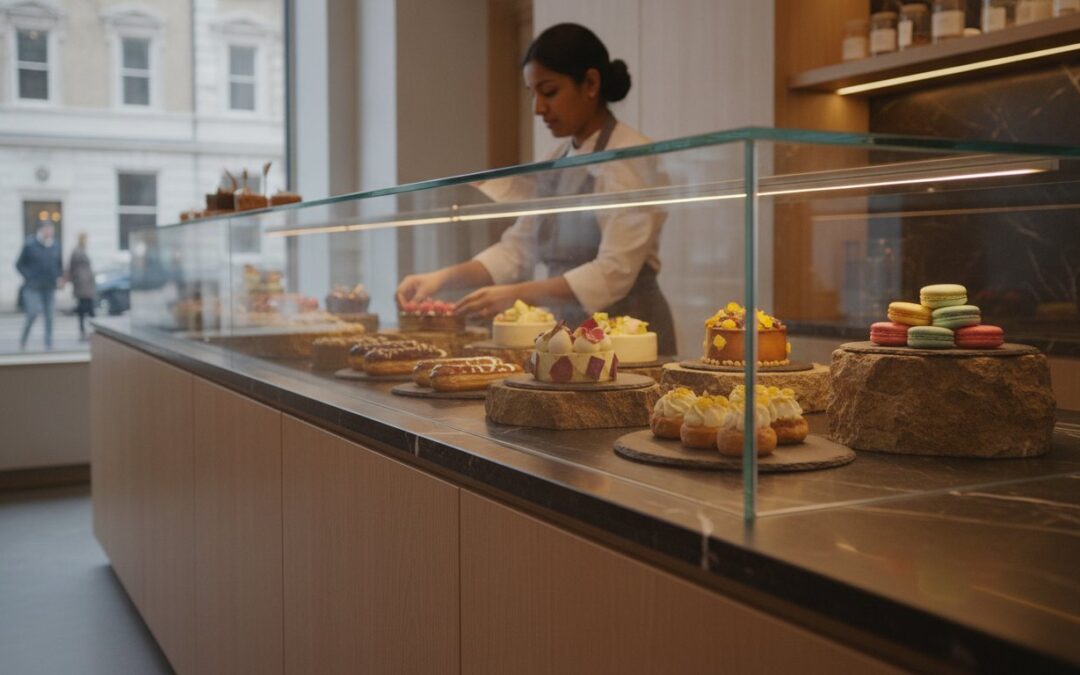
Is your patisserie display cabinet a silent salesperson or a quiet drain on your profit margins? For many UK pastry chefs and cafe owners, the gap between a stunning bake and a successful sale is often lost to poor humidity control or condensation that obscures the view. You’ve likely felt the frustration of watching delicate choux pastry lose its crispness or seeing a bespoke interior design undermined by a bulky, off-the-shelf unit that doesn’t quite fit the brand aesthetic.
We agree that your artisanal creations deserve a stage that functions with the same precision you bring to your kitchen. This guide will help you master the technical requirements and merchandising strategies needed to elevate your food presentation and operational efficiency. We’ll explore the 2026 shift toward R290 natural refrigerants and updated Minimum Energy Performance Standards, ensuring your investment is both compliant and cost-effective. From the benefits of CAD-modelled integrated drop-in units to the impact of high-CRI LED lighting, you’ll learn how to select a durable, UK-manufactured asset that turns browsers into buyers while keeping your energy bills in check.
Key Takeaways
- Understand the critical balance between forced-air and static cooling to ensure your delicate pastries remain crisp while sponges retain their essential moisture.
- Select the ideal patisserie display cabinet format for your space, whether using floor-standing units to maximise verticality or integrated drop-in units for a seamless aesthetic.
- Navigate the 2026 regulatory landscape with confidence by choosing equipment that meets updated UK energy performance standards and utilizes eco-friendly refrigerants.
- Optimise your shop floor layout by positioning displays to capture street-level attention and guide customers along a ‘Golden Path’ toward the point of sale.
- Leverage advanced CAD modelling and UK-based manufacturing to visualise your bespoke installation before production begins, ensuring a perfect fit for your brand’s unique interior.
Defining the Professional Patisserie Display Cabinet
A professional patisserie display cabinet serves a dual purpose that standard kitchen equipment cannot match. It functions as a high-performance preservation system while simultaneously acting as a sophisticated piece of retail furniture. While standard commercial refrigerators are designed for back-of-house utility and thermal retention, a patisserie unit is engineered for the ‘theatre of food’. This concept leverages visual psychology to drive impulse sales, turning a casual visitor into a customer through the sheer impact of presentation. It’s about creating an emotional connection between the shopper and your artisanal bakes.
The engineering behind these units relies on foundational refrigeration technology, yet it’s refined to handle delicate products like choux pastry and tempered chocolate. These items are sensitive to humidity fluctuations and excessive airflow. A well-designed patisserie display cabinet uses tiered shelving and precision-placed components to ensure every tartlet is visible and perfectly preserved. By combining UV-bonded glass with advanced thermal management, we provide a solution that protects your margin by reducing food waste. It’s a strategic investment in your brand’s visual identity and operational efficiency.
Visual Clarity and UV-Bonding Technology
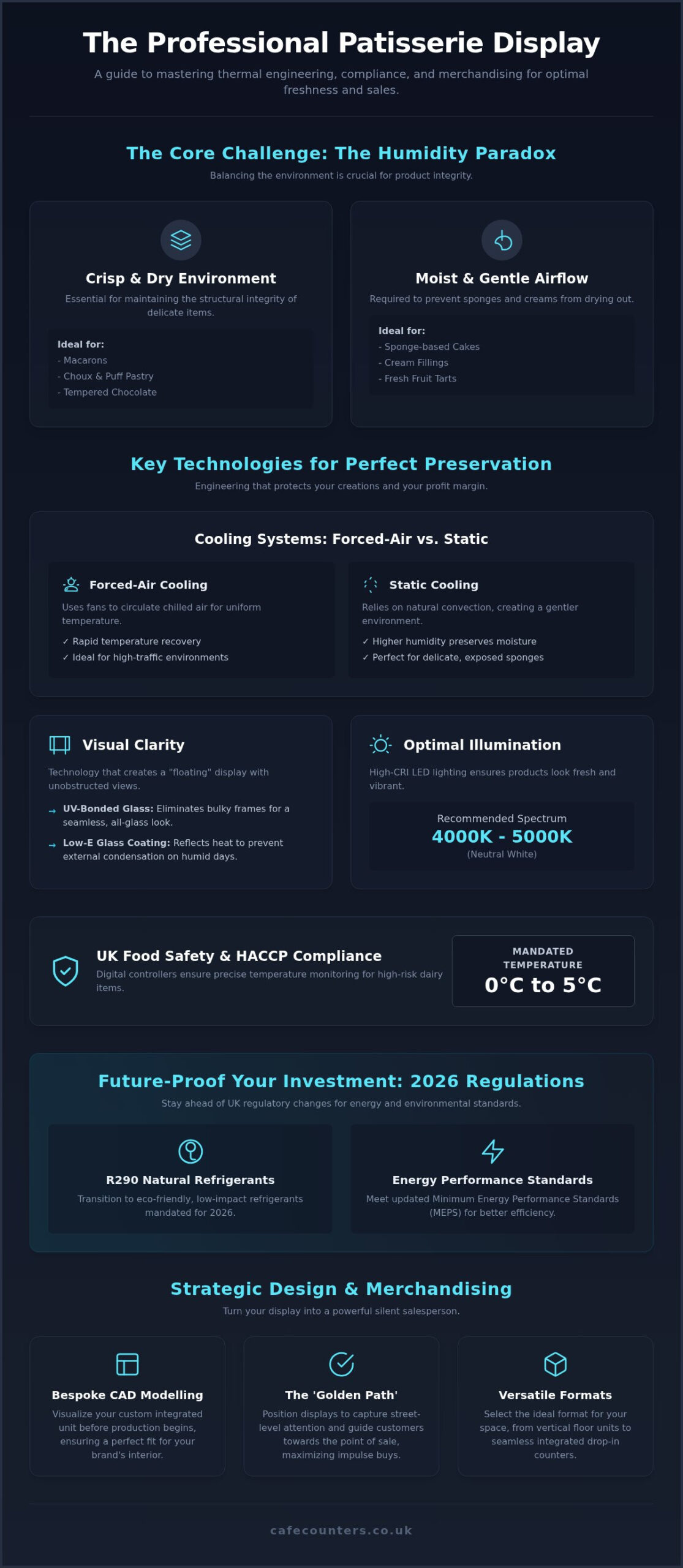
To achieve a high-end look, we utilise UV-bonding technology. This process uses a specialised light-cured adhesive to join glass panels directly, eliminating the need for bulky aluminium frames or gaskets. The result is a ‘floating’ display that offers unobstructed views from every angle. To maintain this clarity, we incorporate low-emissivity (Low-E) glass. This coating reflects heat away from the unit to prevent external condensation from forming during humid UK summer days. For illumination, we specify LED lighting in the 4000K to 5000K range. This neutral white spectrum ensures that cream looks fresh and fruit glazes appear vibrant without artificial yellow tints.
Compliance with UK Food Safety Regulations
Our seasoned team knows that food safety isn’t optional. High-risk items containing fresh cream or dairy must be held at a core temperature between 0°C and 5°C to inhibit bacterial growth. Our cabinets feature digital controllers that facilitate HACCP-compliant temperature monitoring and logging. This level of precision is vital during local authority inspections, as it provides a documented history of safe storage. Investing in professional-grade equipment ensures that your business remains compliant while protecting the integrity of your creations. It provides the steady, reliable hand needed in a complex retail environment.
Thermal Engineering: Humidity, Airflow, and Freshness
Precision-engineered thermal management is what separates a professional patisserie display cabinet from a standard retail chiller. The primary challenge for any pastry chef is the humidity paradox. Delicate puff pastries and macarons require a dry environment to maintain their crisp structural integrity, yet sponge-based cakes and cream fillings will quickly perish if the air is too arid. Achieving this balance requires a sophisticated understanding of UK food safety regulations, which mandate that high-risk chilled items stay between 0°C and 5°C without compromising the product’s texture.
Choosing between forced-air and static cooling is your first strategic decision. Forced-air systems use fans to circulate chilled air, providing rapid temperature recovery after the doors are opened. This is essential for high-traffic environments. Conversely, static cooling relies on natural convection, which creates a higher humidity environment that’s gentler on exposed sponges. In 2026, many high-end operators are opting for hybrid systems that offer the recovery speed of fans with the moisture retention of static units. It’s also vital to check the climate class of your unit. A Climate Class 4 rating ensures your display maintains its set point even when ambient UK kitchen temperatures reach 30°C.
Precision Airflow Management
We use advanced CAD modelling to map the internal environment of every unit we manufacture. This process identifies and eliminates ‘dead spots’ where air might stagnate, ensuring a uniform temperature across every shelf. For delicate items, we design indirect airflow paths that wrap around the product rather than blowing directly onto it. This meticulous approach ensures your stock remains in peak condition for longer. These high-performance standards align with the broader requirements found in our guide to refrigerator commercial units for the UK hospitality sector.
Sustainability and Operational Costs
The 2026 regulatory landscape has placed a firm emphasis on sustainability. The UK’s 40% reduction in HFC quotas means that older, high-GWP refrigerants are becoming prohibitively expensive to maintain. Modern cabinets now utilise R290 natural refrigerant, which offers superior thermal properties and a negligible environmental footprint. High-density insulation and double-glazed Low-E glass further reduce compressor run-times. Since refrigeration can account for half of a shop’s energy usage, an A-rated unit often pays for its price premium through reduced utility bills within 24 months. To see how these efficient systems fit into a wider project, explore our range of bespoke serving counters designed for the modern UK market.
Evaluating Formats: Countertop, Floor-Standing, and Drop-In
Selecting the right format for your patisserie display cabinet is a strategic decision that influences both customer flow and operational capacity. Floor-standing units are the workhorses of the bakery world, offering multiple tiers of vertical space that maximise product volume within a compact floor footprint. For businesses focusing on high-margin impulse sales, countertop units at the point of purchase are highly effective. However, owners must ensure these smaller units maintain the same rigorous thermal standards as larger models. According to UK food safety guidance, any item containing fresh cream or high-risk fillings must be stored under refrigeration; this makes professional-grade countertop cases superior to simple ambient acrylic boxes.
The choice between ‘serve-over’ and self-service models depends on your service speed and hygiene protocols. Serve-over units provide a premium, assisted experience where staff can describe the provenance of the ingredients, adding to the artisanal feel. Self-service or ‘grab and go’ formats are better suited for high-traffic environments where speed is the priority. Both formats require meticulous engineering to ensure that frequent door openings or open fronts don’t lead to temperature fluctuations that could compromise the product.
The Rise of the Integrated Drop-In
Modern high-end interiors often move away from standalone units in favour of integrated drop-in solutions. These units are built directly into the furniture to create a flush, minimalist profile that doesn’t disrupt the visual flow of the room. This approach allows for total customisation of heights and finishes to match your bespoke cafe counter. While the aesthetic is seamless, technical planning is paramount. Integrated refrigeration requires carefully designed ventilation paths in the counter carcase to allow the condenser to breathe. Without these CAD-planned air routes, heat build-up will lead to premature component failure and increased energy consumption.
Specialised Deli and Salad Options
There are instances where a specialised deli counter is a more appropriate choice than a dedicated patisserie case. If your menu includes savoury tarts, salads, or charcuterie alongside sweets, a deli format offers Gastronorm (GN) compatibility for easier replenishment and cleaning. We often design comprehensive counter runs that combine refrigerated sections for cakes with heated gantries for warm savouries. This modular approach ensures that every food group is held at its optimal temperature while maintaining a unified brand aesthetic across the entire serving area. It’s about providing a versatile platform that adapts to your changing menu requirements.
Strategic Placement: Layout and Customer Flow
Operational efficiency is just as critical as customer psychology. We specify rear-access doors for our bespoke units to allow staff to restock and clean the cabinet without disrupting the customer’s view or blocking the shop floor. This ergonomic choice maintains a high standard of hygiene and service speed. However, placement isn’t just about visibility; it’s about technical survival. A common mistake is ‘boxing in’ refrigeration units within tight joinery without adequate ventilation. Without a clear path for heat to escape, the compressor will overwork and eventually fail. Our CAD-driven design process ensures that every installation includes the necessary airflow gaps to protect your long-term investment.
Impulse purchases are driven by accessibility and lighting. Using tiered shelving within your cabinet creates a ‘wall of food’ effect, making the display feel abundant and enticing. To capture customers who are short on time, consider integrating refrigerated grab and go display units near the queue line. This strategic addition caters to different shopping behaviours within the same space. We also use lighting as a navigational tool; by increasing the lux levels on high-margin signature items, we can subtly direct the customer’s focus toward your most profitable bakes.
Site Surveys and Technical Planning
Before any physical construction begins, a comprehensive site survey is essential. We examine floor levels, power supply locations, and drainage requirements to ensure a seamless installation. For example, you must decide whether your unit will require a floor drain or a dedicated condensate pump to manage moisture. These technical details are often overlooked but are vital for a clean, odour-free environment. As your expert partner, we guide you through these complexities, providing the technical expertise required to bring your vision to life safely and efficiently. If you’re ready to plan your next project, explore our full range of bespoke serving counters to see how we integrate high-performance refrigeration into beautiful retail spaces.
The UK Manufacturing Advantage: Bespoke Design and Installation
Choosing a patisserie display cabinet is a strategic investment that extends far beyond the initial purchase price. While off-the-shelf imports might offer a lower entry point, they often lack the build quality and local technical support required for high-stakes commercial environments. Opting for British-made equipment ensures that your unit is engineered to withstand the specific pressures of the UK hospitality sector. Since 1991, TFSE Products Ltd has utilised internal production facilities to maintain total quality control. This geographic proximity means that expert support is always accessible, drastically reducing the potential downtime that occurs when waiting for international parts or overseas engineers.
Our role as an Expert Partner is to alleviate the stress of complex commercial projects by projecting total competence at every stage. We don’t just supply a box; we provide a precision-engineered stage for your products. This journey moves with a deliberate, methodical pace, starting with broad conceptual ideas and narrowing down into fine technical details. By keeping manufacturing within the UK, we ensure that the reliability of sourced parts and the expertise of our fabrication team are built into the very foundation of your retail space.
From CAD Concept to Physical Reality
Every bespoke project begins with advanced CAD modelling. This process isn’t merely a visual aid; it’s a technical necessity that ensures your patisserie display cabinet fits perfectly within your existing or planned counter run. By creating a 3D digital twin, we identify potential issues such as ventilation obstructions or power access before manufacturing begins. This level of precision allows you to select materials that align with your brand aesthetic, whether you require high-grade stainless steel, integrated stone, or specific wood finishes. UK-based fabrication ensures that every joint is seamless and every component is durable, prioritising long-term operational efficiency over fleeting aesthetics.
Professional Commissioning and Long-Term Value
Professional commissioning is the final, critical step in our end-to-end service. An installation involves more than just positioning the unit; it’s about balancing the refrigeration system for its specific environment. We test the unit against local ambient conditions to ensure it maintains the strict 0°C to 5°C range required for food safety compliance. This phase ensures your asset operates at peak efficiency from day one, protecting your energy bills and your stock integrity. Because we value our heritage and internal production capabilities, we maintain a comprehensive inventory of UK-sourced spare parts. This commitment to after-sales care ensures that your business stays operational, providing a steady, reliable hand in a complex and competitive field.
Future-Proofing Your Patisserie Display Strategy
A high-performance patisserie display cabinet is the cornerstone of a successful retail bakery, acting as both a preservation tool and a marketing engine. Throughout this guide, we’ve explored how technical precision in humidity and airflow management directly impacts your bottom line by reducing waste and enhancing visual appeal. As we look toward 2026, the shift to natural refrigerants and stricter energy standards makes the choice of equipment a defining factor in your business’s long-term sustainability and operational efficiency.
Choosing a partner who combines design consultancy with practical manufacturing ensures your vision is executed without compromise. With our UK-based manufacturing facility, expert CAD modelling, and a dedicated installation and commissioning team, we provide a steady, reliable hand for your next commercial project. Request a bespoke patisserie display consultation from TFSE Products Ltd today to elevate your food presentation. We’re ready to help you create a space that celebrates your artisanal pride while delivering the quality and durability your brand deserves.
Frequently Asked Questions
What is the ideal temperature for a patisserie display cabinet?
The ideal operating temperature for a patisserie display cabinet holding high-risk cream or dairy products is between 0°C and 5°C. This range complies with UK food safety standards and effectively inhibits bacterial growth while maintaining the structural integrity of your bakes. Maintaining a consistent temperature within this narrow window is essential for both regulatory compliance and product quality. We utilise digital controllers in our bespoke units to provide precise monitoring and simplified HACCP logging for your records.
How do I prevent condensation on my cake display fridge?
Preventing condensation requires a combination of high-quality glazing and environmental control. We specify low-emissivity (Low-E) glass and double-glazed panels in our units to reflect heat and maintain a robust thermal barrier. It’s also vital to ensure your shop’s ambient temperature and humidity are managed, as excessive moisture in the air will naturally settle on cold surfaces. Proper ventilation around the unit’s base is another critical factor in keeping the glass clear for your customers.
Is UV-bonded glass strong enough for a busy commercial environment?
UV-bonded glass is exceptionally durable and perfectly suited for high-traffic hospitality environments. The light-cured adhesive creates a structural bond that is often stronger than the glass itself, eliminating the need for bulky metal frames. This technology allows for a minimalist, ‘floating’ aesthetic without compromising safety or durability. Our UK manufacturing process ensures every joint is meticulously prepared and cured, providing a steady, reliable display that withstands the daily rigours of a professional cafe or bakery.
Do I need a floor drain for my refrigerated display counter?
Whether you need a floor drain depends on the specific design and location of your unit. Many of our patisserie displays utilise automatic condensate evaporation trays or internal pumps that don’t require fixed plumbing. However, for high-capacity units in humid environments, a dedicated floor drain may be the most reliable long-term solution. During our initial site survey, we evaluate your floor levels and existing services to recommend the most efficient drainage method for your specific installation.
What is the difference between a deli counter and a patisserie display?
The primary difference lies in the internal configuration and thermal management. A deli counter is typically designed with Gastronorm (GN) compatibility for salads and meats, prioritising ease of replenishment and flexible pan layouts. A patisserie display cabinet focuses on vertical merchandising with tiered shelving and specific humidity controls to prevent pastries from drying out. While a deli counter is a versatile workhorse, a patisserie unit is a precision-engineered stage designed specifically for high-impact visual merchandising of delicate sweets.
How often should I clean the condenser on my display cabinet?
You should clean the condenser coil at least once a month to maintain peak operational efficiency. Dust and grease accumulation on the coil can increase energy consumption by up to 20% and put unnecessary strain on the compressor. We design our units with accessible condensers to make this routine maintenance straightforward for your team. Regular cleaning is a simple yet effective way to extend the lifespan of your equipment and protect your investment from the risk of premature component failure.
Are bespoke patisserie displays more energy-efficient than standard units?
Bespoke units are often more energy-efficient because they are engineered specifically for your shop’s environment and product load. Unlike generic imports, our UK-manufactured displays utilise the latest R290 natural refrigerants and high-density insulation tailored to the unit’s exact dimensions. By using CAD modelling to optimise airflow and specifying high-efficiency EC fans, we ensure the compressor runs only when necessary. This precision engineering helps offset the initial investment through significantly reduced monthly utility bills over the unit’s lifespan.
How do I choose between a countertop and a floor-standing unit?
The choice depends on your available footprint and the volume of stock you intend to display. Countertop units are ideal for capturing impulse sales at the point of purchase, making them perfect for smaller cafes with limited floor space. Floor-standing cabinets provide much greater vertical display capacity, allowing you to showcase a wider variety of artisanal creations. We recommend reviewing your peak-time inventory levels and customer flow patterns during the planning phase to determine which format best supports your operational goals.