
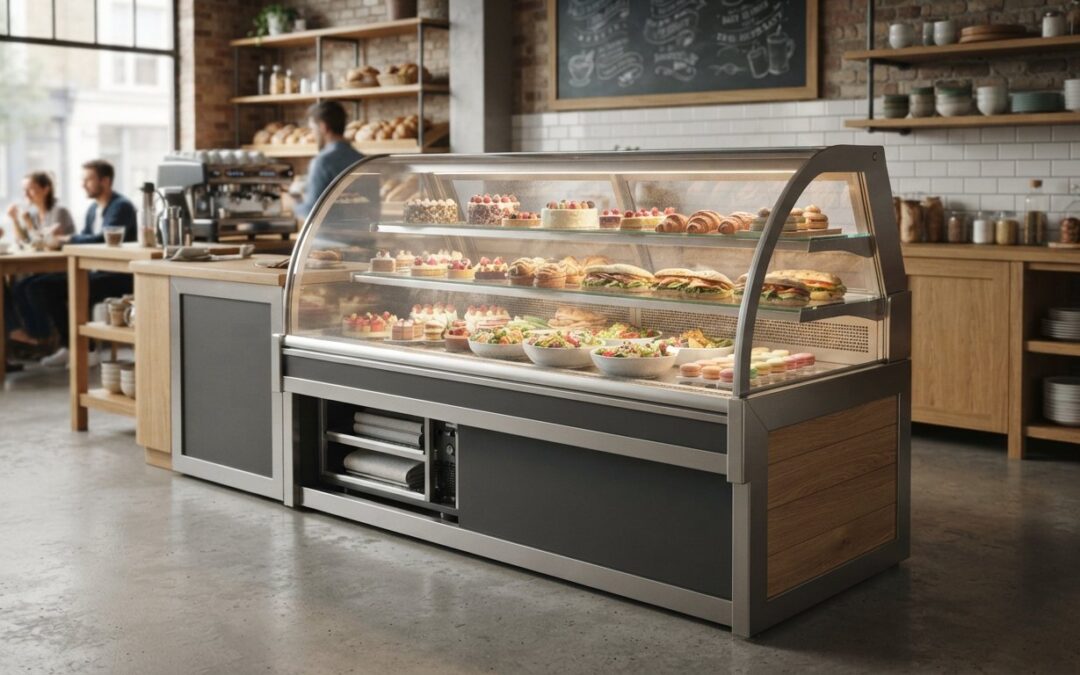
A commercial display counter is never just an insulated cold box; it is an architectural sales engine that drives your front-of-house profitability. Yet sourcing the ideal refrigerated display counter UK venues require often feels like an endless compromise. You shouldn’t have to watch delicate patisserie dry out under aggressive airflow, endure cooling failures during humid British summer peaks, or settle for generic cabinets that clash with a carefully curated interior fit-out.
Balancing statutory 8°C holding limits with appetising food presentation and punishing commercial electricity rates is one of the toughest operational challenges you face. This 2026 buyer’s guide shows you how to select, engineer, and integrate the ideal commercial refrigerated display counter to drive high-margin sales and ensure uncompromising food hygiene across UK venues. From decoding BS EN ISO 23953 climate ratings and static versus ventilated cooling to optimising lifetime running costs, here is everything you need to invest in lasting refrigeration with total confidence.
Key Takeaways
- Learn how to specify a commercial refrigerated display counter UK operators rely on to maintain compliant holding temperatures without compromising visual food presentation.
- Understand the critical engineering differences between static contact cooling and ventilated airflow to prevent delicate produce from drying out.
- Identify the ideal cabinet format for your specific service style, whether integrating grab & go displays, patisserie displays, or assisted-service deli counters.
- Review essential site planning factors, including airflow clearance, condenser heat rejection, and doorway dimensions, before finalising your equipment layout.
- Discover why bespoke British counter engineering and drop-in units deliver superior operational lifespans and seamless interior finishes compared to mass-market alternatives.
What Defines a High-Performance Commercial Refrigerated Display Counter in the UK?
Too many catering aggregators treat refrigeration as plug-and-play white goods, hidden away in a stockroom. In a front-of-house hospitality or retail setting, that approach fails immediately. A commercial display counter is an architectural centrepiece engineered to execute two conflicting jobs at once: creating an unhindered visual stage that drives high-margin impulse sales, while generating an uncompromising thermal barrier to protect perishable stock.
When engineering falls short, the commercial consequences bite quickly. Cheap, uncalibrated cabinets subject delicate produce to rapid temperature fluctuations and surface dehydration. Patisserie glazes crack, artisan sandwiches turn soggy or stale, and prepared proteins lose colour. Beyond food shrinkage and stock loss, substandard equipment invites catastrophic compliance audits from local Environmental Health Officers. Specifying a high-performance refrigerated display counter UK operators can trust turns compliance into a natural baseline rather than a daily gamble.
Visual Merchandising and Food Preservation Working in Harmony
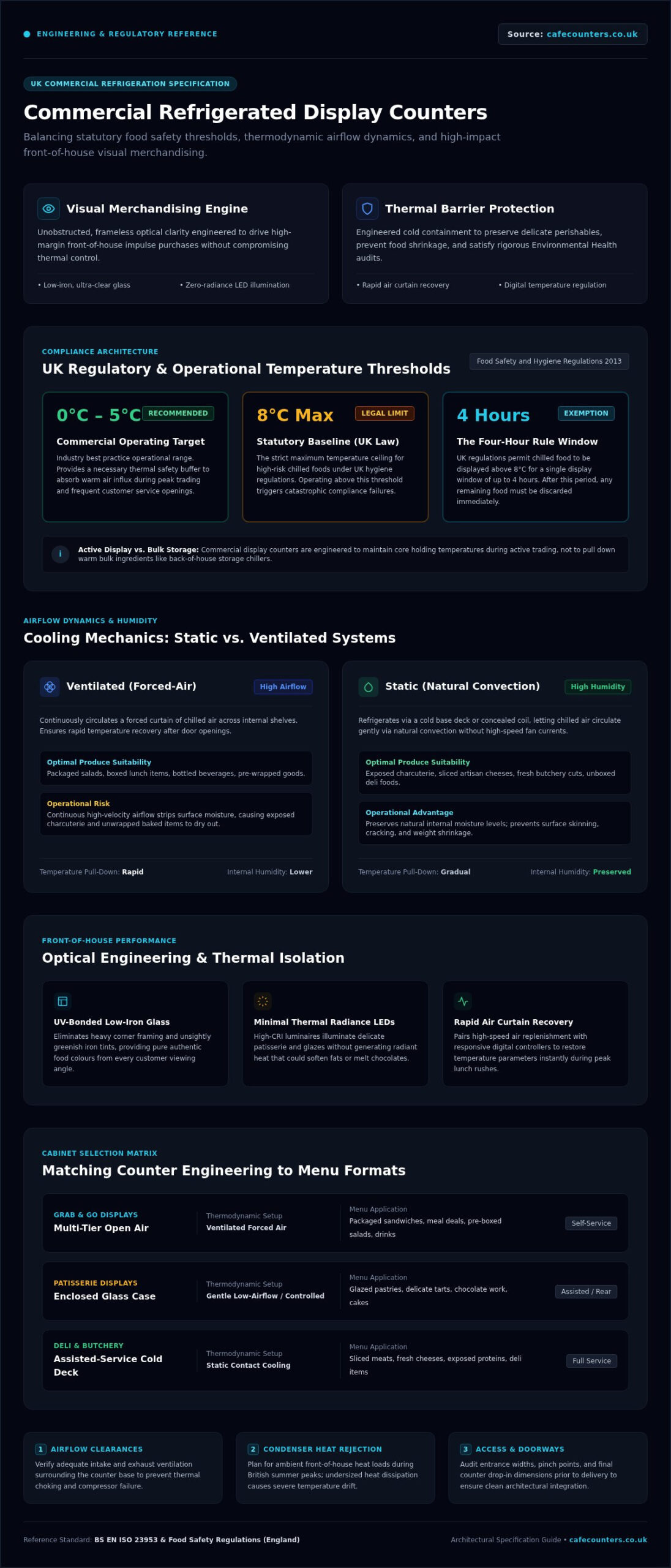
High-end food presentation requires deliberate glass engineering and optical clarity. Premium counters deploy UV-bonded, ultra-clear low-iron glass structures that eliminate heavy corner frames and murky green glass tints. This ensures customers see the authentic colour and texture of your food from any approach angle. To protect stock, modern designs incorporate specialized high-efficiency LED luminaires with minimal thermal radiance. These light engines deliver rich, high-CRI illumination that makes patisserie, artisan cheeses, and charcuterie pop without transferring heat onto chilled surfaces or warming delicate chocolate work.
UK Regulatory Standards for Commercial Food Holding Temperatures
Meeting UK regulatory thresholds requires precision cooling engineering that accounts for real-world trading pressures:
- The Legal Baseline: Under the Food Safety and Hygiene (England) Regulations 2013 and parallel devolved legislation, high-risk chilled food must remain at or below 8°C.
- The Commercial Operating Target: While 8°C is the legal ceiling, industry best practice demands an operational core between 0°C and 5°C to safely absorb heat influx from customer service openings.
- The Four-Hour Exemption: UK rules permit food display above 8°C for a single window of up to four hours, after which unchilled items must be discarded.
- Display vs Long-Term Storage: Display counters are engineered to maintain core temperatures while showcasing goods during active trade, not pull down warm bulk ingredients like dedicated back-of-house storage chillers.
During a chaotic lunch service, an underpowered unit cannot recover from constant door movements. High-performance units solve this by pairing rapid air curtain replenishment with responsive digital controllers, ensuring legal safety margins hold firm all day long.
Cooling Technology Breakdown: Airflow Dynamics, Humidity, and Temperature Classes
Refrigeration physics isn’t one-size-fits-all. The way chilled air moves across your produce directly determines whether food stays fresh or shrivels within hours. Selecting the wrong thermodynamic setup leads to rapid dehydration, unnecessary waste, and inflated energy overheads.
Ventilated Forced-Air vs. Static Cooling Mechanics
Ventilated (fan-assisted) systems push a continuous curtain of chilled air across internal shelves. They excel at pulling down core temperatures rapidly and maintaining uniform conditions across multi-tier layouts. That makes them ideal for bottled beverages, packaged salads, and boxed lunch items. Unwrapped charcuterie, sliced cheeses, or exposed bakery goods don’t cope well in high-velocity airflow; the constant air circulation strips surface moisture, causing unsightly crusting and weight loss.
Static cooling, by contrast, relies on natural convection from a refrigerated base deck or concealed coil. Air movement remains gentle, preserving internal cabinet humidity. It’s the essential choice for assisted-service deli and butchery displays where exposed foods must stay succulent throughout service.
Climate Classes and Ambient Operating Environments
British hospitality spaces face erratic temperature swings. Commercial cabinets are certified under BS EN ISO 23953 to specific climate thresholds:
- Climate Class 3: Rated for ambient conditions up to 25°C and 60% relative humidity. This suits standard air-conditioned convenience stores and quiet dining areas.
- Climate Class 4: Rated for conditions up to 30°C and 55% relative humidity. This higher standard is mandatory for units placed near espresso machines, cooking suites, or south-facing storefront windows.
Specifying an under-rated refrigerated display counter UK conditions will overwhelm causes compressors to run non-stop, tripping cut-outs and accelerating system failure. Integral condensers also need designated intake and exhaust clearance, typically 100 mm to 150 mm, to vent rejected heat effectively.
Energy Efficiency Regulations and Modern Eco-Friendly Refrigerants
With UK commercial electricity tariffs hovering between 24p and 28p per kWh, running costs often exceed the original equipment price over a seven-year lifecycle. Current UK Ecodesign rules require clear A to G energy labels, driving the phase-out of power-hungry legacy units.
Modern commercial counters standardise on natural R-290 (propane) refrigerant, which carries a Global Warming Potential of just 3. Paired with electronically commutated (EC) fans and variable-speed compressors, these platforms reduce baseline power demand while maintaining tight temperature bands. If you’re planning a full front-of-house refurbishment, collaborating with seasoned designers at cafecounters.co.uk ensures your refrigeration mechanics integrate flawlessly with your daily operational workflow.
Comparing Display Counter Formats: Matching the Counter to Your Menu
Your menu and service model must dictate the physical geometry of your counter, not the other way around. Assisted-service formats encourage staff interaction, allowing team members to upsell artisanal cheeses or carve charcuterie to order. Conversely, self-service setups eliminate ordering bottlenecks, letting hurried commuters grab sandwiches and cold drinks in seconds. Deploying the right refrigerated display counter UK operators rely on requires aligning your food types directly with the correct cabinet architecture.
Patisserie Displays: Preserving Delicate Moisture and Pastry Lamination
Delicate choux pastry, chocolate gateaux, and mousses demand gentle, highly calibrated climate control to prevent cracking and glaze dulling. Argon-filled, double-glazed envelopes prevent visual fogging during muggy British weather, ensuring uninterrupted sightlines. Whether specifying a minimalist flat-glass profile or an expansive curved canopy, patisserie displays must meet the exacting standards set out for specialist commercial refrigerators, maintaining a stable 4°C core without aggressive air currents stripping away delicate moisture.
Deli Counters and Salad Bars: Hygienic Preservation for Savory Offerings
Savory food displays demand robust hygiene and adaptable merchandising layouts. Built with heavy-gauge 304 stainless steel interior decks and integrated crumb gutters, an assisted-service deli counter or chilled salad bar allows rapid daily sanitisation. Stepped interior decks bring sliced meats and artisan cheeses directly into the customer’s natural line of sight, while drop-in gastronorm wells keep prepared salads chilled and separated to eliminate allergen cross-contamination.
Open-Front Grab & Go Displays: Accelerating Service Speed and Volume
High-volume venues depend on completely frictionless browsing. Self-service multi-decks use precision laminar air curtains across the cabinet face to contain internal cooling while customers pick up meal deals and bottled drinks. To control running costs, these units integrate thermal night blinds that seal the opening outside trading hours. Under-shelf LED fixtures illuminate every tier evenly, drawing eyes toward grab-and-go products, as detailed in our guide to refrigerated grab and go display units.
Essential Architectural and Practical Siting Considerations Before Buying
A precision-built counter is only as effective as the physical space supporting it. Siting commercial refrigeration requires careful architectural planning long before installation day arrives. Overlooking access corridors, airflow paths, or utility connections leads to costly fit-out delays and premature compressor burnout.
Integral Plug-In versus Remote Condensing Systems
Every refrigeration cycle extracts heat from inside the display and dumps it into the surrounding atmosphere. Integral plug-in units house the compressor inside the counter base, offering a self-contained setup that plugs straight into a dedicated 13-amp or 16-amp supply. However, that rejected warmth and mechanical hum stay inside your trading area. For boutique cafes where customer tables sit within feet of the counter, that extra heat can strain your ambient comfort.
Remote systems solve this by piping refrigerant to an external condensing unit mounted on an outside wall or rooftop. This completely eliminates compressor motor noise and thermal dumping from your front-of-house space, keeping trading rooms quiet and cool. On the drainage side, while integral counters often use electric hot-gas re-evaporation pans to clear defrost runoff, remote systems or high-capacity multi-decks benefit significantly from permanent plumbed-in waste lines to prevent overflow incidents during humid spells.
Site Access, Ergonomics, and Installation Preparation
Commercial counters are substantial, welded steel structures. Ensuring a smooth delivery demands a meticulous survey of your site’s physical thresholds:
- Clearance Dimensions: Measure the narrowest points along the delivery route, including single doorway widths, porch entries, tight hallway turns, and staircase landings.
- Floor Loading and Levelling: Heavy multi-tier displays exert considerable point loads. Floors must support this dead weight while remaining level to prevent door misalignment and erratic condensate drainage.
- Service Ergonomics: Standard working counter heights should align comfortably with staff reach, typically around 900 mm to 950 mm, preventing physical fatigue while keeping eye contact natural across the glass canopy.
Integrating a new refrigerated display counter UK hospitality spaces depend on involves complex coordination between joiners, electricians, and refrigeration engineers. For a broader overview of capacity planning across commercial layouts, review our comprehensive refrigerator commercial guide. When you’re ready to ensure your counter fits your venue’s structural realities without friction, book an architectural site survey with the engineering team at cafecounters.co.uk.
Bespoke Counter Engineering vs Off-the-Shelf Units: The TFSE Products Advantage
Mass-market imported counters box your business into rigid dimensions. Standard catalogue units arrive with fixed external footprints, forcing your front-of-house staff to work around awkward floor plans, mismatched heights, and generic styling that dilutes your brand. When investing in a long-term refrigerated display counter UK operators achieve far superior visual cohesion and operational flow by commissioning custom British fabrication built around their physical architecture.
Custom CAD Design and Architectural Harmony
Every commercial venue has unique structural realities, from awkward support pillars to specific service sequences. Working directly with British manufacturing means starting with comprehensive 3D CAD modeling. This technical process visualizes how your chilled displays align with ambient till points, heated gantries, and bespoke serving counters long before metal is cut. You choose the exact materials, whether integrating solid stone surfaces, bespoke powder-coated steel fascias, or warm natural timber cladding, creating an intentional architectural statement rather than an assembled collection of mismatched appliances.
Seamless Counter Integration with Integrate Drop-in Units
Standard plug-in cabinets often leave narrow, unsightly gaps between separate units where dust and food debris quickly collect. Integrate Drop-in Units resolve this hygiene issue by mounting refrigeration wells directly flush beneath continuous worktops:
- Flush Visual Transitions: Chilled wells drop smoothly into quartz, solid acrylic, or stainless steel counters for an uninterrupted horizon line.
- Modular Adaptability: You can effortlessly pair chilled patisserie displays alongside self-service salad bars or heated wells within a single continuous run.
- Superior Sanitation: Eliminating crevices between separate standalone cabinets removes hard-to-clean crumb traps, making end-of-day kitchen wipe-downs fast and thorough.
End-to-End Nationwide Installation and Commissioning
Distributors and online resellers simply drop flat-packed equipment on the pavement, leaving you to coordinate trades, levelling, and commissioning alone. Operating continuously since 1991, TFSE Products Ltd takes complete project accountability from raw design to finished physical space. Our factory engineers manage direct nationwide delivery, mechanical positioning, and precise electronic calibration on-site. By working directly with a dedicated British manufacturer, you ensure that every counter is built from heavy-gauge steel, complies fully with UK commercial refrigeration energy labeling, and delivers reliable commercial performance for years to come.
Engineer Your Front-of-House Space for Enduring Commercial Success
Selecting the right refrigerated display counter UK venues depend on is far more than a routine equipment purchase; it directly shapes customer dwell time, basket spend, and daily food freshness. By aligning your specific menu requirements with the correct airflow physics, planning for real-world site ventilation, and avoiding ill-fitting off-the-shelf units, you safeguard your operational margins while elevating your brand.
You don’t have to navigate structural constraints, energy standards, and custom joinery integration alone. Operating our specialist UK manufacturing facility since 1991, TFSE Products Ltd brings total engineering accountability to your project. From comprehensive in-house 3D CAD planning and site surveys to turnkey nationwide delivery, installation, and commissioning support, we turn your design vision into a durable physical asset.
Explore British-engineered commercial food displays tailored to your venue, and build a front-of-house service counter designed to perform reliably year after year.
Frequently Asked Questions
What is the legal holding temperature for a refrigerated display counter in the UK?
Under the Food Safety and Hygiene (England) Regulations 2013 and parallel devolved legislation, chilled foods must stay at or below 8°C. Best practice recommends setting your counter between 0°C and 5°C to handle open-service door fluctuations safely. UK food safety rules allow a single four-hour exemption above 8°C for active service, after which unserved food must be discarded.
How do I stop cakes and pastries from drying out in a commercial display counter?
Avoid high-velocity ventilated systems designed strictly for sealed beverages. Delicate sponges and patisserie require gentler, controlled airflow dynamics or static contact base cooling paired with high-humidity settings. Cabinets featuring dedicated patisserie climate calibration and multi-tier gentle ducting safeguard moisture levels, ensuring delicate icings, choux pastry, and fresh cream don’t crack or dry out across long retail trading shifts.
What is the difference between an integral and a remote refrigerated display counter?
Integral counters contain the condensing compressor within the physical cabinet plinth. They plug straight into standard power outlets, simplifying equipment positioning. Remote counters place the condensing machinery outside the building, connected via insulated copper pipework. This eliminates internal motor noise and rejects compressor heat directly outdoors, creating a far quieter, cooler dining environment for front-of-house customers.
Can a refrigerated display counter be installed flush into a bespoke counter run?
Yes, utilizing specialized drop-in refrigeration wells allows display systems to integrate completely flush beneath solid surfaces like quartz, granite, or Corian. Drop-in units drop directly into pre-cut apertures within bespoke joinery. This approach delivers an uninterrupted service counter line, completely eliminating unsightly exterior cabinet seams and difficult-to-clean dirt traps between separate pieces of catering machinery.
How much ventilation clearance does a commercial plug-in refrigerated counter require?
A plug-in refrigerated display counter UK operators install typically requires between 100 mm and 150 mm of unobstructed intake and exhaust clearance around its condenser grilles. Enclosing an integral unit inside joinery without engineered plinth cut-outs traps expelled heat. The system will recirculate its own thermal exhaust, spiking energy consumption and triggering internal safety cut-outs or terminal compressor burnout.
What climate class should I choose for a busy UK cafe environment?
Specify a Climate Class 4 certified unit if your counter sits near espresso machine boilers, commercial ovens, or south-facing storefront glass. Climate Class 4 equipment is tested up to 30°C ambient temperatures at 55% relative humidity. While Climate Class 3 suits air-conditioned 25°C settings, busy British cafe spaces regularly experience humid indoor thermal spikes during peak summer trade.
Why is R290 refrigerant preferred in modern commercial refrigerated counters?
R290, or commercial-grade propane, is a natural hydrocarbon refrigerant that replaces older high-GWP synthetic greenhouse gases. It delivers exceptional thermodynamic efficiency while carrying a Global Warming Potential of just 3. Operating with R290 complies fully with independent UK F-gas phase-down targets, reducing baseline operating power draw and future-proofing commercial venues against costly refrigerant bans.