
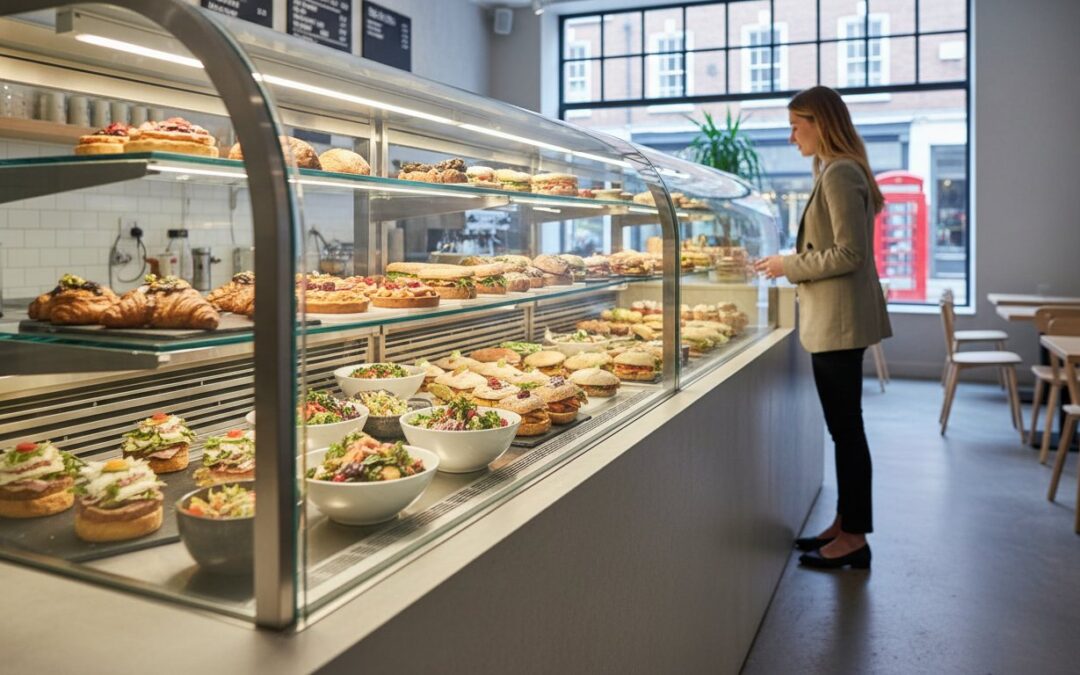
Your food display is either the most hardworking member of your sales team or a quiet drain on your bottom line. While aesthetics often drive the initial conversation, upgrading your cafe’s food display is actually a rigorous exercise in precision engineering and retail psychology. You likely already know that poor visibility leads to stagnant sales, but the hidden costs of inefficient refrigeration and outdated layouts are often what truly impact your margins. It’s frustrating to watch energy bills climb while older units struggle to hit the 5°C best practice standard recommended by the Food Standards Agency.
We understand that a successful commercial environment requires a balance between a high-end look and rugged, long-term durability. This guide demonstrates how a strategic upgrade transforms your operational efficiency and increases average transaction values. You’ll discover how bespoke British manufacturing, from elegant patisserie displays to compliant grab-and-go units, ensures you meet the latest 2026 HFSS regulations while attracting premium customers. We’ll walk you through the technical journey of selecting deli counters and heated gantries that don’t just hold food, but actively sell it.
Key Takeaways
- Master the retail psychology techniques that transform static shelving into a high-performance “silent salesperson” capable of increasing average transaction values.
- Identify the technical specifications, such as high-CRI LED lighting and precise airflow management, that ensure both visual appeal and food safety compliance.
- Evaluate the long-term operational benefits of upgrading your cafe’s food display through bespoke engineering rather than relying on restrictive modular alternatives.
- Understand how a meticulous site survey and 3D CAD modelling prevent costly installation errors and ensure your new units integrate perfectly with existing services.
- Discover the logistical advantages of UK-based production, including shorter lead times and direct access to the craftsmen building your counters and displays.
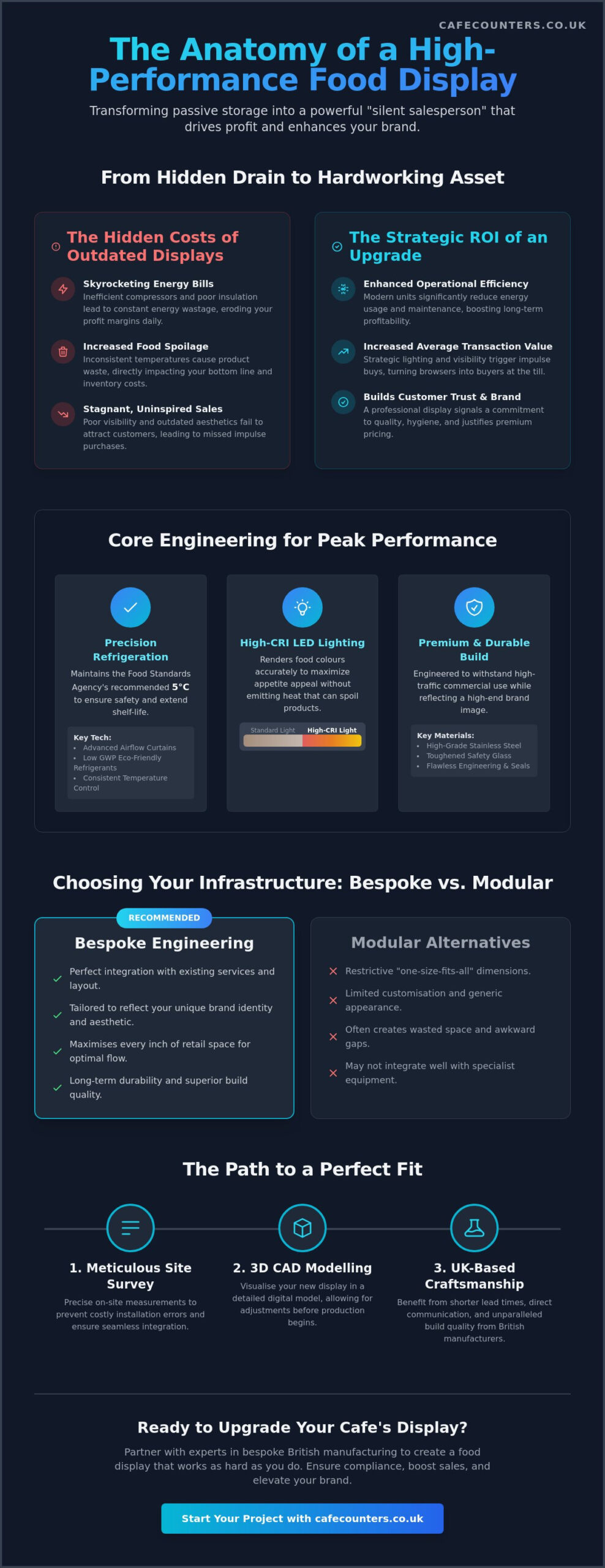
The Strategic ROI of Upgrading Your Cafe’s Food Display
Upgrading your cafe’s food display is a holistic investment that moves beyond simple aesthetics. It integrates advanced hardware, efficient layout design, and modern refrigeration technology to create a seamless retail environment. This transition shifts your units from passive storage containers to active merchandising tools. By rethinking the physical space where your products meet the customer, you create a more professional atmosphere that justifies premium pricing and reinforces your brand’s authority.
Think of your counter as a silent salesperson. When products are positioned correctly within high-visibility deli counters or patisserie displays, they trigger the retail psychology of impulse purchasing. Clear sightlines and professional presentation remove the friction between a customer’s desire and their final decision at the till. A successful strategy for upgrading your cafe’s food display ensures that every item is illuminated and accessible, maximizing the average transaction value during every shift.
Modern displays do more than just hold food; they build customer trust. A sleek, well-maintained display signals a commitment to hygiene and quality. It tells your customers that if you’ve invested in professional-grade equipment, you’ve likely put the same level of care into the ingredients themselves. This perception is vital for attracting a premium clientele who value transparency and artisanal quality.
Why Aesthetics and Engineering Must Align
Durability and visual impact are inseparable in a high-traffic cafe. We use premium materials like stainless steel and toughened glass because they reflect a brand’s premium positioning while withstanding the rigours of daily service. Beyond the surface, the engineering must be flawless. Consistent temperature control is the primary factor in extending product shelf-life and reducing waste. For example, strategically placed refrigerated grab and go display units allow you to capture high-volume sales during peak hours without compromising the integrity of your chilled offerings.
Calculating the Real Cost of Outdated Equipment
Sticking with older refrigerated units often costs more than the investment of a new installation. Inefficient compressors and worn seals lead to excessive energy wastage and frequent, expensive maintenance calls. These hidden costs erode your profit margins every month. Understanding the display case basics of insulation and airflow helps operators see why modern units are significantly more cost-effective. When food spoils because of temperature fluctuations, you aren’t just losing the cost of the ingredients; you’re losing the potential revenue of those sales. True ROI in this sector is defined as the measurable combination of reduced monthly energy expenditure and the uplift in daily footfall driven by superior product visibility.
Technical Standards: Refrigeration, Lighting, and Efficiency
The engineering behind a successful counter is just as critical as its visual appeal. When you’re upgrading your cafe’s food display, the focus must shift from basic shelving to high-performance technical standards. Lighting, for instance, isn’t merely about brightness. We utilise high-CRI (Colour Rendering Index) LED lighting because it determines how accurately colours are perceived. A high CRI ensures that the deep reds of a deli meat or the vibrant greens of a fresh salad appear exactly as nature intended, which is a vital component of appetite appeal. Unlike standard retail bulbs, these specialised LEDs don’t emit heat, protecting your delicate patisserie from premature melting or spoilage.
Maintaining “the perfect chill” requires more than just a cold box; it demands advanced airflow technology. Consistent air curtains prevent warm spots from forming every time a customer opens a door or reaches into a unit. This precision is essential for adhering to food safety and refrigeration guidelines, which recommend keeping chilled items at a steady 5°C to inhibit bacterial growth. By 2026, UK standards have also tightened around the use of eco-friendly refrigerants. Modern systems now utilise gases with lower Global Warming Potential (GWP), ensuring your business remains compliant with environmental legislation while reducing your overall carbon footprint.
Optimising Temperature Control for Freshness
Different food groups require different cooling philosophies. Ventilated cooling uses fans to circulate air, which is ideal for maintaining a uniform temperature across every shelf. However, for products prone to drying out, static cooling offers a gentler environment. This is particularly important for a deli counter, where maintaining specific humidity levels is necessary to keep cheeses and meats from crusting. Digital controllers now allow operators to manage these variables with surgical precision, providing real-time data to prevent food waste before it happens.
The Role of Glass Technology in Visibility
Visibility is often hindered by condensation, but modern glass technology solves this through double-glazed, anti-mist coatings. These units remain crystal clear even in humid environments, ensuring there’s never a fog between the customer and your product. Frameless glass designs further enhance this experience by removing bulky visual barriers, creating a seamless look that highlights the food itself. We use toughened safety glass across all our installations to provide the durability required for high-volume hospitality settings. If you’re looking to streamline your service area further, consider how bespoke stainless steel back-bar units can complement your main display by providing organised, hygienic storage within easy reach of your staff.
Bespoke vs. Modular: Choosing the Right Infrastructure
Choosing the right infrastructure is a pivotal decision when upgrading your cafe’s food display. Most operators start by looking at modular, off-the-shelf units because they appear cost-effective and easy to source. However, a “one-size-fits-all” approach often creates operational bottlenecks that hinder long-term profit. Standard units rarely align perfectly with the unique architectural quirks of British high-street properties. Bespoke UK manufacturing solves this by allowing for a design that maximises every square inch of your available floor space. Instead of leaving awkward gaps or dead zones that collect dust, a custom-built solution ensures a continuous, professional flow that guides the customer through the buying journey.
When you are upgrading your cafe’s food display, the foundation of that project should be durability. The longevity of your counter determines its true cost. While modular units are often built with thinner materials to keep shipping costs low, bespoke counters rely on heavy-duty stainless steel fabrication. This isn’t just about strength; it’s about hygiene and longevity. A custom counter is an investment that outlasts multiple cycles of cheaper equipment. Investing in high-quality materials ensures your equipment meets commercial refrigeration efficiency standards, which reduces the total cost of ownership through lower energy bills and fewer maintenance interventions.
When to Choose Bespoke Serving Counters
Bespoke serving counters are essential when your brand identity requires a specific physical aesthetic that modular units cannot provide. We can integrate multiple functions, such as heated sections, chilled wells, and ambient shelving, into a single, seamless run. This design eliminates the visual clutter of mismatched units. Ergonomics also play a vital role here. A counter tailored to your staff’s height and workflow reduces physical strain and speeds up service during peak hours, directly impacting your bottom line.
The Versatility of Integrated Drop-in Units
If a full counter replacement isn’t feasible, integrated drop-in units offer a practical middle ground. These units allow you to upgrade specific sections of an existing carcass without a complete shop refit. For example, swapping out an inefficient hot plate for modern Vision Heated Counters provides an immediate boost to food quality and presentation. Drop-ins provide the flexibility to modernise your technology while maintaining the structural integrity of your current furniture. This approach is ideal for businesses looking to improve performance incrementally.
Planning the Perfect Fit: Site Surveys and CAD Modelling
The success of upgrading your cafe’s food display is determined long before the first piece of stainless steel is cut. A professional installation requires a transition from a broad conceptual vision to a precise technical reality. This methodical journey begins with understanding the physical constraints of your environment. Without a detailed plan, even the most beautiful patisserie displays can become operational liabilities if they don’t align with existing services or staff movement patterns. We approach every project as an expert partner, ensuring that the engineering behind the counter is as robust as the design is elegant.
A significant part of our project management involves the integration of essential services directly into the counter infrastructure. Modern food displays aren’t standalone units; they are complex hubs that require dedicated electrical feeds for refrigeration and often plumbing for drainage or water supply in salad bars. By planning these requirements during the initial design phase, we eliminate the need for unsightly trailing wires or exposed pipes. This level of meticulous detail ensures your finished space remains clean, professional, and fully compliant with all safety standards from the moment of installation.
The Importance of Accurate Site Surveys
Precision is the hallmark of British manufacturing, and it starts with a comprehensive site survey. We follow a “measure twice, cut once” philosophy to ensure that every bespoke unit fits its intended space perfectly. This process involves more than just measuring walls. We identify critical factors that could derail an installation, such as:
- Access Points: Verifying doorway widths and corridor clearances to ensure units can be moved into position without damage.
- Floor Integrity: Checking for uneven floor levels or slopes that could affect the drainage of refrigerated units.
- Structural Obstacles: Mapping the location of structural pillars, low ceilings, or existing ventilation ducts.
- Service Points: Pinpointing the exact location of power sockets and water inlets to ensure seamless connection.
Visualising Success with CAD
Once the survey data is collected, we move into the digital design phase using 3D CAD modelling. This technology allows you to see a photorealistic render of your new layout before production begins in our facility. It’s an essential step for stakeholders to agree on the aesthetic and functional flow of the space. CAD modelling also provides a platform to test the placement of restaurant equipment for optimal workflow. You can experiment with different finishes, materials, and lighting configurations in the digital realm, ensuring the final physical result matches your brand’s premium positioning. To start your journey toward a precision-engineered retail space, view our range of bespoke serving counters and discover how we can bring your vision to life.
Partnering with a British Manufacturer for Your Display Upgrade
Choosing a local manufacturer is the most effective way to manage the complexities of upgrading your cafe’s food display. By keeping production within the UK, we offer significantly shorter lead times and a direct line of communication that overseas suppliers cannot match. This proximity allows for a transparent process where you’re kept informed at every stage, from the initial sketch to the final polish. It removes the uncertainty of international shipping and ensures that your project remains on schedule.
Quality control is paramount when investing in high-end retail infrastructure. Having design and manufacture under one roof means that our technical drawings are executed with absolute fidelity by the craftsmen on the factory floor. This integrated approach ensures that every weld in our stainless steel back-bar units and every seal in our patisserie displays meets our exacting standards. When the person who designed the unit can walk ten steps to speak with the person building it, the risk of technical error is virtually eliminated.
Long-term operational security is another critical factor in your investment. Partnering with a domestic manufacturer ensures that you have immediate access to after-sales support and genuine spare parts for commercial refrigerators. This availability prevents minor technical issues from becoming prolonged periods of downtime that threaten your revenue. We understand that in a busy cafe, every hour of equipment failure is an hour of lost profit.
The TFSE Commitment to Quality
Since our founding in 1991, TFSE Products Ltd has operated as an Expert Partner to the hospitality industry. We don’t just take orders; we help you refine your vision by grounding it in technical reality. Our commitment to quality is reflected in the use of high-grade materials and advanced manufacturing techniques that ensure your bespoke serving counters remain a centrepiece of your business for years. This heritage of regional artisanal pride is built into every unit we produce.
Seamless Installation and Commissioning
The final phase of your project is handled by the same professional team that understood your vision from the start. Professional installation is followed by thorough commissioning, where we verify that all systems, from heated gantries to salad bars, are running to peak specification upon delivery. This ensures a smooth handover and immediate operational readiness, allowing you to focus on serving your customers. Contact us today to discuss your bespoke cafe counter upgrade and let us provide the steady, reliable hand your project requires.
Elevating Your Retail Environment for Long-Term Success
A successful transition from passive storage to active merchandising requires a deliberate focus on technical precision. By prioritizing high-CRI lighting and advanced airflow technology, you ensure your products remain as fresh as they are visually enticing. Choosing bespoke infrastructure over modular alternatives allows you to maximize every square inch of your floor plan, effectively turning architectural constraints into operational advantages. Upgrading your cafe’s food display isn’t just a cosmetic change; it’s a strategic investment in efficiency and customer trust.
TFSE Products Ltd has been a specialist in UK-based manufacturing since 1991. We provide comprehensive CAD modelling and meticulous site surveys to ensure your vision is realized with absolute accuracy. Whether you require bespoke patisserie displays or high-performance deli counters, our team acts as your expert partner throughout the entire project lifecycle. We’re ready to help you build a durable, high-end space that attracts premium customers and streamlines your daily operations. Start your cafe display upgrade with a professional consultation today and take the first step toward a more profitable future.
Frequently Asked Questions
How long does a typical cafe counter upgrade take from design to installation?
The timeline for a bespoke project typically ranges from four to eight weeks depending on the complexity of the design. This period encompasses the initial site survey, technical CAD modelling, internal manufacturing in our UK facility, and final commissioning. Because we manage the entire project end-to-end, we provide a structured schedule that allows you to plan for minimal operational downtime.
Can I upgrade my refrigerated displays without replacing the entire counter?
Yes, you can modernise specific sections of your service area using integrated drop-in units. This is an excellent strategy for upgrading your cafe’s food display when the existing counter carcass is still structurally sound. Swapping out older, inefficient refrigeration for modern drop-in technology provides immediate performance gains and improved food safety without the cost or disruption of a full shop refit.
What are the most durable materials for a high-traffic cafe counter?
High-grade stainless steel and toughened safety glass are the most reliable materials for high-volume hospitality environments. We utilise these materials because they offer a superior lifespan and remain easy to sanitise throughout the day. Stainless steel fabrication provides the rugged internal structure required for heavy use, while premium glass ensures your display remains clear and professional without scratching over time.
How much energy can I save by switching to modern refrigerated display units?
Switching to modern units can lead to a significant reduction in monthly energy expenditure compared to equipment over a decade old. Newer systems utilise eco-friendly refrigerants and advanced insulation that align with 2026 UK environmental standards. These technical improvements reduce the workload on compressors and fans, which lowers your utility bills while ensuring a more consistent chill for your products.
Do you provide site surveys for custom counter projects across the UK?
We conduct professional site surveys for custom counter projects across our primary regional market and the wider UK. Our technical team visits your premises to take precise measurements and identify potential logistical obstacles like structural pillars or narrow access points. This meticulous planning phase is essential for ensuring that bespoke units fit perfectly and connect seamlessly to existing electrical and plumbing services.
What is the difference between a patisserie display and a standard deli counter?
The main difference involves how the units manage humidity and airflow to protect specific food types. Patisserie displays are engineered to prevent delicate cakes and pastries from drying out in a chilled environment. In contrast, deli counters are built for the robust service of meats and cheeses, often featuring specific temperature zones and surfaces designed for frequent cleaning and high-volume product turnover.
Is it possible to integrate both heated and chilled units into the same bespoke counter?
It is entirely possible to integrate heated gantries, chilled wells, and ambient sections into a single, seamless bespoke serving counter. Our design process uses advanced insulation and airflow management to ensure that heat does not transfer between different temperature zones. This integrated approach creates a cohesive visual aesthetic for your brand while allowing you to serve a diverse menu from one efficient station.